Management Systems World
All on Quality and other Standards in one place since 2010. Now Worldwide.
News Brazil
Please note that you have to be a registered member with paid membership in order to see full articles.
RegisterSelected News

Inmetro Puts Digital Verification in the Palm of Your Hand
The Brazilian government has officially launched Inmetro na Palma da Mão (“Inmetro in the Palm of Your Hand”), a new digital verification platform that allows consumers to confirm whether certified products are genuine.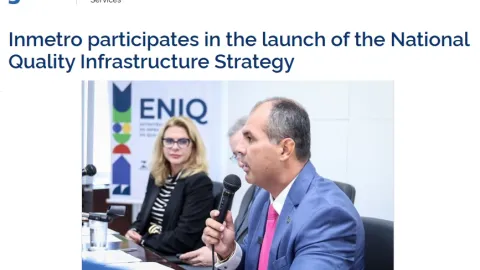
Brazil Unveils First National Quality Strategy Action Plan for 2025–2026
Brazil has launched its National Quality Infrastructure Strategy (ENIQ) and the first related Action Plan, which will be in effect for the 2025–2026 period.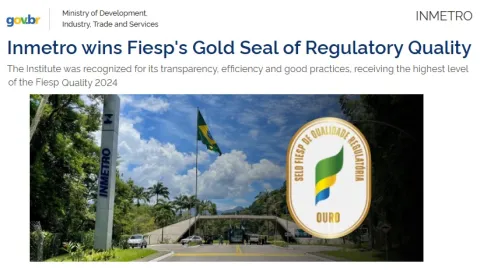
Inmetro Earns Top Fiesp Regulatory Quality Seal from São Paulo Industry Federation
The National Institute of Metrology, Quality, and Technology (Inmetro) has received the 2024 Gold Category of the Regulatory Quality Seal from the Federation of Industries of the State of São Paulo (Fiesp)—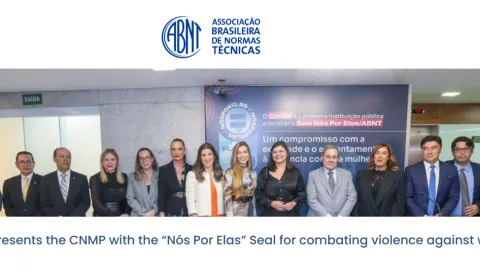
Federal Prosecutors in Brazil Recognized with Top Certification for Gender Violence Prevention
The Brazilian Association of Technical Standards (ABNT) has awarded the National Council of the Public Prosecutor’s Office (CNMP) the highest category of the “Nós Por Elas” Seal, recognizing its efforts to prevent and combat violence against women.
Public Labs Across Brazil Can Now Join Inmetro’s ProdIQ Accreditation Program
Public institutions throughout Brazil can now voluntarily join the ProdIQ Program, which promotes the accreditation of testing and calibration laboratories and supports professional training.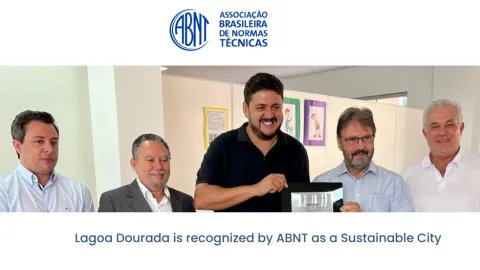
Lagoa Dourada Recognized as Sustainable City by ABNT
Lagoa Dourada, a municipality of about 12,000 people in Minas Gerais, has been officially recognized as a Sustainable City by the Brazilian Association of Technical Standards (ABNT).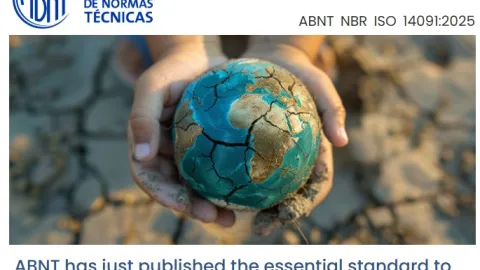
Brazil Publishes Key Standard to Manage Climate Change Risks
ABNT has published a new national standard to help organizations assess and respond to climate-related risks.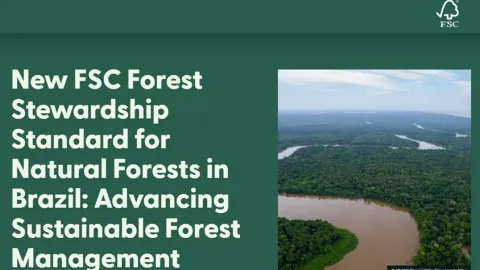
New FSC Standard Advances Sustainable Forest Management in Brazil
A new Forest Stewardship Council (FSC) standard for natural forests in Brazil will take effect on October 1, 2025, aiming to improve biodiversity protection, Indigenous rights, and small producer inclusion.
Inmetro Expands Brazil’s Quality Infrastructure With 15 New Projects in 2025
The National Institute of Metrology, Quality, and Technology (Inmetro) is making major investments to upgrade Brazil’s quality infrastructure, especially in remote regions where only 15% of the market is currently under surveillance.
Brazil Unveils ABNT NBR 17225, Standard to Ensure Digital Accessibility
The Brazilian Association of Technical Standards (ABNT) introduced ABNT NBR 17225, a new standard aimed at ensuring websites and digital applications are accessible to all, including people with disabilities or temporary limitations.
Inmetro Launches Artificial Intelligence Center to Boost Metrology and Technological Innovation in Brazil
The National Institute of Metrology, Quality, and Technology (Inmetro) has established the Artificial Intelligence Center (CIAI) to enhance metrology and technological innovation in Brazil.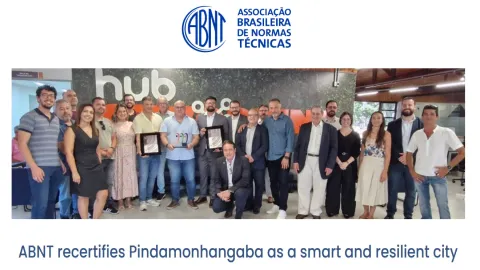
ABNT Recertifies Pindamonhangaba as a Smart and Resilient City
On February 20, 2025, the Brazilian Association of Technical Standards (ABNT) recertified Pindamonhangaba under the ABNT ISO 37122 – Smart City and ABNT ISO 37123 – Resilient City standards.Global News
Risk Management Guidance for AI-Powered Medical Devices: First Edition of ISO/TS 24971-2 Released
ISO has released the first edition of ISO/TS 24971-2:2026, providing guidance on applying the ISO 14971 risk management process to machine learning-enabled medical devices (MLMDs).
Revised ISO 19008 Expands Cost Coding System to Lower Carbon Energy
ISO 19008 has been revised to extend its common system for organizing and comparing cost data to lower carbon energy as well as oil and gas.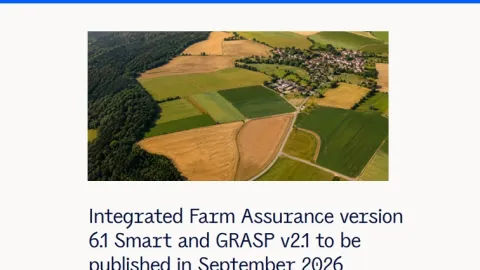
GLOBALG.A.P. Farm Assurance and Social Practice Standards Set for September Update
Agraya has announced that it will publish GLOBALG.A.P. Integrated Farm Assurance (IFA) v6.1 Smart and GLOBALG.A.P. Risk Assessment on Social Practice (GRASP) v2.1 on September 1, 2026.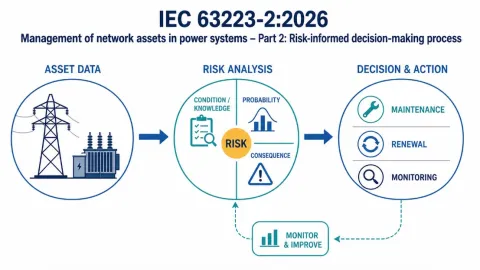
IEC 63223-2 Sets Risk-Informed Decision-Making (RIDM) Process for Power Network Assets
The International Electrotechnical Commission (IEC) has published IEC 63223-2:2026, introducing a structured risk-informed decision-making (RIDM) process for managing existing assets in power networks.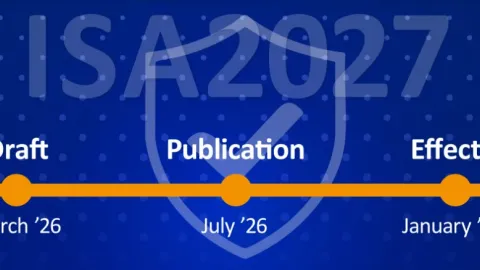
VDA Releases ISA 2027 Information Security Assessment Catalogue for TISAX
The German Association of the Automotive Industry (VDA) has published ISA 2027, the next version of the Information Security Assessment (ISA) catalogue used by TISAX, an information security assessment and exchange mechanism for the automotive industry.
Global Standards Updates Flagship GOTS Standard to Version 8.1
The Global Standards (GS) has updated the Global Organic Textile Standard (GOTS) to Version 8.1, its first revision since the major Version 8.0 release in March.
TÜV SÜD Acquires SustainCERT to Accelerate Digital Carbon Verification
Germany-based testing, inspection and certification company TÜV SÜD has acquired climate verification platform SustainCERT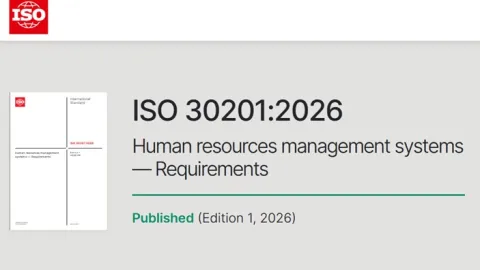
ISO 30201 Adds Human Resources to the ISO Management System Family
The International Organization for Standardization (ISO) has published ISO 30201:2026, the first international requirements standard for human resources management systems.
ISO/PAS 25171 Provides First International Auditing Guide for ISO 21001 Educational Management Systems
The International Organization for Standardization (ISO) has published ISO/PAS 25171:2026, the first international guidance for auditing educational organization management systems under ISO 21001:2025.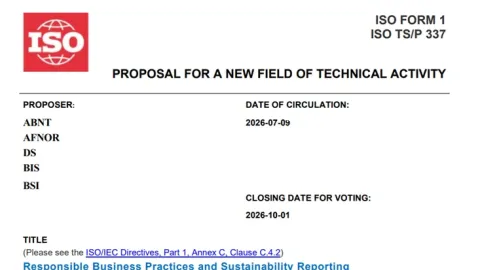
Proposal Calls for ISO Committee on Responsible Business Practices and Sustainability Reporting
An International Organization for Standardization (ISO) technical committee has been proposed to develop standards for responsible business practices and sustainability reporting.
CanadaGAP Version 11 Achieves GFSI Recognition Under 2024 Benchmark
The Global Food Safety Initiative (GFSI) has recognized CanadaGAP Food Safety Program Version 11.0 against its 2024 Benchmarking Requirements (BMRs), allowing