Management Systems World
All on Quality and other Standards in one place since 2010. Now Worldwide.
News Germany
Please note that you have to be a registered member with paid membership in order to see full articles.
RegisterSelected News

German Institutes Publish Tools to Help Smaller Labs Adopt Digital Calibration Certificates
Germany’s National Metrology Institute (PTB) and German Calibration Service (DKD) are helping smaller calibration laboratories move to Digital Calibration Certificates (DCC).
VDA QMC Symposium Explores China Speed and Auto Crisis Challenges
“China Speed” was a central theme at the recent symposium hosted by the Quality Management Center (VDA QMC) of the German Association of the Automotive Industry,
Xayn Becomes First German Company Certified to ISO 42001 for AI Management
Xayn, a Berlin-based AI startup, is the first company in Germany to receive certification to ISO/IEC 42001,
Germany Issues Two Key AI Standards for Autonomous Train Safety
Germany has introduced two pivotal standards to guide the safe integration of artificial intelligence in fully automated rail transport.
Hamburg Standard Aims to Cut Housing Construction Costs by Rethinking Rules
The German city of Hamburg is introducing the Hamburg Standard to make housing more affordable by streamlining planning, allowing flexible use of rules, and accelerating permit processes.
DKE Opens Office in Nanjing to Boost Sino-German Standardization Ties
The German Commission for Electrical, Electronic & Information Technologies (DKE) officially opened a new office in Nanjing, China on April 16, 2025, aiming to deepen international cooperation in electrotechnical standardization.
Global Conference in Berlin to Tackle Quality Infrastructure’s Role in Germany’s Economic Competitiveness
A major international conference will be held in Berlin on May 15, 2025, to explore how quality infrastructure supports Germany’s economic competitiveness and enables fair global trade.
How Germany’s New Government Coalition Shapes the Country’s Standardization Course
After weeks of negotiations, Germany’s new coalition government has signed a four-year agreement outlining its key policy goals.
DIN SPEC 66336 Strengthens Digital Government Services in Germany
Germany has introduced DIN SPEC 66336 to raise the quality of digital public services.
DIN’s Schmidt Defends Draft Building Safety Standard Amid Public Debate
The draft standard DIN 94681: Traffic Safety Inspection for Residential Buildings, also known as the “Building TÜV,” has sparked public debate in Germany over concerns about added costs and bureaucracy.
Germany Launches Standard for Sustainable Investment Criteria
The German Institute for Standardization (DIN) has released DIN 77236-2, establishing uniform criteria for evaluating sustainable financial products.
New German Standard for ReqIF Simplifies Data Exchange
The newly released DIN DKE SPEC 99200 standardizes the interpretation of the Requirements Interchange Format (ReqIF), streamlining data exchange between companies.Global News
ISO 45010 Becomes First International Standard on Menstruation and Menopause at Work
ISO has published ISO 45010, the first International Standard focused on supporting employees experiencing menstruation and menopause at work.
Digital Identity Standards Now Freely Accessible Worldwide
Key ISO and IEC digital identity standards, including the ISO/IEC 18013 and ISO/IEC 23220 series, are now freely accessible worldwide through a new sponsorship model set up by the German Institute for Standardization (DIN) and the OpenWallet Foundation (OWF).
GFSI Opens Consultation on FSSC 22000 Version 7 Against 2024 Benchmarking Requirements
The Global Food Safety Initiative (GFSI) has opened a public consultation on the recently updated FSSC 22000 Version 7 as part of its assessment against the GFSI Benchmarking Requirements Version 2024.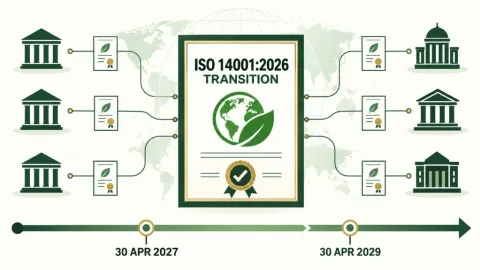
Accreditation Bodies Roll Out ISO 14001 Transition Plans
Accreditation bodies are putting the ISO 14001:2026 transition timetable into practice, with Norwegian Accreditation (NA) among the latest to publish detailed arrangements for certification bodies moving to the revised environmental management systems standard.
ISO Considers Three Tourism Proposals on Restaurant Evaluation, Tourist Guides and AI
Three tourism standardization proposals are now under consideration at the International Organization for Standardization (ISO), covering restaurant evaluation, professional tourist guide services and the use of artificial intelligence with tourism destination data.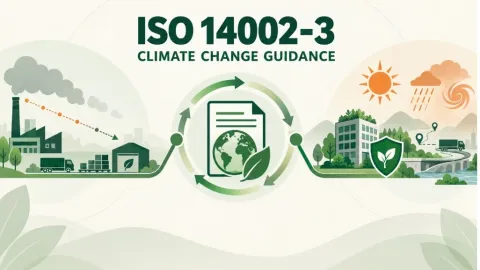
ISO 14002-3 Released as Guidance on Climate Change
The International Organization for Standardization (ISO) has released ISO 14002-3:2026, new guidance to help organizations using ISO 14001 address climate change through their environmental management systems.
AIQI Publishes First AI Use Case for Management System Certification Decisions
The Artificial Intelligence Quality Infrastructure (AIQI) Consortium has published a new use case examining how AI could support management system certification decisions, including the risks, limitations and controls that conformity assessment bodies may need to consider.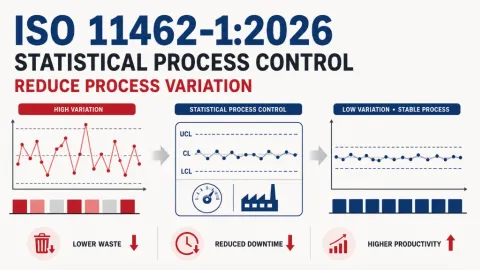
ISO 11462-1:2026 Updates Statistical Process Control to Reduce Process Variation
The International Organization for Standardization (ISO) has published ISO 11462-1:2026, updating guidance on statistical process control (SPC) to help organizations improve the stability and capability of their processes.
Codex Sets New Labelling Rules for Multipacks and Outer Packaging
The Codex Alimentarius Commission (CAC) has adopted new requirements for foods sold in multipacks or grouped together in one outer package, clarifying what information must appear on the packaging consumers see when buying the product.
SBTi Net-Zero Standard Version 2.0 Adds New Rules for Corporate Climate Targets, Reporting and Carbon Removals
The Science Based Targets initiative (SBTi) published Version 2.0 of its Corporate Net-Zero Standard on June 11, introducing new requirements for how companies set climate targets, plan their transition to net zero, report progress and deal with emissions that remain.
CSA Group to Sell Testing and Certification Business to Kiwa
Kiwa and CSA Group have agreed on a deal worth around $1.5 billion for Kiwa to acquire CSA Group’s testing, inspection and certification business, significantly expanding the Dutch company’s presence in North America.