Management Systems World
All on Quality and other Standards in one place since 2010. Now Worldwide.
Please note that you have to be a registered member with paid membership in order to see full articles.
Register
Seven-Figure Penalty for Deepak Jain, but Questions Over AiNET’s Other Certificates Remain
Deepak Jain faced a seven-figure penalty after federal investigators found that he fabricated letters claiming AiNET’s data center had been certified as Tier IV under TIA-942, the highest tier level for reliability, availability and security.
Separating the Facts From the Noise Around the Revised ISO 9001
Ekaterina Potemkina of Quality All In has examined what is genuinely changing in the new edition of ISO 9001, what is being clarified and what is simply noise around the revision.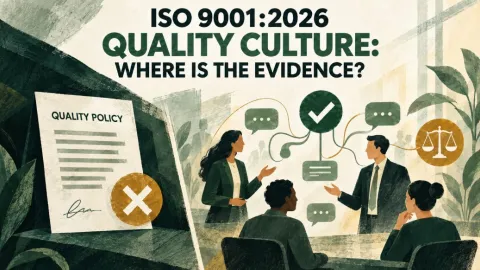
In ISO 9001:2026, Quality Culture Will Need to Be Proven, Not Just Stated
One of the major changes in the upcoming ISO 9001:2026 concerns quality culture and ethical behaviour, explains Rob Pragnell of Anacruses Associates Ltd.
What DAkkS Is Changing After Industry Criticism Over Accreditation Speed, Cost and Service
The German Accreditation Body (DAkkS) has come under pressure from industry groups including the Federation of German Industries (BDI), TÜV Association and VUP over slow accreditation, high costs and service problems, while a wider reform process is now under way.
How Recent Core Tool Changes Are Shaping the IATF 16949 Revision
The International Automotive Task Force (IATF) is revising IATF 16949, the automotive quality management system standard for organizations manufacturing automotive production and service parts.
Exempting Accreditation Bodies From Supplier Controls Creates a Double Standard
A recent ISO Committee on Conformity Assessment (ISO/CASCO) clarification on ISO/IEC 17025 has triggered a forceful critique from Christopher Paris, founder and vice president of operations at Oxebridge.
Tips for Surviving an ISO Audit
Auditors can sometimes stray into consultancy, turning personal preferences about how a control should be implemented into something that sounds like a requirement.
Quality’s ‘New Baseline’ Brings the Cost of Bad Decisions Into the Executive Room
Quality leaders should trace operational failures back to the business decisions that created them and bring their full financial consequences into executive discussions before the damage spreads across the organization.
Has Traditional ISO 9001 Implementation Reached Its Limit?
Organizations today operate amid artificial intelligence, automation, real-time data, digital transformation, complex supply chains, and rapidly changing business risks.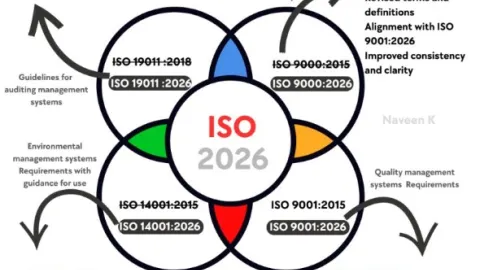
Preparing Your Management System for the ISO 2026 Updates
Several major ISO management system standards are changing in 2026, and organizations should start assessing the impact now rather than wait for certification transition timelines.
Bold Prediction: EN 18286 Could Follow ISO 13485’s Path to Global Use
EN 18286 has the potential to become an AI counterpart to ISO 13485, predicts Seetal Erramilli, a medtech professional at the British Standards Institution (BSI).
What CEOs Need Instead of Another Quality Report
CEOs do not need another report listing nonconformities, defects, or complaints without showing why they matter.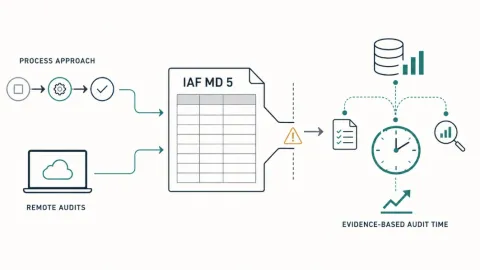
Time to Rethink How QMS Audit Duration Is Determined
QMS audit times are still determined by a method that has failed to keep pace with the process approach and how audits are conducted today.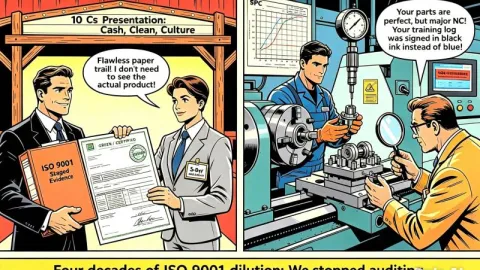
Looking Back at the Mistakes That Led ISO 900x to ‘Audit Theater’
The ISO 900x series is widely viewed as a way to improve how organizations operate, yet it can instead encourage what critics call “audit theater”, where passing an audit becomes more important than actual capability.
ISO 9001 As a Solid Base for Meeting AQAP Requirements
Organizations that need to meet NATO’s Allied Quality Assurance Publications (AQAP) requirements for defense contracts already have a solid head start if they are certified to ISO 9001.
How to Adapt as More Quality Roles Merge into HSEQ
Quality professionals looking for their next role may need to adjust their job search as more employers combine quality, safety and environmental responsibilities into a single position.
The ‘ISO Paradox’: Certification Looks Like a Cost Until Its Practical Value Becomes Clear
Companies can pursue ISO certification as an unwanted expense, only to realize later that the management system they built has made the business work better.
If It's Only 'Between the Lines,' It's Not a Standard Requirement
Requirements should come from the standard itself, not from what is 'between the lines', argues Yasushi Tsukano, IATF Lead Auditor / IRCA Principal Auditor.
How Well Do Internal Auditors Need to Know the Standard?
Internal auditors do not always need to know every requirement of a management system standard.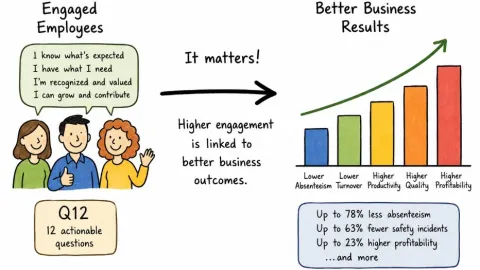
Employee Engagement Benefits Backed by More Than Common Sense
The idea that engaged employees produce better quality and business results may seem like common sense, but Michael Mills asks whether it stands up to evidence.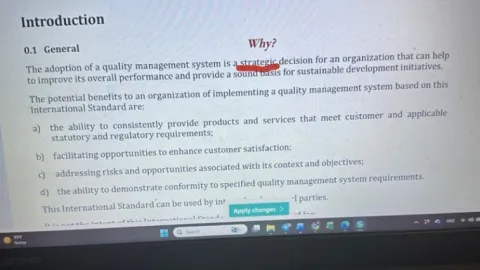
Asking Why After Years of Using ISO 9001
After years of working with ISO 9001, Ruslan Shman realized that many of its principles had become so familiar he no longer stopped to ask why they exist.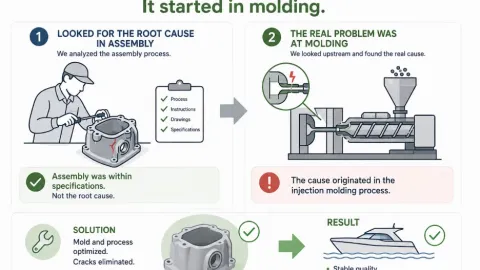
Don't Look for Root Causes Where Problems Appear
Problems are often investigated where they become visible, even though the real cause may lie much earlier in the process.
An Insider's Perspective on the Digital Future of Management System Auditing
As management system auditing enters the digital era, Sheronda Jeffries explains how ISO 19011:2026 helps auditors adapt to new technologies while reinforcing the importance of human judgment.