
Management Systems World
All on Quality and other Standards in one place since 2010. Now Worldwide.
Blogs
Please note that you have to be a registered member with paid membership in order to see full articles.
Register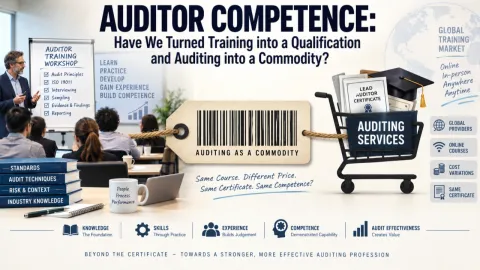
What Separates Auditor Training, Qualification, Authorization and Demonstrated Competence?
Are organizations developing competent auditors or placing too much emphasis on training courses, qualifications and certificates?
Reported Cost of Poor Quality Is Only the Tip of the Iceberg
Poor quality may be costing organizations far more than their reports show, and that gap can lead to misguided business decisions.
The Trap of Accumulating Too Much Responsibility in Quality
Quality departments risk taking on more and more responsibility for issues that other parts of an organization should own.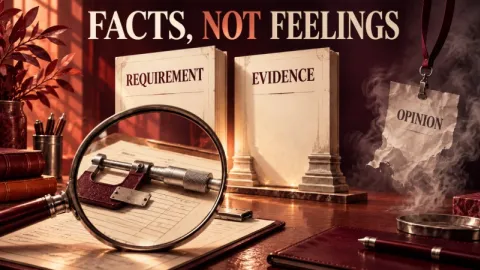
Auditors, Your Opinions Are Not Nonconformities
An auditor cannot report a nonconformity just because something seems wrong.
Buying ISO 27701 Twice for One Usable Copy
Buying a standard to implement a management system across an organization sounds like the easy part.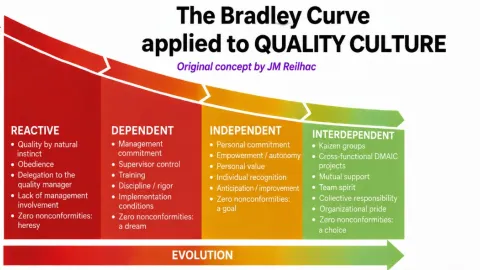
The Problem With Making Quality Culture an Explicit ISO 9001:2026 Requirement
Making quality culture an explicit requirement in ISO 9001:2026 may create more questions than it resolves.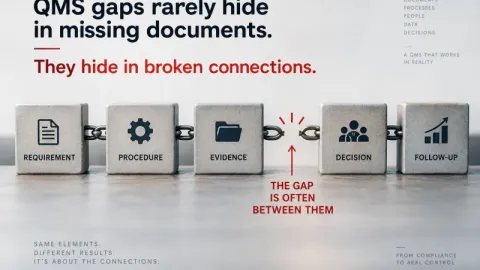
QMS Gaps Often Hide in Broken Connections, Not Missing Documents
Quality management system (QMS) gaps can remain hidden even when procedures, records and other expected elements are all in place.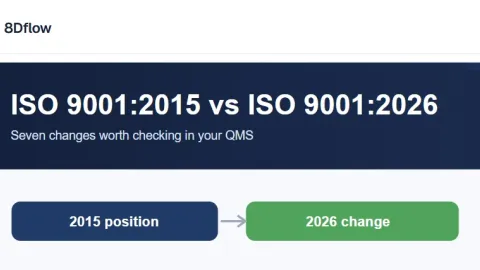
ISO 9001:2026 Changes at a Glance
With ISO 9001 revised for the first time since the 2015 edition, one of the immediate questions for quality teams is what has actually changed.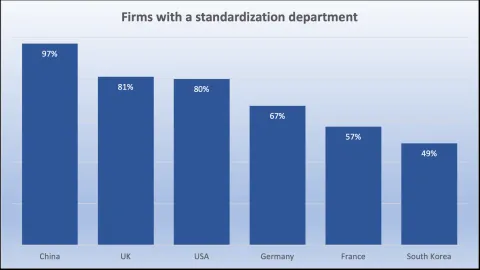
China Is Gaining Ground in ICT Standardization, but What Is Driving It?
A Humboldt University of Berlin study of 1,128 information and communication technology (ICT) companies takes a closer look at what may be giving China an increasingly strong position in international standardization.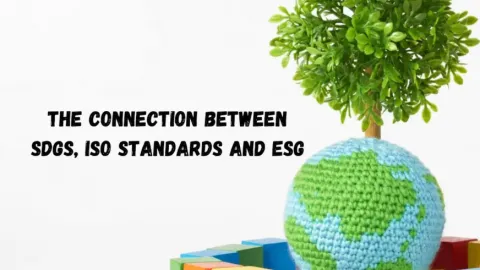
How SDGs, ISO Standards and ESG Work Together for Companies
The Sustainable Development Goals (SDGs), ISO management system standards and environmental, social and governance (ESG) practices can work together to connect broad sustainability ambitions with the way companies set priorities, manage operations and measure results.
Seven Criteria for Choosing an eQMS That Fits Your Operations
The growing number of electronic quality management systems (eQMS) on the market can make choosing the right platform more difficult, especially when many come with similar features and promises.
When Quality Fails, Look at the System Before Blaming the Culture
When quality problems keep returning, management often concludes that the organization has a culture problem.
Rise of Customer Service Apps: How Product Degradation Is Sold as Empowerment
As customer service apps become more common, Pragmatic Quality Leader Michael Mills asks whether replacing human support with self-service technology really represents an advance in product Quality.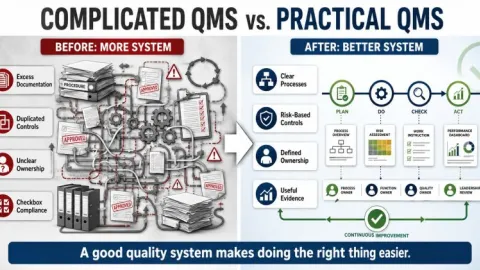
More QMS Can Mean Less Quality
Adding more procedures, approvals and records can make a quality management system (QMS) more complicated without making it more effective.
Seven-Figure Penalty for Deepak Jain, but Questions Over AiNET’s Other Certificates Remain
Deepak Jain faced a seven-figure penalty after federal investigators found that he fabricated letters claiming AiNET’s data center had been certified as Tier IV under TIA-942, the highest tier level for reliability, availability and security.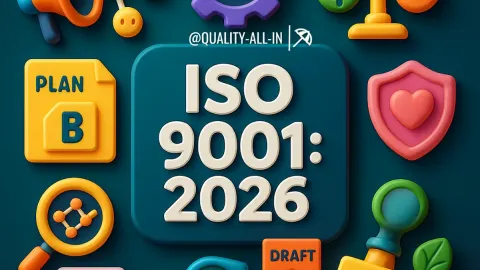
Separating the Facts From the Noise Around the Revised ISO 9001
Ekaterina Potemkina of Quality All In has examined what is genuinely changing in the new edition of ISO 9001, what is being clarified and what is simply noise around the revision.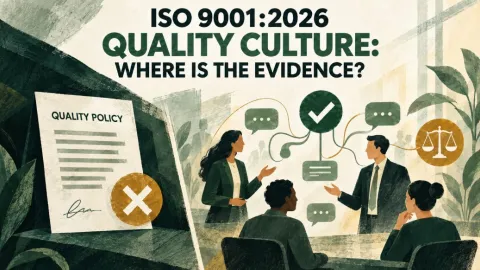
In ISO 9001:2026, Quality Culture Will Need to Be Proven, Not Just Stated
One of the major changes in the upcoming ISO 9001:2026 concerns quality culture and ethical behaviour, explains Rob Pragnell of Anacruses Associates Ltd.
ISO 42001 Annex A Can Be a Useful Reference or a Dangerous Checklist
Annex A of ISO/IEC 42001 provides a reference set of controls for managing AI-related risks, but information security expert Chris Hall argues it can also become a dangerous checklist.
What DAkkS Is Changing After Industry Criticism Over Accreditation Speed, Cost and Service
The German Accreditation Body (DAkkS) has come under pressure from industry groups including the Federation of German Industries (BDI), TÜV Association and VUP over slow accreditation, high costs and service problems, while a wider reform process is now under way.
How Recent Core Tool Changes Are Shaping the IATF 16949 Revision
The International Automotive Task Force (IATF) is revising IATF 16949, the automotive quality management system standard for organizations manufacturing automotive production and service parts.
Exempting Accreditation Bodies From Supplier Controls Creates a Double Standard
A recent ISO Committee on Conformity Assessment (ISO/CASCO) clarification on ISO/IEC 17025 has triggered a forceful critique from Christopher Paris, founder and vice president of operations at Oxebridge.
Tips for Surviving an ISO Audit
Auditors can sometimes stray into consultancy, turning personal preferences about how a control should be implemented into something that sounds like a requirement.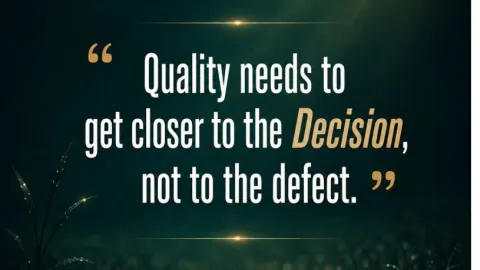
Quality’s ‘New Baseline’ Brings the Cost of Bad Decisions Into the Executive Room
Quality leaders should trace operational failures back to the business decisions that created them and bring their full financial consequences into executive discussions before the damage spreads across the organization.