Management Systems World
All on Quality and other Standards in one place since 2010. Now Worldwide.
News Balkan
Please note that you have to be a registered member with paid membership in order to see full articles.
RegisterSelected News

Serbia Hosts 35th Quality Week Spotlighting Green Transition AI and Risk Management
The 35th Quality Week in Serbia brought together institutions, experts, and industry representatives to explore topics such as green transition, artificial intelligence in healthcare, and risk management in modern organizations.
Montenegro Accreditation Body Completes EA MLA Follow-Up Evaluation
The Accreditation Body of Montenegro (ATCG) underwent a follow-up evaluation in March 2026 as part of the European co-operation for Accreditation (EA) Multilateral Agreement (MLA) process.
Academic Standards Day Connects Students With Standards And Career Opportunities In Belgrade
The Institute for Standardization of Serbia (ISS) has announced that Academic Standards Day will take place in Belgrade on April 1,
Montenegro Launches National Technical Committee for Building Information Modeling in Construction
The Institute for Standardization of Montenegro (ISME) has launched the formation of a national technical committee dedicated to building information modeling (BIM),
Croatia Calls On SMEs To Join EU Standardization Regulation Workshop
The Croatian Standards Institute (HZN) is encouraging small and medium-sized enterprises (SMEs) to take part in a European Commission (EC) workshop on the revision of the EU Standardization Regulation (EU) No 1025/2012.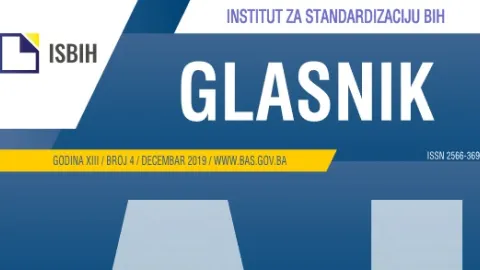
World Standards Day, Quantum Threats and Medical Device Standards Highlight ISBIH Bulletin
The Institute for Standardization of Bosnia and Herzegovina (ISBIH) has published Glasnik 4/25, the latest issue of its standards bulletin, together with a separate document containing official notices on newly adopted and withdrawn BAS standards.
ISO 21500 On Project Program And Portfolio Management Released In Serbian
Serbia has released SRPS ISO 21500, the national edition of ISO 21500:2021, making guidance on project, program and portfolio management available in Serbian.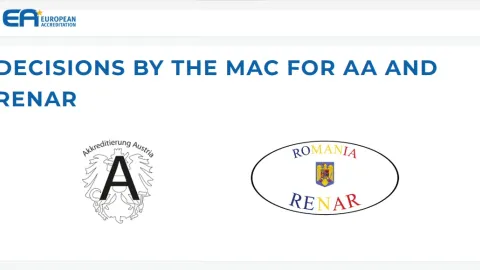
Austrian And Romanian Accreditation Bodies Retain EA MLA Status
The European co-operation for Accreditation (EA) has confirmed that Accreditation Austria (AA) and the Romanian Accreditation Association (RENAR) will remain signatories to the EA Multilateral Agreement (EA MLA) following their latest peer evaluations.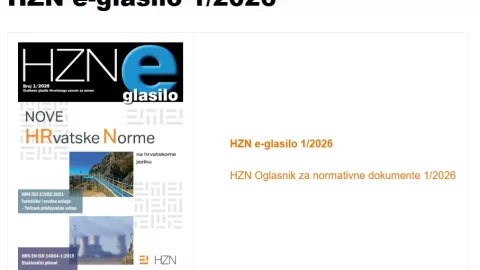
HZN First 2026 Newsletter Highlights Appointment of New Director
The Croatian Standards Institute (HZN) has released the first 2026 issue of issue of HZN e-glasilo, its official e-newsletter,
HZN Publishes Work Programme For National Standardization Activities In 2026
The Croatian Standards Institute (HZN) has published its Work Programme for 2026, setting out the national standardization projects it plans to develop, revise, or complete during the year, in line with European Union rules and international trade commitments.
27th International Quality Symposium Planned For March 2026 In Šibenik
The Croatian Quality Managers Society (HDMK) has announced the 27th International Symposium “Quality – Yesterday, Today, Tomorrow”, scheduled for March 25–27, 2026, in Šibenik, Croatia.
Applications Open for Quality Oscar 2026 Business Excellence Awards
Applications are now open for the Quality Oscar (Oskar kvaliteta) 2026, Serbia’s national award for business excellence, recognizing profit and nonprofit organizations based on demonstrated organizational performance and results.Global News

Codex Defines When 'May Contain' Allergen Labels Are Justified
New international guidance adopted by the Codex Alimentarius Commission aims to make 'may contain' allergen labels more consistent and trustworthy.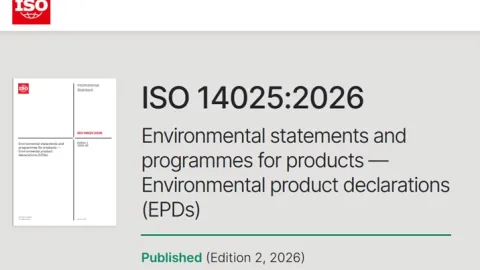
ISO 14025:2026 Brings First Major Update to Environmental Product Declarations in 20 Years
The International Organization for Standardization (ISO) has published ISO 14025:2026, the first major revision of the international standard for Environmental Product Declarations (EPDs) since 2006.
ISO/IEC 27000 Updated With Clearer Guidance for Information Security Standards
ISO and IEC have updated ISO/IEC 27000, the guide to the ISO/IEC 27000 family of information security standards.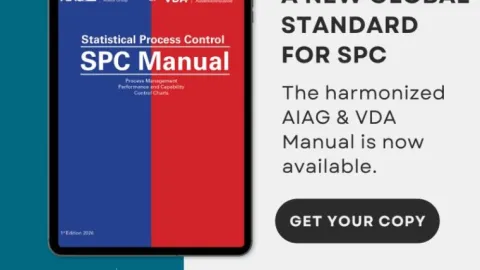
AIAG and VDA Publish Global Guide for Better Manufacturing Process Control
A new joint manual from the Automotive Industry Action Group (AIAG) and the German Association of the Automotive Industry (VDA) establishes a single international approach to monitoring and improving manufacturing processes.
ISO 14001:2026 Transition Deadlines Confirmed
The International Organization for Standardization (ISO) has confirmed the transition timeline for ISO 14001:2026,
BIPM Releases First Stable Digital Reference for SI Units
The International Bureau of Weights and Measures (BIPM) has released the first stable version of the SI Reference Point, a digital reference for the International System of Units (SI).
FSSC 22000 Version 7 Incorporates Save Food Packaging Principles
The Foundation FSSC has incorporated aspects of the Save Food Packaging (SFP) Design Principles into FSSC 22000 Version 7 through a partnership with the World Packaging Organisation (WPO) and the Australasian Institute of Packaging (AIP).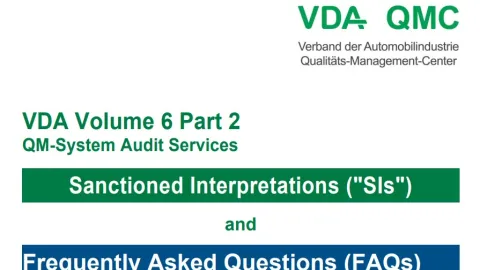
VDA Publishes Updated Interpretations for VDA 6.2 Service Audit Standard
The German Association of the Automotive Industry Quality Management Center (VDA QMC) has published Version 2 of the Sanctioned Interpretations (SIs) and Frequently Asked Questions (FAQs) for VDA 6.2, updating how service organizations in the automotive industry should apply the quality management audit standard.
ISO and IEC Update AI Rules for Standards Development
ISO and IEC have published updated guidance on the use of artificial intelligence in technical committees, defining how AI may be used during the development of international standards.
BRCGS Updates Packaging Materials Issue 7 Requirements for GFSI Benchmarking 2024
BRCGS has updated the requirements for its Packaging Materials Issue 7 certification scheme to meet the GFSI Benchmarking Requirements 2024.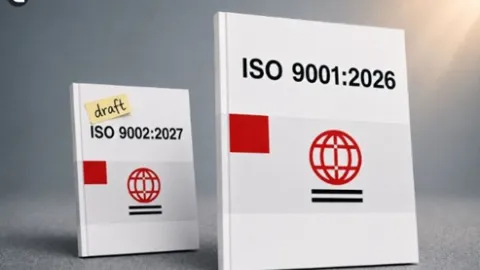
SIS Opens Draft ISO 9002 for Public Comment
The Swedish Institute for Standards (SIS) has opened public access to the draft version of ISO 9002, allowing organizations and quality professionals to read and comment on the official guidance for applying ISO 9001 before the document is finalized.