
Management Systems World
All on Quality and other Standards in one place since 2010. Now Worldwide.
News European Union
Please note that you have to be a registered member with paid membership in order to see full articles.
RegisterSelected News

Pivovarna Laško Union Wins Two Sustainability Recognitions
Pivovarna Laško Union has been named ESG Champion of Slovenia 2025 and has also received a five star Green Star certificate, two national recognitions linked to its sustainability performance.
HZN First 2026 Newsletter Highlights Appointment of New Director
The Croatian Standards Institute (HZN) has released the first 2026 issue of issue of HZN e-glasilo, its official e-newsletter,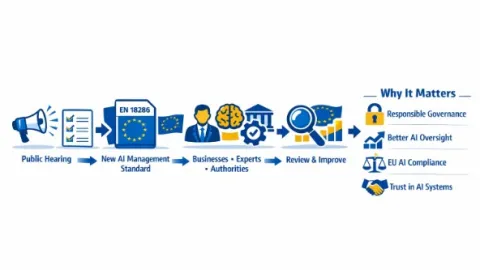
High Interest Across Europe As EN 18286 AI Management Standard Draws Over 1,000 Comments
A forthcoming European management system standard for artificial intelligence, EN 18286, aimed at quality management systems for high-risk AI systems, has attracted more than 1,000 comments during its public consultation.
UNI Establishes Technical Commission on Governance and Compliance
The Italian standards body has created UNI/CT 062, to strengthen the link between governance and compliance and align national work with international standards.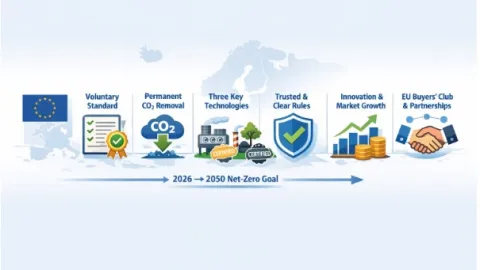
EU Creates First Voluntary Framework For Certifying Permanent Carbon Removals
The European Union (EU) has adopted its first voluntary framework for permanent carbon removals, setting EU-wide rules for how carbon dioxide removals are measured, verified, and certified.
France Launches Work On National Anti Food Waste Label For Agrifood Companies
France has launched work on a new reference framework for the National Anti Food Waste Label aimed at agrifood companies, extending a state-backed scheme created under the AGEC law to reduce food waste across the supply chain.
Revised AMC 40 Removes Earlier Restrictions on Accreditation Scopes
The Danish Accreditation Fund, DANAK, has issued a new edition of AMC 40 that removes earlier restrictions that limited which activities certification bodies could cover under their accreditation for quality, environmental, OH&S, and energy management systems.
Edu4Standards.eu Project Establishes European Student Association for Standardization
CEN and CENELEC are establishing the first European student association dedicated to standardization and inviting students to help co-create it.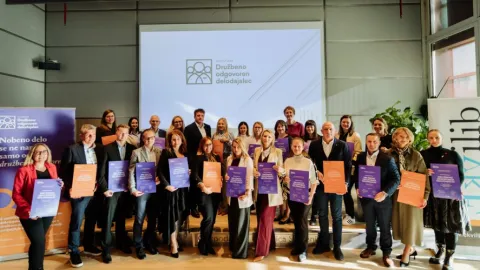
Slovenian Employers Awarded Socially Responsible Employer Certificates
Twenty-eight Slovenian companies and organizations received the Socially Responsible Employer certificate at a formal ceremony held on December 1, 2025, at the Chamber of Commerce and Industry of Slovenia (GZS).
Denmark Aligns Accreditation Rules for Referral Laboratories and Specialists With ISO 15189
Denmark has revised its national accreditation rules for the use of referral laboratories and external specialists to align with the Danish version of ISO 15189:2022 for medical laboratories.
HZN Publishes Work Programme For National Standardization Activities In 2026
The Croatian Standards Institute (HZN) has published its Work Programme for 2026, setting out the national standardization projects it plans to develop, revise, or complete during the year, in line with European Union rules and international trade commitments.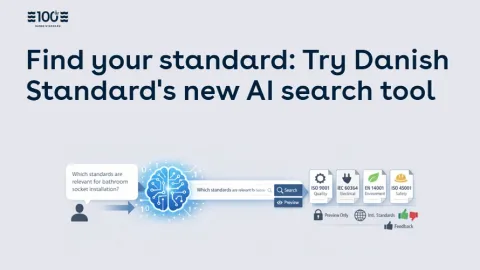
Danish Standards Introduces AI Search Tool for Standards
Danish Standards (DS) has developed a new AI-based search tool to make standards search easier and more relevant for organizations.Global News
IATF Releases New Updates to Rules 6th Edition and IATF 16949
The International Automotive Task Force (IATF) has approved Stakeholder Communiqué SC-2025-003, announcing new Sanctioned Interpretations and Frequently Asked Questions for both the Rules 6th Edition and the automotive quality standard IATF 16949.
Codex Commission’s 48th Session Confirms Updates Across Core Food Safety Standards
The Codex Alimentarius Commission adopted major changes to international food-safety rules during its 48th session in Rome from November 10 to 14.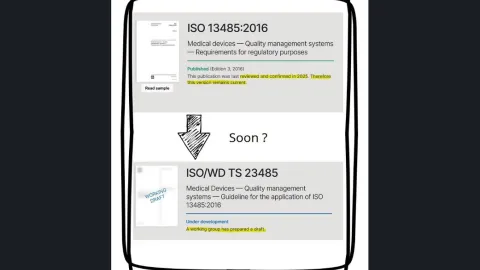
ISO 13485 Application Guide, TS 23485, Under Way After Standard Confirmed as Current
A new guide on how to apply ISO 13485 is moving through development shortly after the standard was reconfirmed in its 2016 version (no revision will be done), despite remaining unaligned with the Annex SL structure.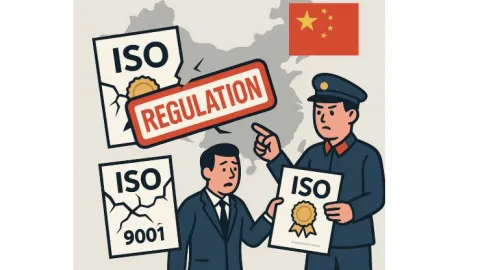
A Different Approach: China Strengthens Oversight of Certification Bodies from 2026
China has issued new regulations that directly target accredited certification bodies that ignore international requirements, and the new rules will take effect on January 1, 2026.
ISO and IEC Develop Global Standard to Embed Ecodesign in Medical Devices
The International Organization for Standardization (ISO) and the International Electrotechnical Commission (IEC) are developing a new global standard to formally integrate ecodesign into the development of medical devices.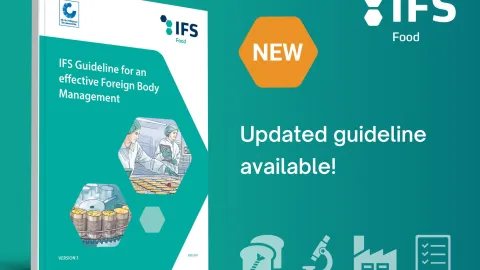
IFS Releases Updated Guideline for Effective Foreign Body Management
International Featured Standards (IFS) has issued an updated Guideline for an Effective Foreign Body Management,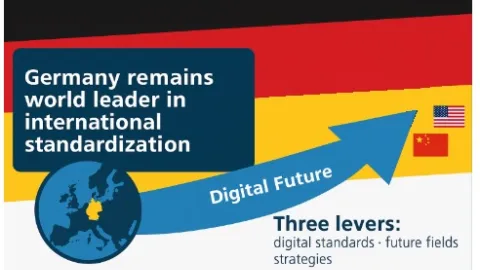
Germany Heads Most ISO Secretariats But China Rapidly Gains Ground
Germany remains the world’s top country in international standardization, holding 17.1% of all ISO secretariats, according to the 2025 International Standardization Barometer published by the German Institute for Standardization (DIN).
Europe Now Conditionally Accepts FDA Inspections Conducted Abroad
The European Medicines Agency (EMA) and the U.S. Food and Drug Administration (FDA) have entered a new stage of cooperation under their Mutual Recognition Agreement (MRA) for Good Manufacturing Practice (GMP) inspections.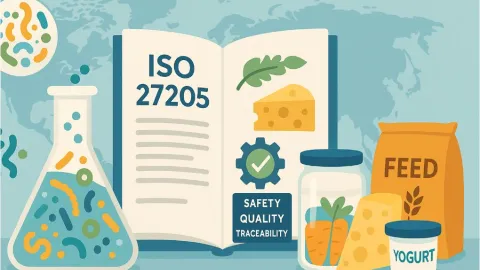
New International Standard in Development for Microbial Cultures and Probiotics
Work has begun within ISO to create a global standard that defines how microorganisms used in food and feed, such as bacteria, yeasts, and fungi, should be characterized and quality assured.
BS 30480 Launched as the World’s First Standard on Suicide Awareness in the Workplace
The world’s first standard dedicated to suicide awareness and prevention in the workplace, BS 30480, has been released by the British Standards Institution (BSI).
IATF Updates GM Quick Reference Guide on How Auditors Review Scorecard Data.
The International Automotive Task Force (IATF) has issued an updated GM Scorecard Quick Reference Guide and Screen Images package to align with the latest Rules for Achieving and Maintaining IATF Recognition (6th edition).