Management Systems World
All on Quality and other Standards in one place since 2010. Now Worldwide.
News Europe
Please note that you have to be a registered member with paid membership in order to see full articles.
RegisterSelected News

Latest DINews Edition Focuses on Digital Sovereignty and Product Passports
The German Institute for Standardization (DIN) has released the latest edition of its DINews newsletter, highlighting digital sovereignty and digital product passports as two of the key topics shaping current standardization work.
Swedac Announces Transition to Third Edition of ISO/IEC 17020
The Swedish Board for Accreditation and Conformity Assessment (Swedac) has announced the transition to the third edition of ISO/IEC 17020, published in Sweden as SS-EN ISO/IEC 17020:2026.
ČAS Updates Procedures for Approving Electronic Records Management Software
The Czech Standardization Agency (ČAS) has updated the procedures and testing documents used to assess electronic records management systems (eSSL).
SNAS Broadens Role of Emissions Technical Committee
The Slovak National Accreditation Service (SNAS) has issued a new edition of ST-06, its statute governing technical committees, effective June 2026.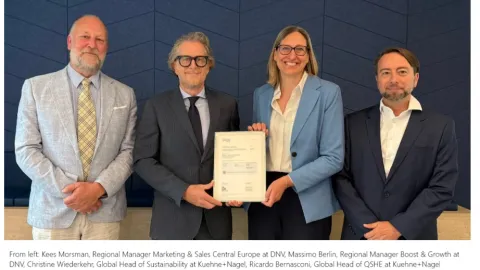
Kuehne+Nagel Earns ESG Recognition Backed by Four Certifications
Global logistics and supply chain company Kuehne+Nagel has received Environmental, Social and Governance (ESG) Recognition from DNV,
UNE and CRED Publish New Specifications for Food and Mobility Data Spaces
The Spanish Association for Standardization (UNE) and the Data Spaces Reference Center (CRED) have published two new specifications designed to support data interoperability in the food and mobility sectors.
ISBIH Glasnik 1/2026: From Autonomous Vehicles to Bosnian Standardization News
The Institute for Standardization of Bosnia and Herzegovina (ISBIH) has published Glasnik 1/2026 and a separate Official Notices bulletin covering standards updates and other standardization announcements.
Croatia Adopts New Edition of ISO/IEC 17020
The Croatian Accreditation Agency (HAA) has informed accredited inspection bodies that the new edition of HRN EN ISO/IEC 17020:2026 has been published in Croatia.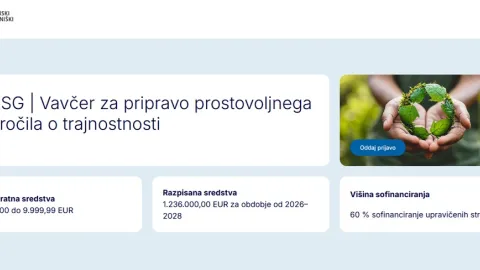
Slovenia Launches ESG Voucher for Voluntary Sustainability Reporting
The Slovenian Enterprise Fund (SPS) has launched a new Environmental, Social and Governance (ESG) Voucher to help micro, small and medium-sized enterprises prepare voluntary sustainability reports.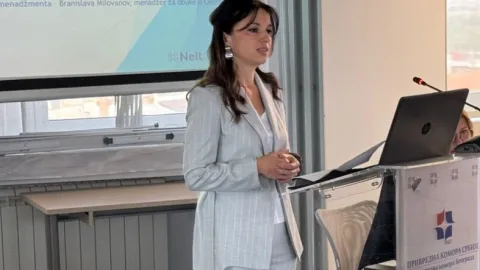
Nelt Group Hosts Quality and Supply Chain Conference in Belgrade
The Quality Sector of Nelt Group, in cooperation with the Chamber of Commerce and Industry of Serbia (PKS), organized a two-day Quality and Supply Chain Conference in Belgrade on May 27-28.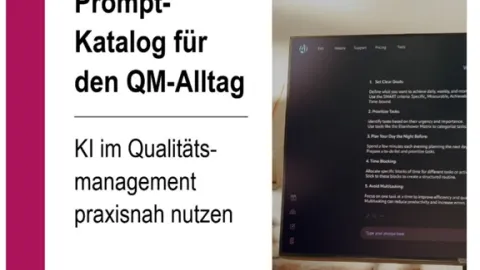
DGQ Releases AI Prompt Library for Quality Managers
The German Society for Quality (DGQ) has released an AI prompt library designed to help quality professionals use artificial intelligence in their daily work.
Norway Reestablishes Medical Device Standards Committee, Invites New Members
Standard Norway (SN) has reestablished its national committee for medical device management systems and is now inviting more professional communities to participate in work on international and European standards for quality and risk management in medical devices.Global News

One Vote Tips Toward New Edition Of ISO/IEC 17065 Over Amendment
One vote has tipped the decision toward publishing a new edition of ISO/IEC 17065 instead of issuing a separate amendment, following a closely split ballot within the International Organization for Standardization (ISO).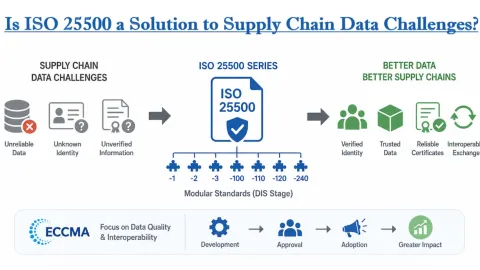
Is ISO 25500 a Solution to Supply Chain Data Challenges?
ISO 25500, a draft series of standards from the International Organization for Standardization (ISO), is presented by the Electronic Commerce Code Management Association (ECCMA) as a possible way to address long-standing problems with unreliable data across global supply chains.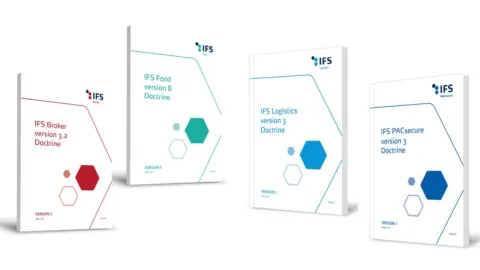
IFS Updates Food, Logistics, Broker And Pacsecure Doctrines To Clarify Certification Rules
The International Featured Standards (IFS) has published updated doctrine documents for its current standards covering food production, logistics, brokerage, and packaging materials, clarifying how certification requirements should be applied without revising the standards themselves.
PAS 25535 on Sustainability in Asset Management Reaches Draft Stage
PAS 25535, a specification focused on integrating sustainability into asset management systems, has reached the committee draft stage within the International Organization for Standardization (ISO), marking the close of its initial comment period.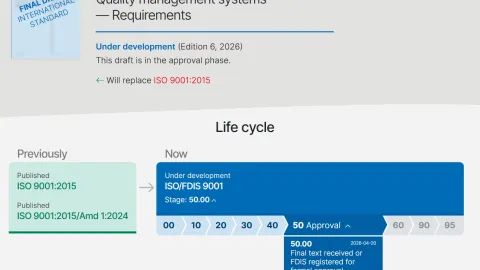
ISO 9001 Revision Moves to FDIS Stage as Early Analysis Questions Scope of Changes
The International Organization for Standardization (ISO) has confirmed that the revision of ISO 9001 has entered the Final Draft International Standard (FDIS) stage, marking the last step before publication.
DIN to Lead ISO IEC Joint Technical Committee 5 on Digital Product Passport Standards
Following an initiative by the German Institute for Standardization (DIN) and the German Commission for Electrical, Electronic & Information Technologies (DKE),
ANSI/TIA-942 Addendum Targets AI Data Center Cooling and High-Density Needs
The Telecommunications Industry Association (TIA) is developing a new addendum to the ANSI/TIA-942 data center standard to address the growing demands of artificial intelligence (AI) infrastructure.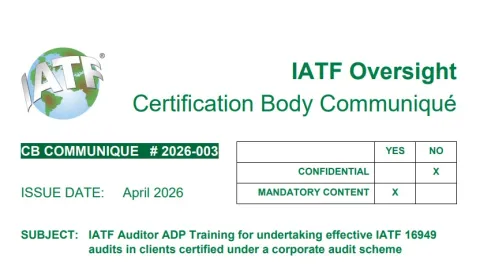
IATF Introduces Mandatory Auditor Training for Corporate Scheme Audits
The International Automotive Task Force (IATF) has approved a new mandatory training module to strengthen how auditors assess organizations certified under corporate audit schemes for IATF 16949.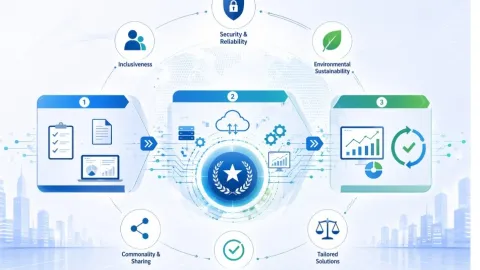
ISO/TS 19384 Sets First Standard for Digital Service Excellence
The International Organization for Standardization (ISO) has released ISO/TS 19384:2026,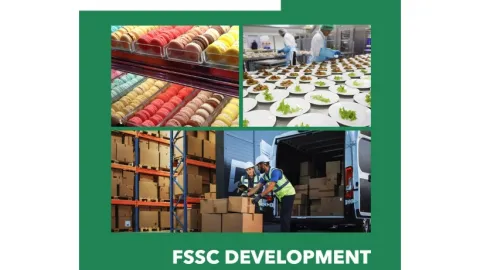
FSSC Issues Five Sector-Specific Guides for Development Program Implementation
The Foundation for Food Safety Certification (FSSC) has published five sector-specific guidance documents to support organizations using the FSSC Development Program,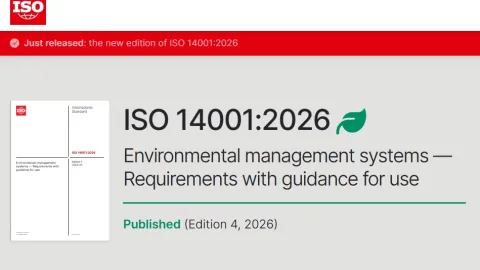
ISO 14001 Fourth Edition Officially Released
The International Organization for Standardization (ISO) has published ISO 14001:2026, marking the release of the fourth edition of the world’s most widely used environmental management systems standard.