Management Systems World
All on Quality and other Standards in one place since 2010. Now Worldwide.
News Europe
Please note that you have to be a registered member with paid membership in order to see full articles.
RegisterSelected News
Polish Accreditation Centre Opens CBAM Verification Program
The Polish Accreditation Centre (PCA) has launched a new accreditation process for bodies that verify emissions data under the European Union’s Carbon Border Adjustment Mechanism (CBAM).
‘Day of ÚNMZ and ČAS’ Conference Highlights Data and Digitalization in Cities and Construction
The Czech Office for Standards, Metrology and Testing (ÚNMZ) and the Czech Standardization Agency (ČAS) held the “Day of ÚNMZ and ČAS” conference in Prague on May 14,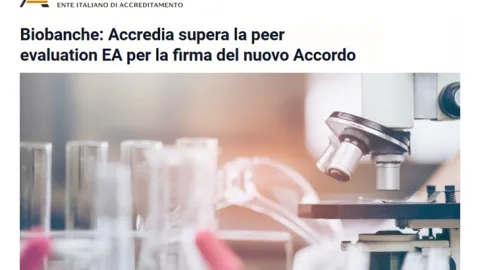
Accredia Passes EA Peer Evaluation for Biobanking Accreditation
The Italian accreditation body Accredia has passed a peer evaluation by the European co-operation for Accreditation (EA), advancing the process for international recognition of Italian biobank accreditations under ISO 20387.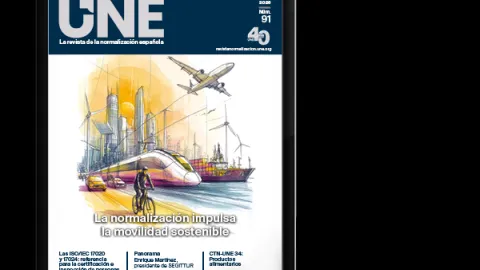
Sustainable Mobility Anchors UNE Magazine’s May 2026 Edition
The Spanish Association for Standardization (UNE) has released the May 2026 edition of UNE Magazine,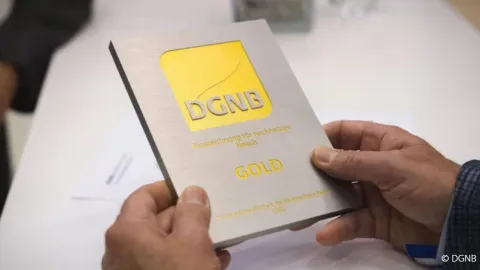
Kristalna palača Becomes First Building in Slovenia to Earn DGNB Gold Certificate
Kristalna palača in BTC City Ljubljana became the first building in Slovenia to receive a DGNB Gold certificate for sustainable buildings in use from the German Sustainable Building Council (DGNB).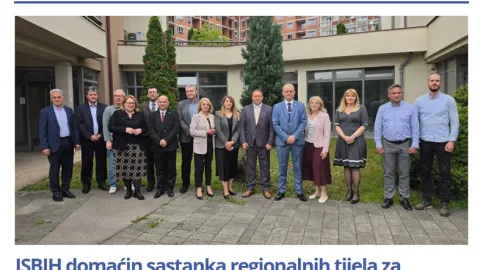
Regional Standards Bodies Discuss SMART Standards and Eurocodes in Sarajevo
The Institute for Standardization of Bosnia and Herzegovina (ISBIH) hosted a regional meeting of national standardization bodies on May 11 and 12 in Sarajevo,
Reptil Markets and Rade Koncar Showcase Energy Savings Through ISO 50001 Project
Reptil Markets and Rade Koncar TEP have reported lower energy consumption and reduced CO₂ emissions after implementing ISO 50001 through an International Organization for Standardization (ISO) sustainability project in North Macedonia.
EU AI Act Implementation: Risk Management and Cybersecurity Draft Standards Enter Consultation
Two draft European standards, prEN 18228 Risk Management and prEN 18282 Cybersecurity, have entered public consultation as part of ongoing standards work supporting implementation of the European Union’s AI Act.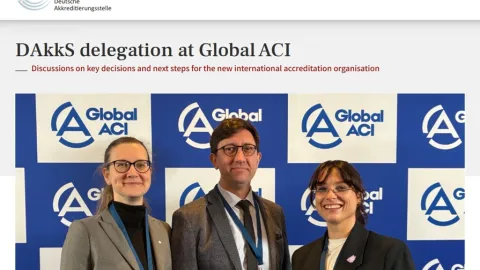
DAkkS Membership in Global ACI Hinges on Statute Changes and EA Conditions
The German Accreditation Body (DAkkS) attended the April 2026 mid-term meeting of Global Accreditation Cooperation Incorporated (Global ACI) in Prague as an observer while negotiations continue over a possible future membership in the new international accreditation organization.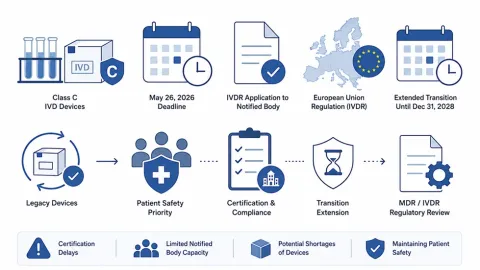
IVDR May 26 Deadline Closes In for Class C Diagnostic Device Manufacturers
Manufacturers of medium-to-high risk Class C in-vitro diagnostic medical devices (IVDs) face a May 26, 2026 European Union deadline to formally apply under the In Vitro Diagnostic Medical Devices Regulation (IVDR).
Italy Opens Consultation on Food Traceability Certification Rules
The Italian National Unification Body (UNI) has opened a public consultation on a new reference practice that would define how accredited certification bodies assess traceability systems in agri-food supply chains under UNI EN ISO 22005:2008.
Large Danish Companies Face ISO 50001 Certification Deadline
The Danish Standards (DS) is warning companies to prepare for new legal energy management requirements that take effect in Denmark by August 1.Global News
FSSC 22000 Version 7 Release Moved To May 2026
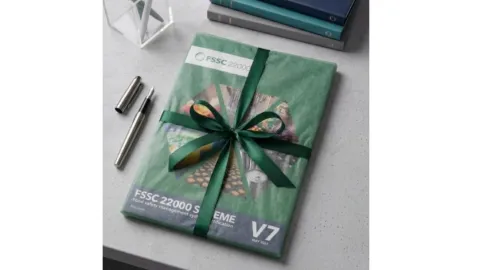
The Foundation for Food Safety Certification (FSSC) has delayed the launch of FSSC 22000 Version 7, with publication now expected in early May 2026.
FSC Launches Normative Newsfeed For Clearer Requirements Updates
The Forest Stewardship Council (FSC) has introduced a new Normative Newsfeed to make updates to its requirements easier to track and understand.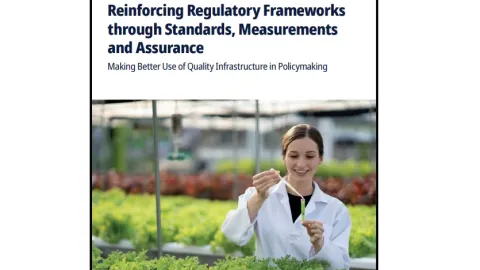
OECD Report Links Standards To More Effective Regulation
The Organisation for Economic Co-operation and Development (OECD) has released a report examining how governments can improve regulation by making better use of standards, measurement, and assurance systems, known as quality infrastructure (QI).
ISO 9000 Revision Reaches Final Draft Stage, Publication Expected In May 2026
The revision of ISO 9000, the international standard that defines the basic concepts and vocabulary of quality management, has reached the Final Draft International Standard (FDIS) stage, the final step before publication.
ISO and IEC Form JTC 5 Committee on Digital Product Passport Standards
A new international standards committee has been created to develop standards for digital product passports (DPPs), systems designed to share key product information across the entire lifecycle and improve transparency and circular economy practices.
Third Edition of ISO 22301 Business Continuity Standard Enters Development
The next revision of ISO 22301, the international standard for business continuity management systems (BCMS), has moved into development.
Global Accreditation Cooperation Incorporated Launches Website
Global Accreditation Cooperation Incorporated has launched its new official website, providing a central online platform for the organization that became the single global body for international accreditation cooperation.
Cradle to Cradle Certified Version 5 Released With Stronger Focus On Measurable Product Requirements
The Cradle to Cradle Products Innovation Institute (C2CPII) has released Version 5 of the Cradle to Cradle Certified standard,
IEC 63372 Establishes Method For Measuring Carbon Footprint And Avoided Emissions In Electronics
The International Electrotechnical Commission (IEC) has published IEC 63372,
IFAN Launches Podcast Highlighting Perspectives Of Standards Users
The International Federation of Standards Users (IFAN), a global organization representing the interests of standards users, has launched a podcast aimed at sharing the experiences of organizations and professionals who use standards in their work.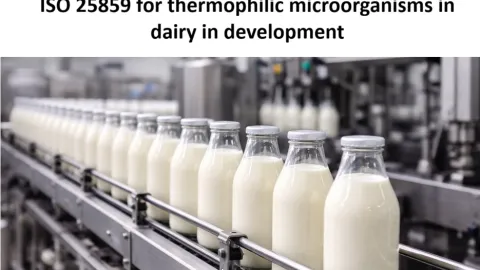
ISO 25859 for Thermophilic Microorganisms in Dairy Under Development
The International Organization for Standardization (ISO) is developing ISO 25859, a new international standard that will define how microorganisms that grow at high temperatures are counted in milk and dairy products.