
Management Systems World
All on Quality and other Standards in one place since 2010. Now Worldwide.
News Europe
Please note that you have to be a registered member with paid membership in order to see full articles.
RegisterSelected News
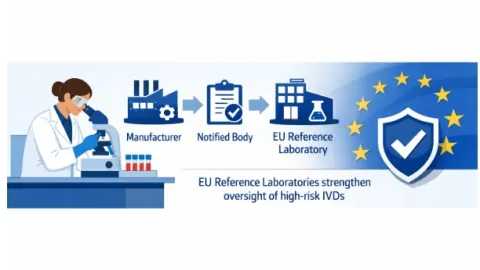
EU Expands Laboratory Oversight for Highest Risk In Vitro Diagnostic Devices
The European Union (EU) has expanded oversight of Class D in vitro diagnostic medical devices under Regulation (EU) 2017/746, known as the In Vitro Diagnostic Regulation (IVDR).
Danish Standards Launches Guide To Prepare Companies For Digital Product Passport
Danish Standards (DS) has launched a new guide to help companies prepare for upcoming EU requirements related to the Digital Product Passport (DPP).
Quality Austria and ÖVQ Announce Finalists for DACH Quality Awards 2026
Quality Austria and the Austrian Association for Quality Assurance (ÖVQ) have announced the finalists for the 2026 Quality Awards, recognizing leading professionals, young talents, and teams across the DACH region (Germany, Austria, and Switzerland).
COSA Method Certification Debuts with CSQA as First Authorized Body
A new COSA Method certification has been introduced to measure and strengthen food safety culture in agri-food companies.
France Qualité Launches Project Group to Develop White Paper on Integrated CSR
France Qualité, a French association that promotes quality management and organizational performance,
UNI Opens 20th Edition of Paolo Scolari Award with February 26 Deadline
The Italian National Standardization Body (UNI) has launched the 20th edition of the Paolo Scolari Award (Premio Paolo Scolari),
ENAC Grants First Accreditations for EU ETS 2 Emissions Trading Regime
The Spanish National Accreditation Entity (ENAC) has granted the first accreditations for verifiers under the upcoming EU ETS 2 emissions trading regime, which will apply to buildings, road transport, and other sectors.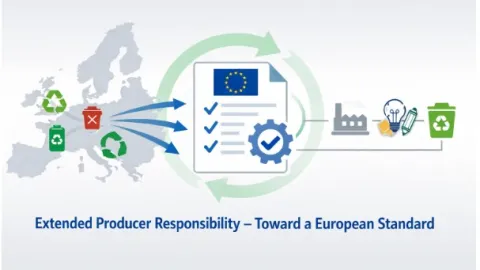
Europe Develops Standard on Extended Producer Responsibility (EPR)
The European Committee for Standardization (CEN) is developing a new standard on Extended Producer Responsibility (EPR) to align how producer responsibility systems are applied across EU countries and reduce barriers for companies operating in multiple markets.
SIST Invites Entrepreneurs to Free Seminar on Using Standards for Market Entry
The Slovenian Institute for Standardization (SIST) is hosting a free seminar to help entrepreneurs place products on the market with fewer risks and fewer barriers.
Pivovarna Laško Union Wins Two Sustainability Recognitions
Pivovarna Laško Union has been named ESG Champion of Slovenia 2025 and has also received a five star Green Star certificate, two national recognitions linked to its sustainability performance.
HZN First 2026 Newsletter Highlights Appointment of New Director
The Croatian Standards Institute (HZN) has released the first 2026 issue of issue of HZN e-glasilo, its official e-newsletter,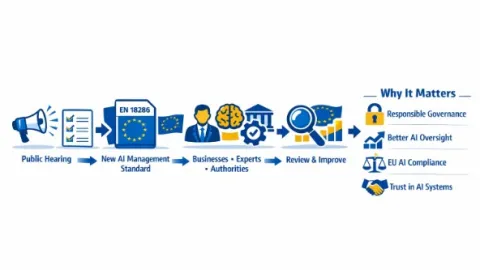
High Interest Across Europe As EN 18286 AI Management Standard Draws Over 1,000 Comments
A forthcoming European management system standard for artificial intelligence, EN 18286, aimed at quality management systems for high-risk AI systems, has attracted more than 1,000 comments during its public consultation.Global News
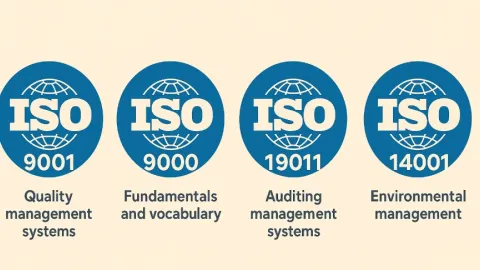
Four High-Impact ISO Standards Revision Tracker: Parallel Reviews Set for 2026 Completion
Four cornerstone standards from the International Organization for Standardization (ISO) - ISO 9001, ISO 9000, ISO 19011, and ISO 14001
ISO 42005 and How to Master AI Impact Assessments: INCITS Launches Video Series
The InterNational Committee for Information Technology Standards (INCITS) has launched a YouTube video series to help organizations apply ISO 42005.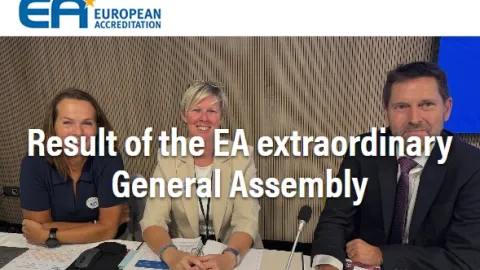
EA Approves Conditional Membership in Global Accreditation Cooperation - GLOBAC
The European co-operation for Accreditation (EA) has voted to apply for membership in the Global Accreditation Cooperation Incorporated (GLOBAC), but only if key governance changes are made.
ISO and GHG Protocol Join Forces to Create Unified Global Standards for Carbon Accounting
The International Organization for Standardization (ISO) and the Greenhouse Gas Protocol (GHG Protocol) have announced
IFS Introduces Deforestation Check to Support EUDR Compliance
IFS has launched the Deforestation Check Self-assessment to help businesses prepare for the EU Deforestation Regulation (EUDR).
ISO Establishes Committee to Develop Standards for Event Industry
A new international standards committee, ISO/TC 354, has been created to establish best practices for the global event industry.
Global Standard for Textile Publishes Version 4.0 of Requirements for Certification Bodies
The Global Standard has released Version 4.0 of its approval procedure and requirements for Certification Bodies.
IAF and ILAC Publish New Issue of IAF/ILAC A2 for Evaluating Accreditation Bodies
The International Accreditation Forum (IAF) and the International Laboratory Accreditation Cooperation (ILAC) have published a new issue of IAF/ILAC A2:
South Korea Leads Release of ISO 18960 Standard on Third Party Payment Security
South Korea has led the development of ISO 18960:2025, a new international standard that sets security guidelines for third party payment service providers.
ISO Annual Meeting 2025 Heads to Rwanda
The International Organization for Standardization (ISO) Annual Meeting 2025 will take place from October 6 to 10 in Kigali, Rwanda,
IEC Survey Shows Global Citizens Demand Stronger Action on Renewable Energy
The International Electrotechnical Commission (IEC) has released a new study showing overwhelming public support for a more sustainable future,