Management Systems World
All on Quality and other Standards in one place since 2010. Now Worldwide.
News Europe
Please note that you have to be a registered member with paid membership in order to see full articles.
RegisterSelected News
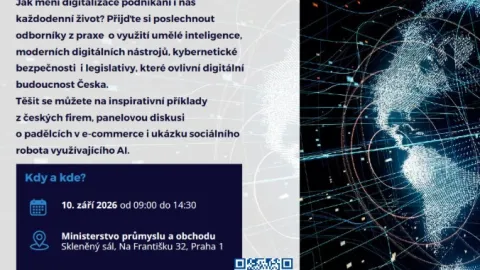
Czech Quality and Sustainability Conference Set for September 10
The 10th National Conference on Quality and Sustainability will examine how digitalization can support quality, security, competitiveness, and sustainable development.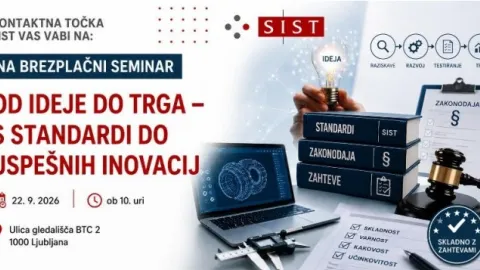
SIST Seminar Targets Standards, Compliance, and Market Access for Innovative Companies
The Slovenian Institute for Standardization (SIST) will hold a free seminar on September 22 to help innovative companies use standards when developing products and preparing them for the Slovenian and EU markets.
Slovenia Seeks Members for New Quantum Technologies Committee
The Slovenian Institute for Standardization (SIST) is inviting experts to join a new national technical committee on quantum technologies, with applications due October 1, 2026.
First ISO Secretary-General Visit to Croatia Leads New HZN e-Glasilo
The Croatian Standards Institute (HZN) has released its July 2026 e-Glasilo, led by the first official visit to Croatia by an International Organization for Standardization (ISO) Secretary-General.
FSC Revises Regulatory Module After EUDR Simplifications
The Forest Stewardship Council (FSC) has revised its Regulatory Module to align with the latest simplifications to the EU Deforestation Regulation (EUDR), reducing due diligence and risk assessment obligations for some certificate holders.
ISS Webinar Prepares Organizations for ISO 9001:2026 Changes
The Institute for Standardization of Serbia (ISS) will hold a free webinar on September 18 on changes in ISO 9001:2026.
Bulgaria Establishes Innovation Management Standards Committee
The Bulgarian Institute for Standardization (BDS) has established BDS/TC 109, a technical committee dedicated to innovation management standards, replacing an expert working group that had operated in the field since 2011.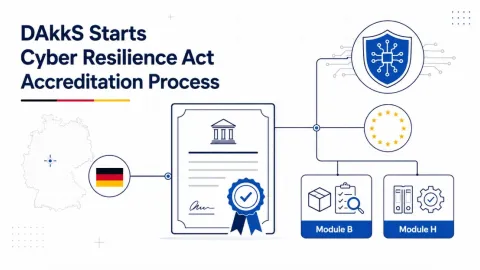
DAkkS Starts Cyber Resilience Act Accreditation Process
Germany’s national accreditation body, Deutsche Akkreditierungsstelle (DAkkS), has opened accreditation applications for conformity assessment bodies that want to work under the EU Cyber Resilience Act (CRA).
Erasmus MC Receives Netherlands’ First Biobank Accreditation
The Dutch Accreditation Council (RvA) has granted the Netherlands’ first biobank accreditation to Erasmus MC Central Biobank & Trialsupport.
Czech Republic Adds Construction-Stage Requirements to BIM Data Standard
The Czech Standardization Agency (ČAS) has added construction-stage requirements to the country’s Construction Data Standard (DSS), specifying what information digital building models used in Building Information Modeling (BIM) must contain while a project is being built.
TÜV AUSTRIA Expands Railway Safety and Quality Services with Berlin Company
TÜV AUSTRIA has established TÜV AUSTRIA RAIL GMBH in Berlin, expanding its safety, testing and quality services for railway vehicles and infrastructure.
OECD Confirms Slovakia’s Good Laboratory Practice System Meets Requirements
The Organisation for Economic Co-operation and Development (OECD) has confirmed that Slovakia’s Good Laboratory Practice (GLP) monitoring system continues to meet its requirements, allowing qualifying study data from Slovak test facilities to remain internationally accepted.Global News
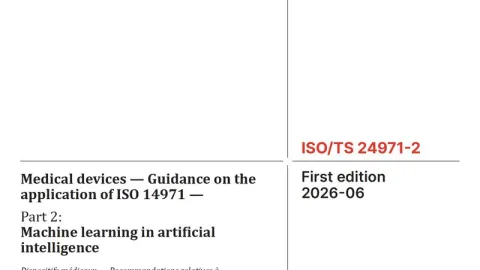
Risk Management Guidance for AI-Powered Medical Devices: First Edition of ISO/TS 24971-2 Released
ISO has released the first edition of ISO/TS 24971-2:2026, providing guidance on applying the ISO 14971 risk management process to machine learning-enabled medical devices (MLMDs).
Revised ISO 19008 Expands Cost Coding System to Lower Carbon Energy
ISO 19008 has been revised to extend its common system for organizing and comparing cost data to lower carbon energy as well as oil and gas.
GLOBALG.A.P. Farm Assurance and Social Practice Standards Set for September Update
Agraya has announced that it will publish GLOBALG.A.P. Integrated Farm Assurance (IFA) v6.1 Smart and GLOBALG.A.P. Risk Assessment on Social Practice (GRASP) v2.1 on September 1, 2026.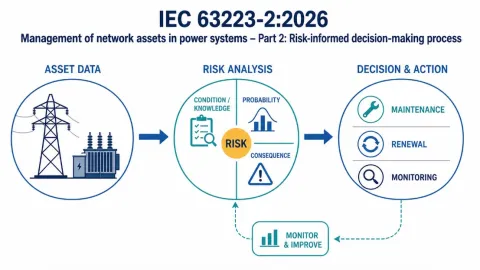
IEC 63223-2 Sets Risk-Informed Decision-Making (RIDM) Process for Power Network Assets
The International Electrotechnical Commission (IEC) has published IEC 63223-2:2026, introducing a structured risk-informed decision-making (RIDM) process for managing existing assets in power networks.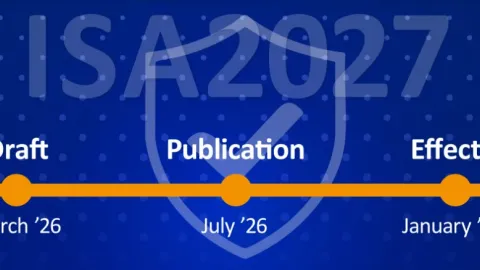
VDA Releases ISA 2027 Information Security Assessment Catalogue for TISAX
The German Association of the Automotive Industry (VDA) has published ISA 2027, the next version of the Information Security Assessment (ISA) catalogue used by TISAX, an information security assessment and exchange mechanism for the automotive industry.
Global Standards Updates Flagship GOTS Standard to Version 8.1
The Global Standards (GS) has updated the Global Organic Textile Standard (GOTS) to Version 8.1, its first revision since the major Version 8.0 release in March.
TÜV SÜD Acquires SustainCERT to Accelerate Digital Carbon Verification
Germany-based testing, inspection and certification company TÜV SÜD has acquired climate verification platform SustainCERT
ISO 30201 Adds Human Resources to the ISO Management System Family
The International Organization for Standardization (ISO) has published ISO 30201:2026, the first international requirements standard for human resources management systems.
ISO/PAS 25171 Provides First International Auditing Guide for ISO 21001 Educational Management Systems
The International Organization for Standardization (ISO) has published ISO/PAS 25171:2026, the first international guidance for auditing educational organization management systems under ISO 21001:2025.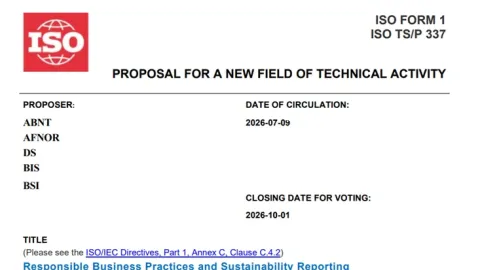
Proposal Calls for ISO Committee on Responsible Business Practices and Sustainability Reporting
An International Organization for Standardization (ISO) technical committee has been proposed to develop standards for responsible business practices and sustainability reporting.
CanadaGAP Version 11 Achieves GFSI Recognition Under 2024 Benchmark
The Global Food Safety Initiative (GFSI) has recognized CanadaGAP Food Safety Program Version 11.0 against its 2024 Benchmarking Requirements (BMRs), allowing