
Management Systems World
All on Quality and other Standards in one place since 2010. Now Worldwide.
News Europe
Please note that you have to be a registered member with paid membership in order to see full articles.
RegisterSelected News
34th Quality Forum and Quality Oscar Scheduled for Early November in Belgrade
The Foundation for Culture of Quality and Excellence (FQCE) will organize the 34th Quality Forum (Forum Kvaliteta) on November 6–7, 2025, in Belgrade at the Chamber of Commerce and Industry of Serbia.
ATS Grants First Accreditations for Greenhouse Gas Verification in Serbia
The Accreditation Body of Serbia (ATS) has granted the first accreditations for verification of greenhouse gas (GHG) emission reports.
Certificate for Authentic Croatian Products Awarded to 96 Family Farms Selling at Zagreb Markets
Representatives of 96 family farms (OPGs) received the Croatian Farmers’ Products certificate confirming the authenticity of their domestic products sold at Zagreb markets.
PCA Seeks Feedback on Update to Poland’s Central Accreditation System Document DA-01
The Polish Centre for Accreditation (PCA) has released for consultation a draft update of its DA-01 document, the central description of Poland’s accreditation system.
BSF 2025 Forum on Standardization in Lithuania Highlights Baltic Cooperation
The Baltic Forum on Standardization (BSF 2025) took place in Vilnius from September 3 to 5,
RvA Publishes Updated Accreditation Protocols for Energy, Carbon Emissions, and Healthcare IT Security
The Dutch Accreditation Council (RvA) has issued new versions of three Specific Accreditation Protocols (SAPs).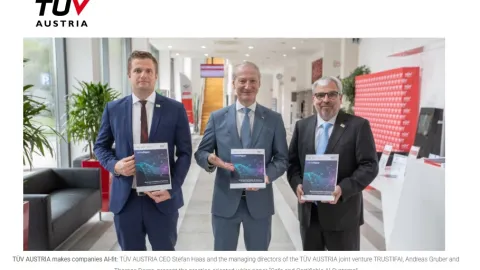
TÜV Austria White Paper Details Trusted AI Framework for Safe and Certifiable Systems
TÜV Austria has released a new white paper presenting its Trusted AI Framework, a structured approach for evaluating and certifying artificial intelligence (AI) systems in safety-critical applications.
EU Acknowledges MSPO as Credible Sustainability Standard Supporting EUDR Compliance
The European Union (EU) has officially recognized the Malaysian Sustainable Palm Oil (MSPO) certification as a credible sustainability standard that supports compliance with the EU Deforestation Regulation (EUDR).
UNI Releases UNI 11919 Part 2 Dedicated to Sustainability Reporting
The Italian national standards body UNI has released UNI 11919-2:2025, a new standard that defines processes for sustainability reporting and accountability.
Luxembourg Forest Certification System Revised and Submitted for PEFC Assessment
The Luxembourg Forest Certification Scheme has been submitted to the Programme for the Endorsement of Forest Certification (PEFC) for assessment.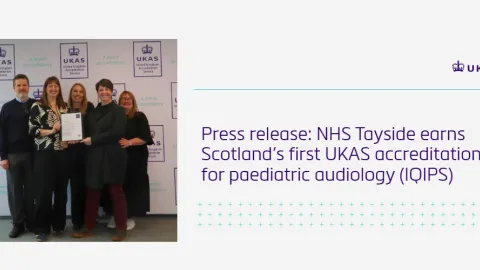
First in Scotland: NHS Tayside Audiology Accredited Under IQIPS Standard
NHS Tayside’s Audiology Department has become the first in Scotland to achieve accreditation under the Improving Quality in Physiological Services (IQIPS) standard from the United Kingdom Accreditation Service (UKAS).
You Can’t Replace Czech Quality: Latest Episode Examines Certification in Social Services
The latest episode of the series You Can’t Replace Czech Quality looked at social services and the meaning of certification in elderly and disability care.Global News

ISO 45001 Revision Commences
The International Organization for Standardization (ISO) has initiated the revision of ISO 45001, the standard for occupational health and safety management systems.
IATF Issues Q&A and New Requirements for Rules 6th Edition
The International Automotive Task Force (IATF) has released a Q&A document addressing certification bodies' questions about the 6th Edition of its Rules.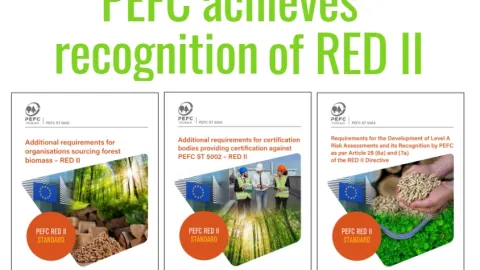
EC Approves PEFC Standards for RED II Renewable Energy Compliance
The Programme for the Endorsement of Forest Certification (PEFC) has achieved a significant milestone with the European Commission’s recognition of its new standards for renewable energy.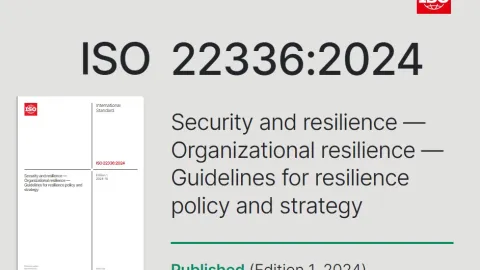
ISO 22336 Provides New Guidelines for Organizational Resilience
The International Organization for Standardization (ISO) has published ISO 22336, offering guidelines for organizations to create resilience policies and strategies.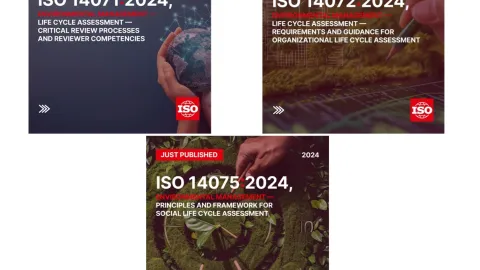
Three New Life Cycle Assessment Standards Released by ISO
Three new ISO standards focused on life cycle assessment (LCA) have been published.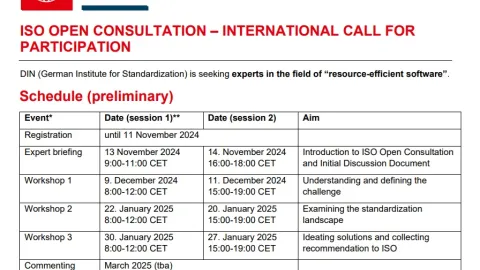
DIN Launches Pilot ISO Consultation on Resource-Efficient Software
The German Institute for Standardization (DIN) has initiated a pilot consultation on resource-efficient software under a new ISO procedure.
Bluesign Label Guides Consumers to More Sustainable Fashion Choices
Sustainability is now a major concern in the fashion industry, and the bluesign product label helps consumers make eco-friendly choices.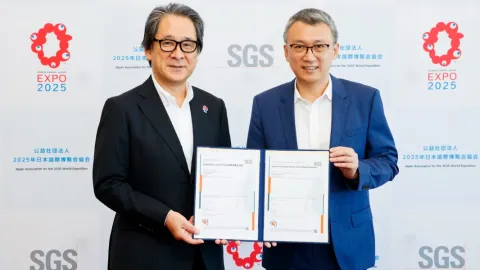
2025 World Expo in Japan Secures Certification for Integrating Sustainability in Event Planning
The Japan Association for the 2025 World Expo, the organizer of the event, has achieved ISO 20121 certification, a globally recognized standard for sustainable event management.
Fingerprinting Standard Updated as Biometrics Expand Globally
The ISO/IEC 29794-4 standard for finger image quality has been updated to ensure that biometric data remains relevant in today’s environment.
ILAC and IAF Merge to Form GLOBAC, Aiming to Harmonize Global Accreditation
On October 9th, the International Laboratory Accreditation Cooperation (ILAC) and the International Accreditation Forum (IAF) officially merged to create a new global accreditation body called GLOBAC.
Swiss Expert Interviewed on Transition to New Global Standard for Machinery Safety
ISO 13849, an international standard for the safety of machine control systems, is being updated to its new version, ISO 13849-1:2023.