Management Systems World
All on Quality and other Standards in one place since 2010. Now Worldwide.
News Japan
Please note that you have to be a registered member with paid membership in order to see full articles.
RegisterSelected News

Japan Standards Association Opens 2027 Grants for University Standardization Education
The Japanese Standards Association (JSA) has opened applications for its 2027 grant program supporting standardization education and related research at universities and graduate schools in Japan.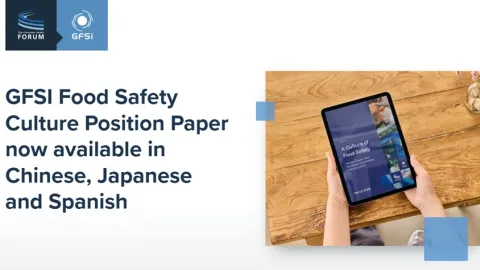
GFSI Food Safety Culture Paper Now Available in Three More Languages
The Global Food Safety Initiative (GFSI) has published Chinese, Japanese and Spanish translations of the second edition of its food safety culture position paper, making the updated framework more accessible to businesses and food safety professionals worldwide.
Draft Proposal on Manufacturing Quality Misconduct Opens for Comment in Japan
The Quality Misconduct Study Group has published draft recommendations on manufacturing quality misconduct and opened a public consultation until July 13, 2026,
METI Opens Applications for Japan’s 2026 Industrial Standardization Project Awards
The Ministry of Economy, Trade and Industry (METI) has opened applications for the FY2026 Industrial Standardization Project Awards,
Japan Standards Association Opens Applications For 2026 IEC Young Professionals Workshop
The Japanese Standards Association (JSA) has opened applications for the 2026 IEC Young Professionals Workshop, inviting early-career professionals to take part in international standardization activities.
Japan Invites Bids to Strengthen Academia’s Role in Standardization
The Japanese Standards Association (JSA) has opened a call for contractors to carry out a 2026 project aimed at strengthening academia’s role in standardization.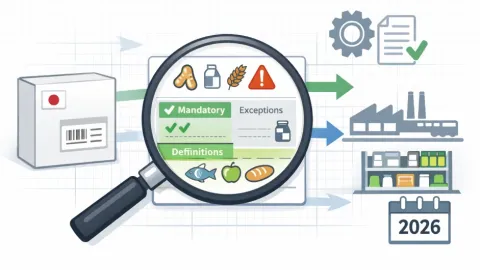
Japan Updates Food Labeling Rules for Allergen Information
The Consumer Affairs Agency (CAA) has revised Japan’s Food Labeling Standards to update allergen information and improve how key safety details are presented on food products.
JSA Launches International Standardization Strategy Center
The Japan Standards Association (JSA) established a new International Standardization Strategy Promotion Center on April 1, 2026, to support government-led priority sectors and strengthen Japan’s role in international standardization.
Japan Names 2026 Recipient Of RQES And JSA Chairman Award
The Robust Quality Engineering Society (RQES) has named Hiroyuki Narahara of Kyushu Institute of Technology (Kyutech) as the recipient of the 11th RQES and Japanese Standards Association (JSA) Chairman’s Award.
Japan Revises Certification Rules For Concrete Products
Japan has revised JIS Q 1012, the certification guideline used for concrete products carrying the JIS Mark, aligning it with related standards and introducing changes that simplify factory quality management and allow digital documentation.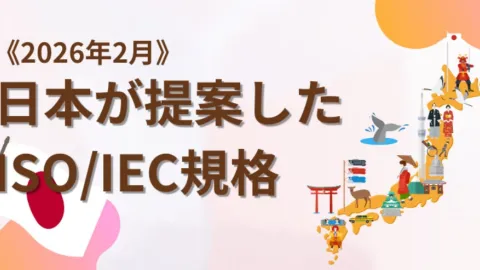
Three Japan-Proposed International Standards Reported In February Update
The Japanese Standards Association (JSA) has reported that three international standards proposed by Japan have reached the publication stage.
Japan Updates Water Protection Standard For Electrical Products And Aligns With IEC 60529
Japan has revised its national standard for the IP Code, the rating system that shows how well electrical products are protected against contact, dust, and water,Global News
ISO 9001:2026 Officially Launched
The sixth edition of ISO 9001, the world’s most widely used quality management system standard, has been officially launched by ISO during a virtual press conference.
Global Responsible Textile Standard (GRTS) Launches for Certification of Wider Range of Fibers
Global Standards has launched the Global Responsible Textile Standard (GRTS), a new certification standard for textiles made from a wider range of plant, animal, synthetic, man-made cellulosic and recycled fibers.
ISO 45001 Second Edition Clears DIS Ballot With Overwhelming Support
The draft second edition of ISO 45001 has passed its Draft International Standard (DIS) vote with only one vote against, moving the revision closer to its planned publication in the first half of 2027.
Second Edition of ISO/IEC 17065 Reaches Final Approval Phase
The second edition of ISO/IEC 17065, which sets requirements for bodies that certify products, processes and services, has moved further into the final approval process and is now at stage 50.20 of the Final Draft International Standard (FDIS) phase.
SMART Initiative Enters Pilot Phase in October, Testing Nine Standards
A pilot of the ISO and IEC SMART standards initiative will begin in October, testing nine selected international standards.
New Net Zero Carbon Cities Standard Project Approved as ISO 37115-2
The International Organization for Standardization (ISO) has approved a proposal for ISO 37115-2, a new standard that will set out principles and fundamentals for net zero carbon cities.
First Edition of ISO 41002 Guides Development of Facility Management Organizations
The first edition of ISO 41002 gives organizations guidance on how to develop and structure their facility management function across strategic, tactical and operational levels.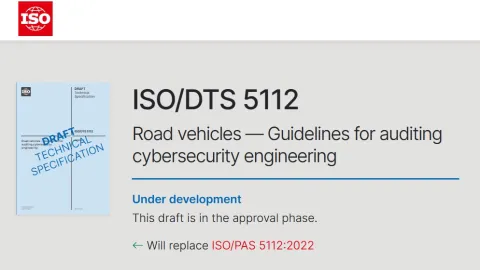
ISO/DTS 5112 Road Vehicle Cybersecurity Audit Guidance Reaches Final Approval Stage
ISO/DTS 5112, the draft Technical Specification for auditing cybersecurity management systems (CSMS) across the automotive supply chain, has reached the final approval stage.
ISO 37011 Webinars on Purpose-Driven Organizations Set for September 22 and 23
Two international webinars on ISO 37011, the draft guidance standard for purpose-driven organizations, will be held on September 22 and 23 ahead of consultation on the draft beginning September 24, 2026.
ISO 45010 Becomes First International Standard on Menstruation and Menopause at Work
ISO has published ISO 45010, the first International Standard focused on supporting employees experiencing menstruation and menopause at work.
Digital Identity Standards Now Freely Accessible Worldwide
Key ISO and IEC digital identity standards, including the ISO/IEC 18013 and ISO/IEC 23220 series, are now freely accessible worldwide through a new sponsorship model set up by the German Institute for Standardization (DIN) and the OpenWallet Foundation (OWF).