Management Systems World
All on Quality and other Standards in one place since 2010. Now Worldwide.
News Korea, Republic of
Please note that you have to be a registered member with paid membership in order to see full articles.
RegisterSelected News
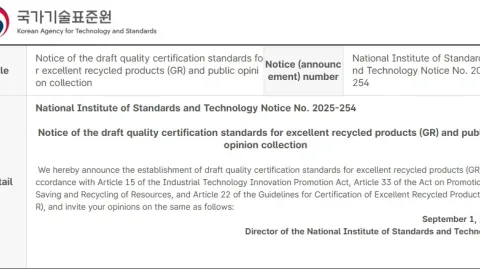
KATS Opens Consultation on Three New GR Certification Standards for Recycled Precious Metals
The Korean Agency for Technology and Standards (KATS) has released three draft standards for GR certification covering recycled platinum, palladium, and rhodium.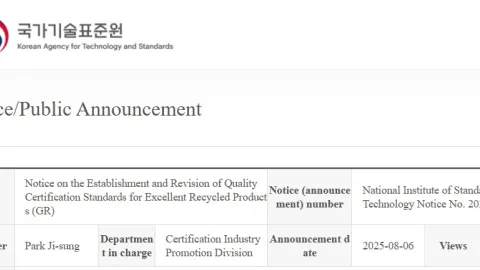
Korea Updates Excellent Recycling (GR) Product Certification Standards
The Korean Agency for Technology and Standards (KATS) has finalized revisions and new additions to the quality certification criteria for Excellent Recycling (GR) products.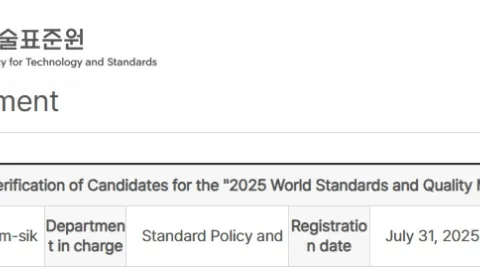
South Korea Seeks Public Input on 2025 Honors for Standards and Quality Achievements
The Korean Agency for Technology and Standards (KATS) has opened a public comment period for candidates nominated for the 2025 government awards in standards and quality management.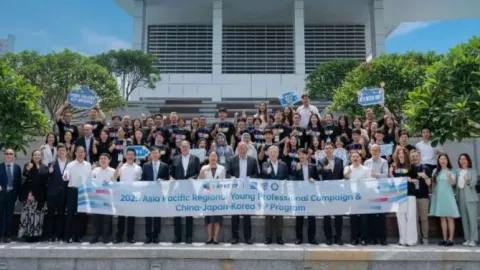
CQC Employees Li Jiangyun and Liu Meng Named China IEC Young Experts
Two young professionals from the China Quality Certification Center (CQC), Li Jiangyun and Liu Meng, were awarded the title of “China IEC Young Experts”.
KATS Celebrates World Accreditation Day with Awards for Export and Testing Excellence
The Korean Agency for Technology and Standards (KATS) marked World Accreditation Day 2025 with a ceremony on July 17, recognizing 21 people and organizations that helped boost Korea’s exports and testing capabilities.
Three Recycled Product Standards Under GR Label Open for Comment in Korea
South Korea’s Korean Agency for Technology and Standards (KATS) has proposed new quality certification standards under the GR (Excellent Recycled Product) label and is now collecting public comments until August 2.
South Korea Proposes Revisions to Two GR Standards for Recycled Products
The Korean Agency for Technology and Standards (KATS) has proposed updates to the quality certification standards for Excellent Recycled Products (GR) and launched a public consultation process.
Korea Hosts Forum to Accelerate Standards for Eco-Friendly Plastics
Korea’s Agency for Technology and Standards (KATS) and the Korea Conformity Laboratories (KCL) organized an international forum on June 12 in Seoul to address standardization in the bioplastics sector.
KATS Awards 17 New Technology and 7 New Product Certificates for 2025
The Korean Agency for Technology and Standards (KATS) awarded certificates to 17 New Excellent Technologies (NET) and 7 New Excellent Products (NEP) during a ceremony held on May 23 in Seoul.
Competition Heats Up for Standards Olympiad: Second Qualifying Round Held in Korea
Korea’s second qualifying round for the 20th International Standards Olympiad was held online on May 20.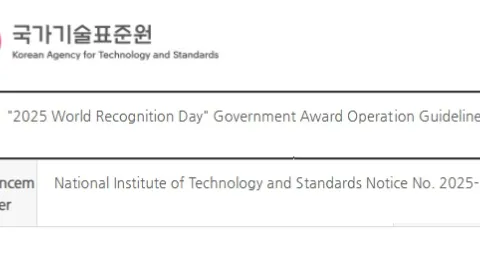
Korea Publishes Revised 2025 Guidelines for World Accreditation Day Government Awards
The Korean Agency for Technology and Standards (KATS) has published updated guidelines for the 2025 World Accreditation Day government awards,
Korea Establishes National Lidar Standard to Support Autonomous Driving
The Korean Agency for Technology and Standards (KATS) has established a new national standard to assess lidar sensor performance in autonomous vehicles, aiming to improve safety and accelerate commercialization.Global News
Risk Management Guidance for AI-Powered Medical Devices: First Edition of ISO/TS 24971-2 Released
ISO has released the first edition of ISO/TS 24971-2:2026, providing guidance on applying the ISO 14971 risk management process to machine learning-enabled medical devices (MLMDs).
Revised ISO 19008 Expands Cost Coding System to Lower Carbon Energy
ISO 19008 has been revised to extend its common system for organizing and comparing cost data to lower carbon energy as well as oil and gas.
GLOBALG.A.P. Farm Assurance and Social Practice Standards Set for September Update
Agraya has announced that it will publish GLOBALG.A.P. Integrated Farm Assurance (IFA) v6.1 Smart and GLOBALG.A.P. Risk Assessment on Social Practice (GRASP) v2.1 on September 1, 2026.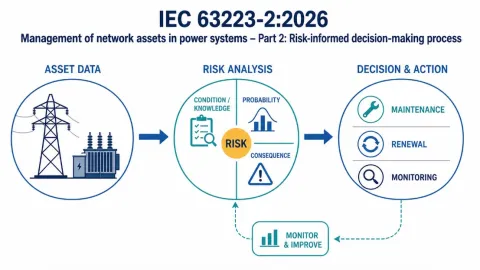
IEC 63223-2 Sets Risk-Informed Decision-Making (RIDM) Process for Power Network Assets
The International Electrotechnical Commission (IEC) has published IEC 63223-2:2026, introducing a structured risk-informed decision-making (RIDM) process for managing existing assets in power networks.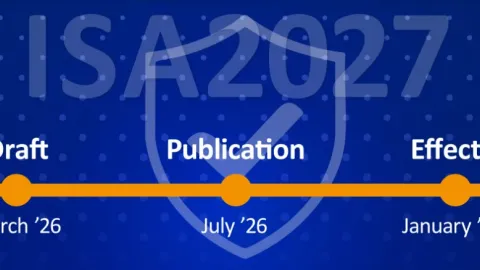
VDA Releases ISA 2027 Information Security Assessment Catalogue for TISAX
The German Association of the Automotive Industry (VDA) has published ISA 2027, the next version of the Information Security Assessment (ISA) catalogue used by TISAX, an information security assessment and exchange mechanism for the automotive industry.
Global Standards Updates Flagship GOTS Standard to Version 8.1
The Global Standards (GS) has updated the Global Organic Textile Standard (GOTS) to Version 8.1, its first revision since the major Version 8.0 release in March.
TÜV SÜD Acquires SustainCERT to Accelerate Digital Carbon Verification
Germany-based testing, inspection and certification company TÜV SÜD has acquired climate verification platform SustainCERT
ISO 30201 Adds Human Resources to the ISO Management System Family
The International Organization for Standardization (ISO) has published ISO 30201:2026, the first international requirements standard for human resources management systems.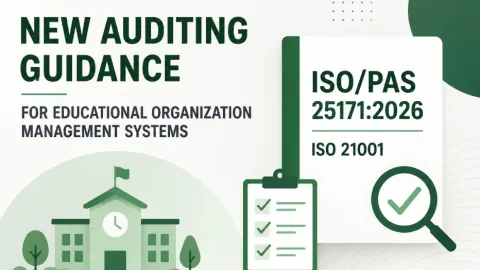
ISO/PAS 25171 Provides First International Auditing Guide for ISO 21001 Educational Management Systems
The International Organization for Standardization (ISO) has published ISO/PAS 25171:2026, the first international guidance for auditing educational organization management systems under ISO 21001:2025.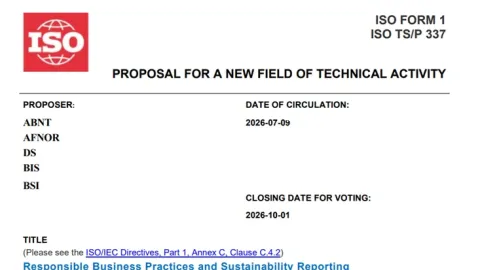
Proposal Calls for ISO Committee on Responsible Business Practices and Sustainability Reporting
An International Organization for Standardization (ISO) technical committee has been proposed to develop standards for responsible business practices and sustainability reporting.
CanadaGAP Version 11 Achieves GFSI Recognition Under 2024 Benchmark
The Global Food Safety Initiative (GFSI) has recognized CanadaGAP Food Safety Program Version 11.0 against its 2024 Benchmarking Requirements (BMRs), allowing