Management Systems World
All on Quality and other Standards in one place since 2010. Now Worldwide.
News Serbia
Please note that you have to be a registered member with paid membership in order to see full articles.
RegisterSelected News
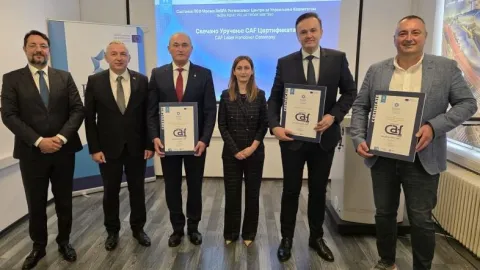
ATS Earns CAF Certification for Advancing Public Sector Quality and Service Efficiency
The Accreditation Body of Serbia (ATS) has been awarded the Common Assessment Framework (CAF) certificate for its efforts to improve public sector performance through better management, transparency, and service delivery.
Serbia’s KS CASCO Reviews Draft of ISO 19011 Management Systems Auditing Standard
Serbia’s national mirror committee to ISO CASCO has reviewed the draft of ISO DIS 19011, Guidelines for Auditing Management Systems,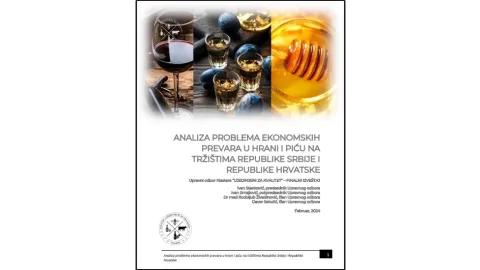
Study Reveals Motives Behind Serbian Honey Testing Lab Destruction
A comprehensive study on food fraud in Serbia and Croatia reveals insights into the recent destruction of Europe's only EIM-IRMS system accredited lab for honey testing.
Few in Serbia Know About the Product Safety Alert System Nepro
Consumers in Serbia have little awareness of how to find out if products on the market are unsafe, even though the country has a functioning alert system.
Serbia Submits Comments on ISO 17020 Draft Standard for Inspection Bodies
KS CASCO, Serbia’s national mirror committee on conformity assessment, has finalized its analysis and submitted comments on the Draft International Standard (DIS) version of ISO/IEC 17020, as reported on April 30.
Serbia Adopts Standard for Sustainable Event Management
KS CASCO has published the Serbian version of the international standard on sustainable event management as SRPS ISO 20121:2025.
Honey Fraud Testing Suspended After Europe’s Only EIM-IRMS system Accredited Lab Burglarized in Serbia
The only accredited lab capable of detecting fake honey for the Serbian market was burglarized over the weekend, meaning that Serbia lost it's primary tool for honey authenticity testing.
Honey Testing Halted in Serbia as Beekeepers Claim Deliberate Obstruction
The analysis of honey quality and safety in Serbia has been halted for over a month, according to the Union of Beekeeping Organizations of Serbia (SPOS),
ISS Launches New Sections in First 2025 Edition of Standardization Bulletin
The Institute for Standardization of Serbia (ISS) has released the first 2025 edition of its Standardizacija bulletin, featuring a refreshed layout and two new sections for clearer, more engaging content.
Serbian Institute for Standardization Invites Experts to Join KS B033 Refractory and Ceramic Materials Committee
The Institute for Standardization of Serbia (ISS) is inviting companies and organizations to nominate experts for membership in the KS B033 committee, which focuses on standardization in the field of refractory and advanced ceramic materials.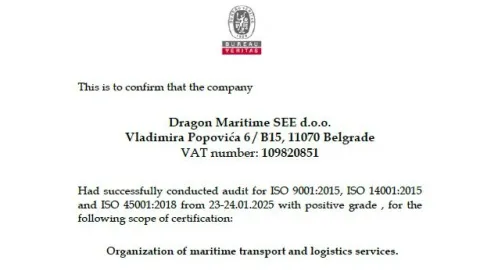
Dragon Maritime Group Earns ISO Certifications for Quality, Environment, and Safety
Dragon Maritime Group has achieved ISO 9001, ISO 14001, and ISO 45001 certifications, reinforcing its commitment to quality management, environmental sustainability, and workplace safety. The certification covers the organization of maritime transport and logistics services and follows a successful audit conducted by Bureau Veritas Serbia in January 2025.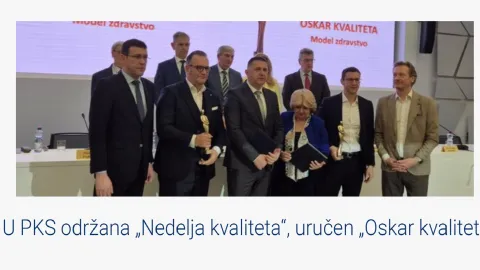
Oscar of Quality Awarded to Four Organizations at 34th Serbian Quality Week
At the 34th annual "Quality Week 2025," held on March 6 and 7 at the Serbian Chamber of Commerce, the "Oscar of Quality" awards for 2024 were presented.Global News

Codex Defines When 'May Contain' Allergen Labels Are Justified
New international guidance adopted by the Codex Alimentarius Commission aims to make 'may contain' allergen labels more consistent and trustworthy.
ISO 14025:2026 Brings First Major Update to Environmental Product Declarations in 20 Years
The International Organization for Standardization (ISO) has published ISO 14025:2026, the first major revision of the international standard for Environmental Product Declarations (EPDs) since 2006.
ISO/IEC 27000 Updated With Clearer Guidance for Information Security Standards
ISO and IEC have updated ISO/IEC 27000, the guide to the ISO/IEC 27000 family of information security standards.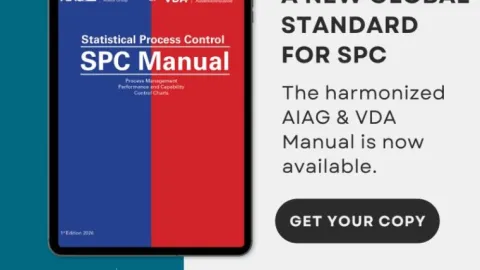
AIAG and VDA Publish Global Guide for Better Manufacturing Process Control
A new joint manual from the Automotive Industry Action Group (AIAG) and the German Association of the Automotive Industry (VDA) establishes a single international approach to monitoring and improving manufacturing processes.
ISO 14001:2026 Transition Deadlines Confirmed
The International Organization for Standardization (ISO) has confirmed the transition timeline for ISO 14001:2026,
BIPM Releases First Stable Digital Reference for SI Units
The International Bureau of Weights and Measures (BIPM) has released the first stable version of the SI Reference Point, a digital reference for the International System of Units (SI).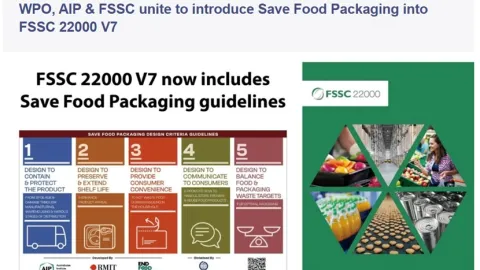
FSSC 22000 Version 7 Incorporates Save Food Packaging Principles
The Foundation FSSC has incorporated aspects of the Save Food Packaging (SFP) Design Principles into FSSC 22000 Version 7 through a partnership with the World Packaging Organisation (WPO) and the Australasian Institute of Packaging (AIP).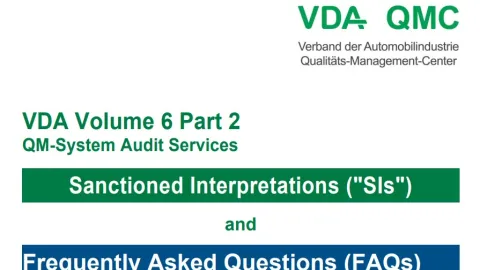
VDA Publishes Updated Interpretations for VDA 6.2 Service Audit Standard
The German Association of the Automotive Industry Quality Management Center (VDA QMC) has published Version 2 of the Sanctioned Interpretations (SIs) and Frequently Asked Questions (FAQs) for VDA 6.2, updating how service organizations in the automotive industry should apply the quality management audit standard.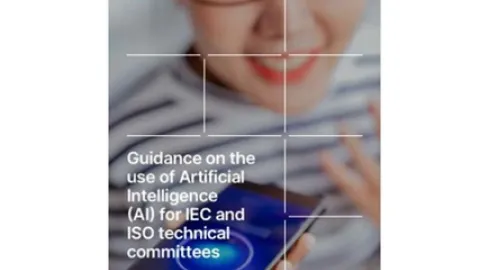
ISO and IEC Update AI Rules for Standards Development
ISO and IEC have published updated guidance on the use of artificial intelligence in technical committees, defining how AI may be used during the development of international standards.
BRCGS Updates Packaging Materials Issue 7 Requirements for GFSI Benchmarking 2024
BRCGS has updated the requirements for its Packaging Materials Issue 7 certification scheme to meet the GFSI Benchmarking Requirements 2024.
SIS Opens Draft ISO 9002 for Public Comment
The Swedish Institute for Standards (SIS) has opened public access to the draft version of ISO 9002, allowing organizations and quality professionals to read and comment on the official guidance for applying ISO 9001 before the document is finalized.