Management Systems World
All on Quality and other Standards in one place since 2010. Now Worldwide.
News Serbia
Please note that you have to be a registered member with paid membership in order to see full articles.
RegisterSelected News
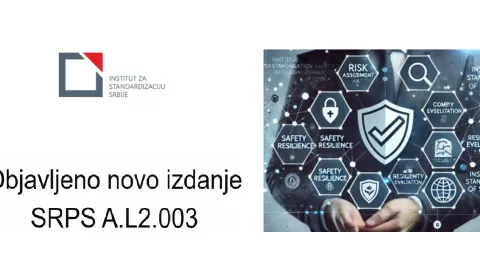
Serbia Updates SRPS A.L2.003 Standard on Risk Assessment
The Institute for Standardization of Serbia (ISS) has published a revised edition of the SRPS A.L2.003 standard, "Security and Resilience – Risk Assessment – Requirements and Guidelines for Conformity Assessment."
Serbia’s National Corporate Social Responsibility Award: 20 Companies Reach Second Round
The Chamber of Commerce and Industry of Serbia (PKS) has selected 20 companies to advance to the second round of the Đorđe Vajfert National Award for Corporate Social Responsibility.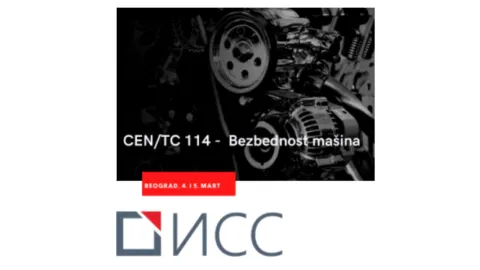
Belgrade to Host CEN Technical Committee on Machinery Safety for First Time
For the first time, Belgrade is hosting the plenary session of the European Technical Committee CEN/TC 114, which focuses on safety in machinery.
Dušan Rafailović, ISS Chairman of the Board of Directors, Arrested for Money Laundering
The chairman of the Board of Directors at the Institute for Standardization of Serbia (ISS), Dušan Rafailović, has been arrested as part of a Serbian state anti-corruption operation.
34th Serbian Quality Week Scheduled for March 2025 in Belgrade
The 34th edition of Quality Week will take place on March 6–7 at the Serbian Chamber of Commerce in Belgrade.
Serbia Adopts Guidelines for United Nations Sustainable Development Goals
KS CASCO has adopted the document ISO/UNDP PAS 53002:2024 Guidelines for Contributing to the United Nations Sustainable Development Goals in Serbian.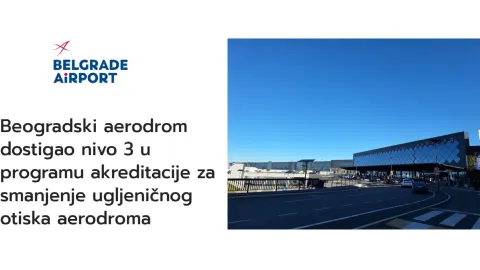
Belgrade Airport Lifts Off to Level 3 in Carbon Reduction Certification
Belgrade Nikola Tesla Airport has advanced to Level 3 in the Airport Carbon Accreditation (ACA) program by Airports Council International (ACI).
Serbian Republic Geodetic Authority Earns ISO 37001 Certification for Corruption Prevention
The Serbian Republic Geodetic Authority (RGZ) has achieved ISO 37001 certification, affirming its procedures and systems are focused on preventing corruption.
Serbia Translates ISO 45006 for Managing Infectious Disease Risks at Work
On December 30, 2024, Serbia published SRPS ISO 45006:2024, offering guidance to organizations on preventing, controlling, and managing exposure to infectious agents in the workplace.
Serbia Publishes Updated Rules for Evaluating Measurement Uncertainty
The Accreditation Body of Serbia (ATS) has released the updated Rules for Evaluating Measurement Uncertainty (ATS-PA06), version 4/0, effective January 17, 2025.
Serbia Releases ESG Framework Translation Following Recent Global Publication
The Institute for Standardization of Serbia (ISS) has published the national translation of ISO’s IWA 48:2024, a framework for applying ESG principles.
Serbia Publishes Guide on Information Security Systems for Small and Medium Enterprises
The Serbian Standards Institute (ISS) has released a Serbian-language translation of the ISO guide for implementing information security management systems (ISMS) tailored to small and medium enterprises (SMEs).Global News
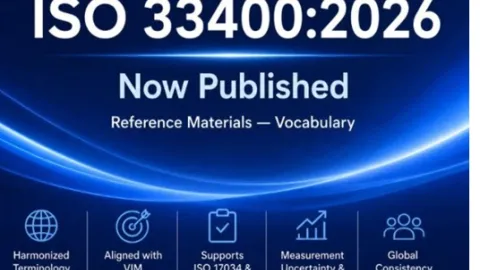
ISO 33400:2026 Sets International Vocabulary for Reference Materials
The International Organization for Standardization (ISO) has published ISO 33400:2026, updating the international vocabulary for reference materials (RM) and certified reference materials (CRM).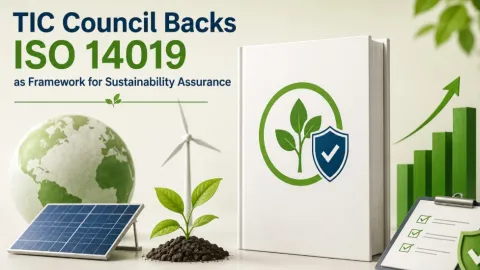
TIC Council Backs ISO 14019 as Framework for Sustainability Assurance
The International Association for Testing, Inspection and Certification (TIC Council) has published a paper urging policymakers to recognize the ISO 14019 series as the framework for sustainability assurance,
IFS Updates Progress Scoring Guide for Food and Logistics Programs
International Featured Standards (IFS) has updated its Progress Scoring System brochure following the recent launch of IFS Progress Logistics 2.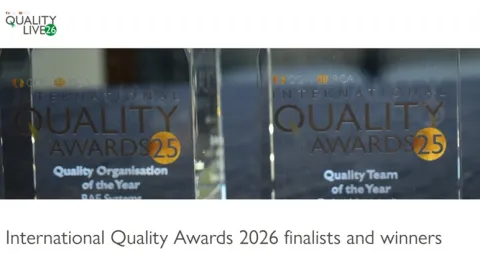
CQI Announces International Quality Awards 2026 Winners
The Chartered Quality Institute (CQI) announced the winners of the International Quality Awards 2026 during the Quality Live event in London on June 25,
IAQG Centralizes Aerospace Auditor Authentication
The International Aerospace Quality Group (IAQG) has centralized the authentication of aerospace quality management system auditors, replacing the previous network of independent Auditor Authentication Bodies (AABs).
FSC Revised Trademark Standard Takes Effect
The Forest Stewardship Council (FSC) has launched a new online training course to support implementation of its revised trademark standard, FSC-STD-50-001 V3-0, which takes effect on July 1, 2026.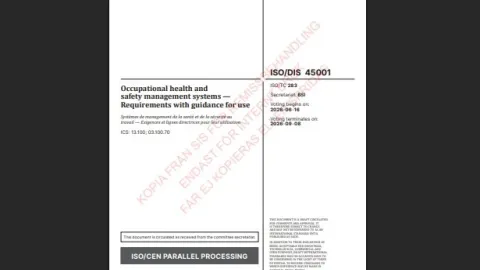
SIS Offers Free Access to ISO 45001 Draft
The Swedish Institute for Standards (SIS) has made the proposed second edition of ISO 45001 - draft available for free download and public review,
ISO/DIS 9002 Ballot Opens for Comment
The International Organization for Standardization (ISO) has released ISO/DIS 9002 for ballot, opening the international comment period on the revision of the guidance standard for applying ISO 9001.
Public Consultation Opens on ISO 14060, First International Standard for Net Zero Alignment
ISO 14060, the first international standard for net zero alignment, has entered public consultation.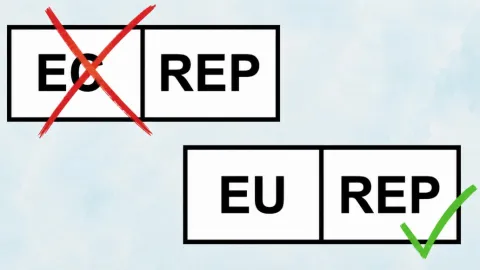
EU Approves EN ISO 15223-1 for Medical Device and IVD Labeling
The European Commission (EC) has approved EN ISO 15223-1, the standard used for symbols on medical device and in vitro diagnostic (IVD) labeling, for use in demonstrating compliance with EU requirements for these products.
GFSI Seeks Feedback on JFSM Recognition Under Benchmarking Requirements v2024
The Global Food Safety Initiative (GFSI) has opened a public stakeholder consultation on the Japan Food Safety Management Association (JFSM) application for recognition under GFSI Benchmarking Requirements Version 2024.