Management Systems World
All on Quality and other Standards in one place since 2010. Now Worldwide.
News Slovenia
Please note that you have to be a registered member with paid membership in order to see full articles.
RegisterSelected News

How Slovenian Suppliers Prove Sustainability Practices to Large Buyers
Slovenian companies supplying automotive, electrical engineering, chemical, food and retail groups are increasingly being asked by large customers to provide sustainability data.
SIST Seminar Targets Standards, Compliance, and Market Access for Innovative Companies
The Slovenian Institute for Standardization (SIST) will hold a free seminar on September 22 to help innovative companies use standards when developing products and preparing them for the Slovenian and EU markets.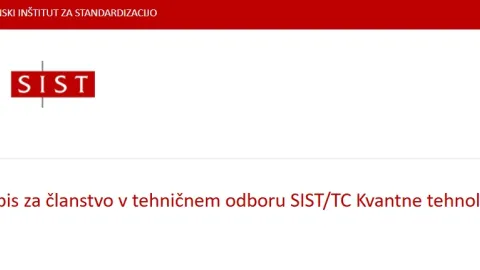
Slovenia Seeks Members for New Quantum Technologies Committee
The Slovenian Institute for Standardization (SIST) is inviting experts to join a new national technical committee on quantum technologies, with applications due October 1, 2026.
Slovenia Launches ESG Voucher for Voluntary Sustainability Reporting
The Slovenian Enterprise Fund (SPS) has launched a new Environmental, Social and Governance (ESG) Voucher to help micro, small and medium-sized enterprises prepare voluntary sustainability reports.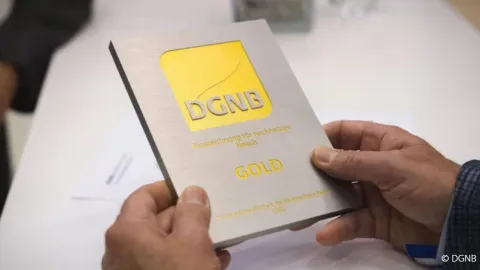
Kristalna palača Becomes First Building in Slovenia to Earn DGNB Gold Certificate
Kristalna palača in BTC City Ljubljana became the first building in Slovenia to receive a DGNB Gold certificate for sustainable buildings in use from the German Sustainable Building Council (DGNB).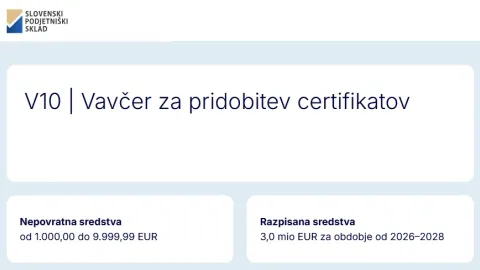
Slovenia Opens Voucher Scheme Covering Up to 60 Percent of Certification Costs
The Slovenian Enterprise Fund (SPS) has opened a new call offering co-financing for companies seeking certification under the “V10 – Voucher for Obtaining Certifications” scheme,
SIST Names Young Ambassadors of Standardization for 2026
The Slovenian Institute for Standardization (SIST) has selected four young engineers as its Young Ambassadors of Standardization for 2026, following its Autumn School held in November 2025 in Ljubljana.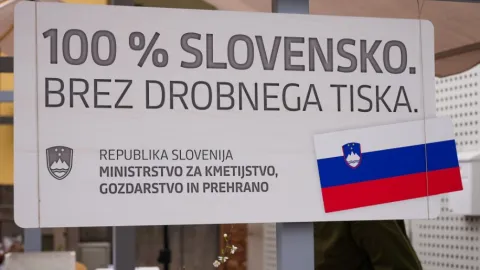
Slovenia Introduces Flag Label On Food To Guarantee Full Domestic Origin
The Ministry of Agriculture, Forestry and Food of Slovenia (MAFF) has introduced a new label featuring the national flag to guarantee that food products are entirely produced, processed, and packaged in Slovenia.
EUDOM Achieves ISO 14001 Certification For Environmental Management
EUDOM, d.o.o., part of the EUTRIP group, has obtained certification to ISO 14001, the international standard for environmental management systems.
SIST Invites Entrepreneurs to Free Seminar on Using Standards for Market Entry
The Slovenian Institute for Standardization (SIST) is hosting a free seminar to help entrepreneurs place products on the market with fewer risks and fewer barriers.
Pivovarna Laško Union Wins Two Sustainability Recognitions
Pivovarna Laško Union has been named ESG Champion of Slovenia 2025 and has also received a five star Green Star certificate, two national recognitions linked to its sustainability performance.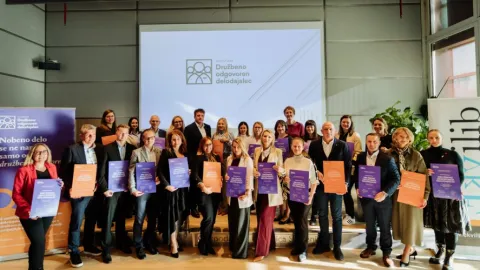
Slovenian Employers Awarded Socially Responsible Employer Certificates
Twenty-eight Slovenian companies and organizations received the Socially Responsible Employer certificate at a formal ceremony held on December 1, 2025, at the Chamber of Commerce and Industry of Slovenia (GZS).Global News
ISO 9001:2026 Officially Launched
The sixth edition of ISO 9001, the world’s most widely used quality management system standard, has been officially launched by ISO during a virtual press conference.
Global Responsible Textile Standard (GRTS) Launches for Certification of Wider Range of Fibers
Global Standards has launched the Global Responsible Textile Standard (GRTS), a new certification standard for textiles made from a wider range of plant, animal, synthetic, man-made cellulosic and recycled fibers.
ISO 45001 Second Edition Clears DIS Ballot With Overwhelming Support
The draft second edition of ISO 45001 has passed its Draft International Standard (DIS) vote with only one vote against, moving the revision closer to its planned publication in the first half of 2027.
Second Edition of ISO/IEC 17065 Reaches Final Approval Phase
The second edition of ISO/IEC 17065, which sets requirements for bodies that certify products, processes and services, has moved further into the final approval process and is now at stage 50.20 of the Final Draft International Standard (FDIS) phase.
SMART Initiative Enters Pilot Phase in October, Testing Nine Standards
A pilot of the ISO and IEC SMART standards initiative will begin in October, testing nine selected international standards.
New Net Zero Carbon Cities Standard Project Approved as ISO 37115-2
The International Organization for Standardization (ISO) has approved a proposal for ISO 37115-2, a new standard that will set out principles and fundamentals for net zero carbon cities.
First Edition of ISO 41002 Guides Development of Facility Management Organizations
The first edition of ISO 41002 gives organizations guidance on how to develop and structure their facility management function across strategic, tactical and operational levels.
ISO/DTS 5112 Road Vehicle Cybersecurity Audit Guidance Reaches Final Approval Stage
ISO/DTS 5112, the draft Technical Specification for auditing cybersecurity management systems (CSMS) across the automotive supply chain, has reached the final approval stage.
ISO 37011 Webinars on Purpose-Driven Organizations Set for September 22 and 23
Two international webinars on ISO 37011, the draft guidance standard for purpose-driven organizations, will be held on September 22 and 23 ahead of consultation on the draft beginning September 24, 2026.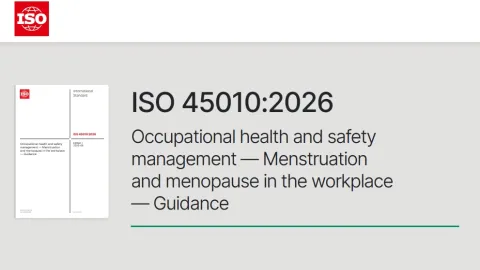
ISO 45010 Becomes First International Standard on Menstruation and Menopause at Work
ISO has published ISO 45010, the first International Standard focused on supporting employees experiencing menstruation and menopause at work.
Digital Identity Standards Now Freely Accessible Worldwide
Key ISO and IEC digital identity standards, including the ISO/IEC 18013 and ISO/IEC 23220 series, are now freely accessible worldwide through a new sponsorship model set up by the German Institute for Standardization (DIN) and the OpenWallet Foundation (OWF).