Management Systems World
All on Quality and other Standards in one place since 2010. Now Worldwide.
News South America
Please note that you have to be a registered member with paid membership in order to see full articles.
RegisterSelected News

ABNT Awards Nós por Elas Seals At Women’s Initiative Event In Paraná
The Brazilian Association of Technical Standards (ABNT) presented Nós por Elas seals during a public event recognizing organizations that implement structured practices to prevent violence against women.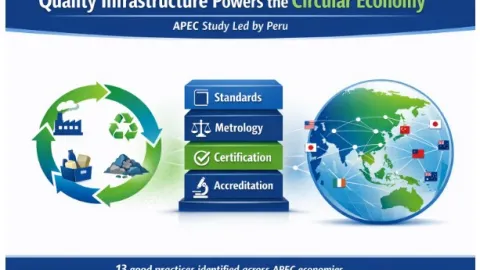
Peru Leads APEC Study on 13 Good Practices in Circular Economy Policies
A study led by Peru under the Asia-Pacific Economic Cooperation (APEC) framework has assessed 13 good practices related to circular economy policies and their use of quality infrastructure services.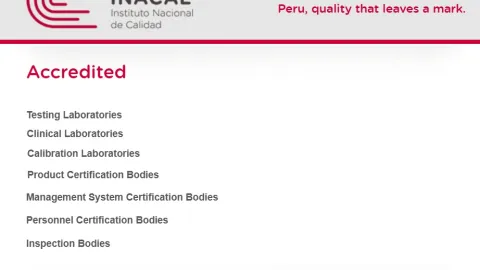
Inacal Clarifies Only Certificates With Its Symbol Are Officially Accredited In Peru
Peru’s National Institute of Quality has clarified that only ISO certificates bearing its accreditation symbol are officially recognized under its national accreditation system.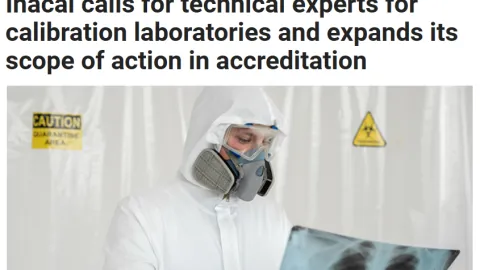
Inacal Seeks Experts for Calibration Laboratories and Expands Accreditation Scope
Inacal, Peru’s national quality institute, has launched a call for technical experts for calibration laboratories in ionizing radiation and expanded the scope of its accreditation activities.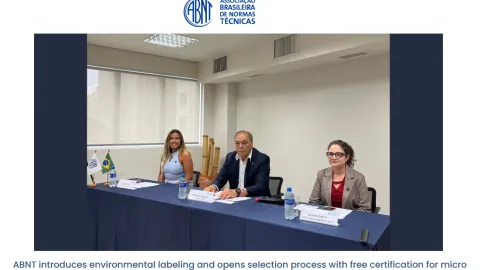
ABNT Launches Environmental Labeling Initiative and Opens Free Certification for Small Businesses
The Brazilian Association of Technical Standards, ABNT, has presented a new environmental labeling initiative and opened a selection process offering free certification for micro and small enterprises (MSEs).
Inacal Shares Tips to Avoid Fraudulent ISO Certificates
Peru’s National Institute for Quality (Instituto Nacional de Calidad, Inacal) has issued recommendations to help organizations avoid fraudulent ISO management system certificates,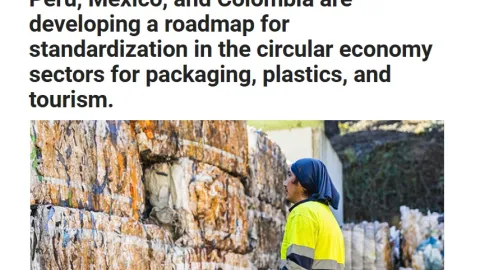
Circular Economy Roadmap: Peru Mexico and Colombia Join Forces on Packaging Plastics and Tourism Standards
Peru, Mexico, and Colombia are jointly developing a standardization roadmap to support the circular economy in the packaging, plastics, and tourism sectors.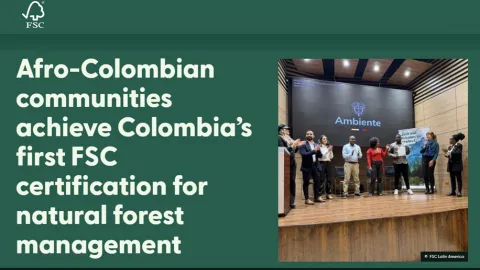
ASOFODEMA Becomes First in Colombia With FSC Certification for Natural Forest Management
The Sustainable Forestry Association for Community Development of Medio Atrato (ASOFODEMA), representing Afro-Colombian communities in Colombia’s Medio Atrato region,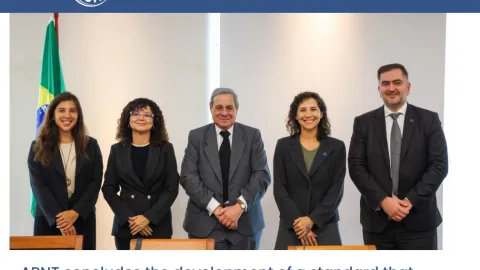
ABNT Completes Development of Sustainability Standard for Products and Services
The Brazilian Association of Technical Standards (ABNT) has completed the development of ABNT NBR 20250,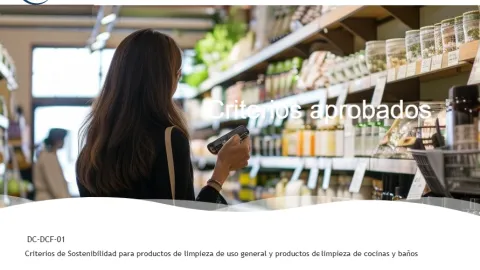
Environmental Alliance of the Americas Approves Eco-Label Criteria for Cleaning and Paper Products
The Environmental Alliance of the Americas (Alianza Ambiental de América) has approved two sets of regional sustainability criteria under a shared eco-labeling program covering Latin America and the Caribbean.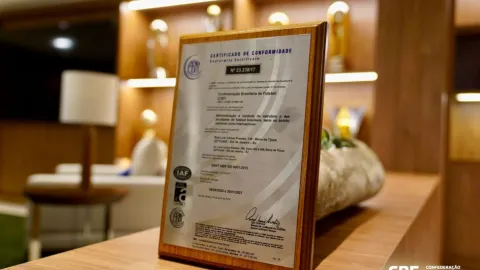
Brazilian Football Confederation Renews ISO 9001 Quality Management Certification
The Brazilian Football Confederation (CBF) has renewed its ISO 9001 quality management system certification following an assessment conducted by the Brazilian Association of Technical Standards (ABNT),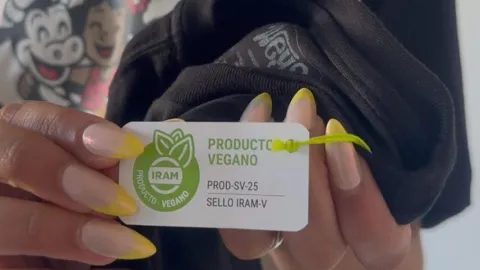
IRAM-V Seal as a Guarantee of Animal-Free Products in Argentina
The IRAM-V Seal is a certification that guarantees products marketed as vegan or plant-based are free from components of animal origin, giving consumers in Argentina a clear and independent reference beyond self-declared claims.Global News
Risk Management Guidance for AI-Powered Medical Devices: First Edition of ISO/TS 24971-2 Released
ISO has released the first edition of ISO/TS 24971-2:2026, providing guidance on applying the ISO 14971 risk management process to machine learning-enabled medical devices (MLMDs).
Revised ISO 19008 Expands Cost Coding System to Lower Carbon Energy
ISO 19008 has been revised to extend its common system for organizing and comparing cost data to lower carbon energy as well as oil and gas.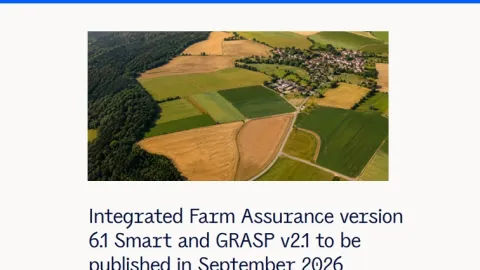
GLOBALG.A.P. Farm Assurance and Social Practice Standards Set for September Update
Agraya has announced that it will publish GLOBALG.A.P. Integrated Farm Assurance (IFA) v6.1 Smart and GLOBALG.A.P. Risk Assessment on Social Practice (GRASP) v2.1 on September 1, 2026.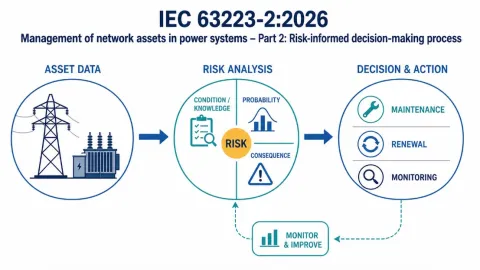
IEC 63223-2 Sets Risk-Informed Decision-Making (RIDM) Process for Power Network Assets
The International Electrotechnical Commission (IEC) has published IEC 63223-2:2026, introducing a structured risk-informed decision-making (RIDM) process for managing existing assets in power networks.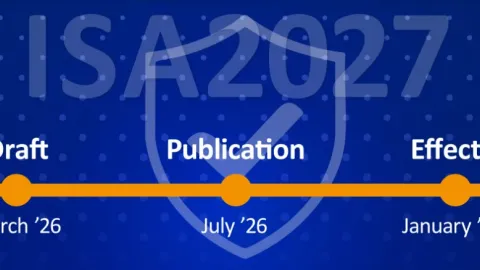
VDA Releases ISA 2027 Information Security Assessment Catalogue for TISAX
The German Association of the Automotive Industry (VDA) has published ISA 2027, the next version of the Information Security Assessment (ISA) catalogue used by TISAX, an information security assessment and exchange mechanism for the automotive industry.
Global Standards Updates Flagship GOTS Standard to Version 8.1
The Global Standards (GS) has updated the Global Organic Textile Standard (GOTS) to Version 8.1, its first revision since the major Version 8.0 release in March.
TÜV SÜD Acquires SustainCERT to Accelerate Digital Carbon Verification
Germany-based testing, inspection and certification company TÜV SÜD has acquired climate verification platform SustainCERT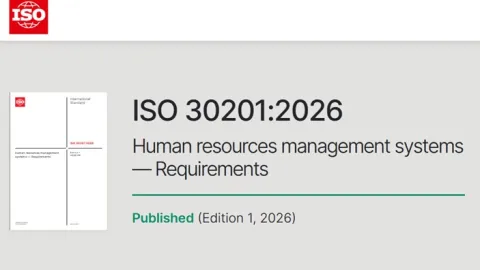
ISO 30201 Adds Human Resources to the ISO Management System Family
The International Organization for Standardization (ISO) has published ISO 30201:2026, the first international requirements standard for human resources management systems.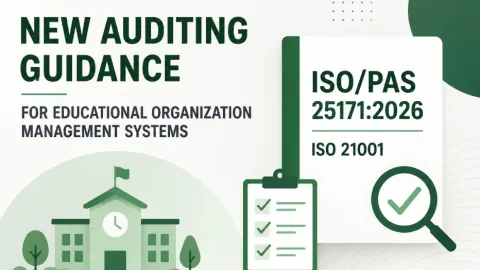
ISO/PAS 25171 Provides First International Auditing Guide for ISO 21001 Educational Management Systems
The International Organization for Standardization (ISO) has published ISO/PAS 25171:2026, the first international guidance for auditing educational organization management systems under ISO 21001:2025.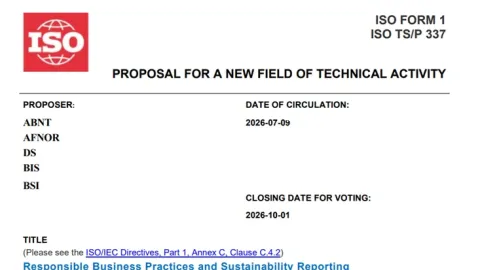
Proposal Calls for ISO Committee on Responsible Business Practices and Sustainability Reporting
An International Organization for Standardization (ISO) technical committee has been proposed to develop standards for responsible business practices and sustainability reporting.
CanadaGAP Version 11 Achieves GFSI Recognition Under 2024 Benchmark
The Global Food Safety Initiative (GFSI) has recognized CanadaGAP Food Safety Program Version 11.0 against its 2024 Benchmarking Requirements (BMRs), allowing