Management Systems World
All on Quality and other Standards in one place since 2010. Now Worldwide.
News South America
Please note that you have to be a registered member with paid membership in order to see full articles.
RegisterSelected News

INEN Honors 179 Companies With National Quality Seal
The Ecuadorian Service for Standardization INEN honored 179 companies during its 2025 Quality Seal ceremony, recognizing products that meet Ecuador’s official requirements for ongoing compliance with national and international requirements.
Brazil Certifies First City in the World for Urban ESG Indicators
São José dos Campos, located in the state of São Paulo, has become the first city in the world to earn an urban ESG certification, awarded by the Brazilian Association of Technical Standards (ABNT) at its Platinum tier.
IRAM Brings Together Global Partners to Celebrate 90 Years of Standards Work
The Argentine Institute of Standardization and Certification (IRAM) marked its 90-year milestone by gathering more than 200 representatives from
INEN and UASB Invite Public to Join International Quality Congresses
The Ecuadorian Standardization Service (INEN) and the Andean University Simón Bolívar (UASB) are inviting participants to the XVI International Quality Congress and the VII Integrated Quality Congress,
Inacal Accredits 39 Public Conformity Assessment Bodies to Improve State Service Quality
Peru’s National Quality Institute (Inacal) has accredited 39 public-sector conformity-assessment bodies to strengthen the quality, safety and reliability of state services nationwide.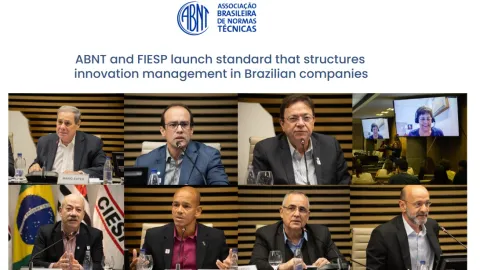
Brazil Adopts ISO 56001 to Strengthen Innovation Management Systems
The Brazilian Association of Technical Standards (ABNT) and the Federation of Industries of the State of São Paulo (FIESP) launched the ABNT NBR ISO 56001 Innovation Management System standard during a ceremony in São Paulo.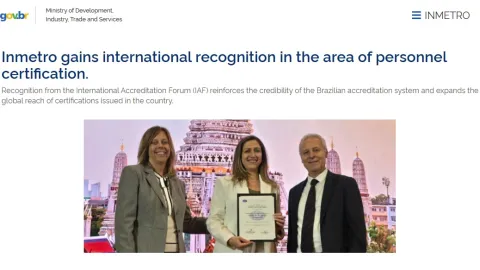
Inmetro Gains IAF Recognition under ISO 17024 for Personnel Certification
The National Institute of Metrology, Quality, and Technology (Inmetro) has been accepted as a signatory to the International Accreditation Forum (IAF) Multilateral Recognition Arrangement (MLA) for personnel certification under ISO/IEC 17024.
ABNT Becomes First Brazilian Entity Accredited to Validate Carbon Projects
The Associação Brasileira de Normas Técnicas (ABNT) has become the first Brazilian organization accredited by Inmetro to validate greenhouse gas (GHG) projects.
Inmetro Prepares Launch of New Metris Journal, Invites Submissions on Quality Infrastructure
The National Institute of Metrology, Quality, and Technology (Inmetro) in Brazil is preparing to launch Metris, a new scientific journal dedicated to Quality Infrastructure (QI).
How INEN Label Certification System Strengthens Ecuador’s National Industry
The Ecuadorian Service for Standardization (INEN) operates a voluntary Label Certification System that supports national manufacturers of textiles, footwear, and leather goods in meeting Andean labeling regulations.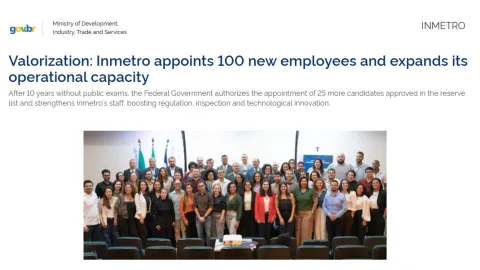
Workforce Expansion: Inmetro Welcomes 100 New Employees
The National Institute of Metrology, Quality and Technology (Inmetro) has officially welcomed 100 new employees after more than a decade without public recruitment.
Peru Hosts ISO/TC 176 Plenary and Quality Forum for Small Enterprises
Peru has become a global meeting point for quality management this week,Global News

Codex Defines When 'May Contain' Allergen Labels Are Justified
New international guidance adopted by the Codex Alimentarius Commission aims to make 'may contain' allergen labels more consistent and trustworthy.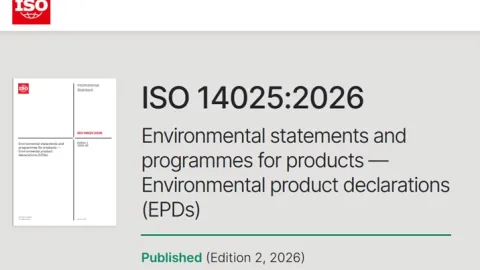
ISO 14025:2026 Brings First Major Update to Environmental Product Declarations in 20 Years
The International Organization for Standardization (ISO) has published ISO 14025:2026, the first major revision of the international standard for Environmental Product Declarations (EPDs) since 2006.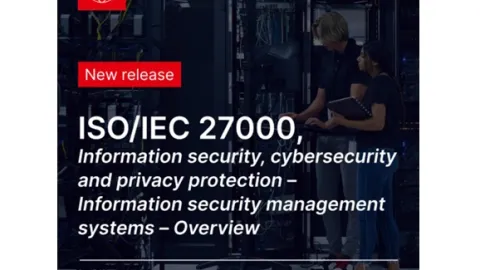
ISO/IEC 27000 Updated With Clearer Guidance for Information Security Standards
ISO and IEC have updated ISO/IEC 27000, the guide to the ISO/IEC 27000 family of information security standards.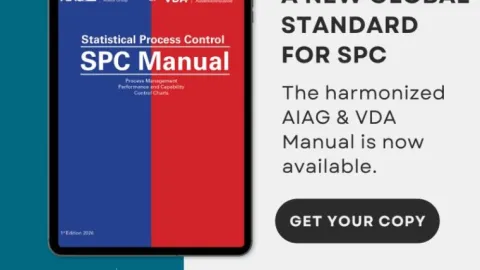
AIAG and VDA Publish Global Guide for Better Manufacturing Process Control
A new joint manual from the Automotive Industry Action Group (AIAG) and the German Association of the Automotive Industry (VDA) establishes a single international approach to monitoring and improving manufacturing processes.
ISO 14001:2026 Transition Deadlines Confirmed
The International Organization for Standardization (ISO) has confirmed the transition timeline for ISO 14001:2026,
BIPM Releases First Stable Digital Reference for SI Units
The International Bureau of Weights and Measures (BIPM) has released the first stable version of the SI Reference Point, a digital reference for the International System of Units (SI).
FSSC 22000 Version 7 Incorporates Save Food Packaging Principles
The Foundation FSSC has incorporated aspects of the Save Food Packaging (SFP) Design Principles into FSSC 22000 Version 7 through a partnership with the World Packaging Organisation (WPO) and the Australasian Institute of Packaging (AIP).
VDA Publishes Updated Interpretations for VDA 6.2 Service Audit Standard
The German Association of the Automotive Industry Quality Management Center (VDA QMC) has published Version 2 of the Sanctioned Interpretations (SIs) and Frequently Asked Questions (FAQs) for VDA 6.2, updating how service organizations in the automotive industry should apply the quality management audit standard.
ISO and IEC Update AI Rules for Standards Development
ISO and IEC have published updated guidance on the use of artificial intelligence in technical committees, defining how AI may be used during the development of international standards.
BRCGS Updates Packaging Materials Issue 7 Requirements for GFSI Benchmarking 2024
BRCGS has updated the requirements for its Packaging Materials Issue 7 certification scheme to meet the GFSI Benchmarking Requirements 2024.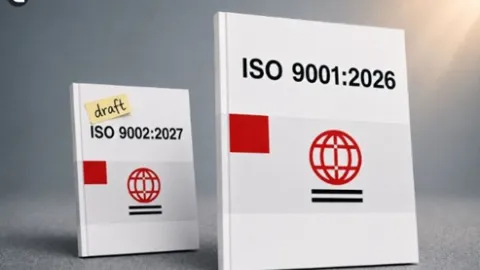
SIS Opens Draft ISO 9002 for Public Comment
The Swedish Institute for Standards (SIS) has opened public access to the draft version of ISO 9002, allowing organizations and quality professionals to read and comment on the official guidance for applying ISO 9001 before the document is finalized.