Management Systems World
All on Quality and other Standards in one place since 2010. Now Worldwide.
News
Please note that you have to be a registered member with paid membership in order to see full articles.
RegisterSelected News

HKAS Sets Transition Plan for ISO/IEC 17020:2026
The Hong Kong Accreditation Service (HKAS) has published its transition schedule for ISO/IEC 17020:2026, giving accredited inspection bodies until March 31, 2029, to comply with the revised international standard for inspection bodies.
NEN Evaluates Online Standards Development Platform for Potential Adoption
The Netherlands Standardization Institute (NEN) is exploring potential adoption of the Online Standards Development (OSD) platform from ISO and IEC.
Quebec Opens Consultation on Good Practices Guide for Public Works
The Bureau de normalisation du Québec (BNQ) has opened a public consultation on draft guide BNQ 9600-100, a new good practices guide intended to help Quebec municipalities use more consistent approaches to public works.
Spain Publishes UNE 41610, Europe's First Standard for Industrialized Construction
The Spanish Association for Standardization (UNE) has published UNE 41610, the first technical standard for industrialized construction in Europe.
Bulgaria Holds First Trade Union Standardization Awareness Event
Bulgaria held its first trade union awareness event on standardization on June 12, bringing together trade union representatives to explore how standards contribute to safe and healthy workplaces and how workers can take part in shaping them.
Korea Revises Five Operating Rules for Its Laboratory Accreditation Scheme
The Korean Agency for Technology and Standards (KATS) has revised five operating rules governing the Korea Laboratory Accreditation Scheme (KOLAS) to improve the operation of the national accreditation system and clarify existing requirements.
DAkkS Updates Accreditation Portal With Faster Document Management
The German Accreditation Body (DAkkS) has released a major update to its online accreditation portal, DAkkS-PORT, making it easier for organizations to upload, manage, and submit documents during the accreditation process.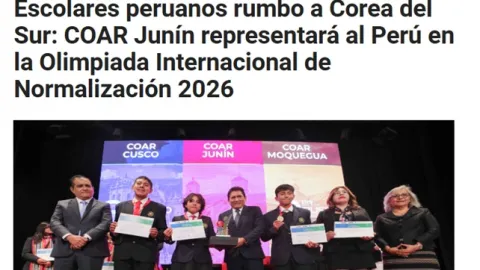
COAR Junín High School to Represent Peru at International Standards Olympiad
The National Institute of Quality (INACAL) has announced that Yachay Warriors, a student team from COAR Junín High School, will represent Peru at the 21st International Standards Olympiad in South Korea after winning the National Standards Olympiad 2026.
FSC Publishes FAQ Explaining Swedish Forest Certification
The Forest Stewardship Council (FSC) has published a new frequently asked questions (FAQ) document addressing some of the country's most frequently debated issues surrounding forest certification.
Alexandre Garrido Receives ISO Excellence Award for Sustainable Tourism Standards Leadership
Alexandre Garrido has received an ISO Excellence Award in recognition of his outstanding leadership and contributions to ISO/TC 228, including his role as project leader of ISO 18060:2026.
PKN Reports Growth in Standards Development and Digital Modernization During 2025
The Polish Committee for Standardization (PKN) has published its 2025 Annual Report, highlighting expanded standards development, growing participation from industry, and major steps to modernize Poland's standardization system through new digital initiatives.
Armenia Joins International Measurement System as BIPM Associate State
The International Bureau of Weights and Measures (BIPM) has admitted the Republic of Armenia as an Associate State, expanding the country's participation in the international measurement system.Global News
ISO and IEC Develop Global Standard to Embed Ecodesign in Medical Devices
The International Organization for Standardization (ISO) and the International Electrotechnical Commission (IEC) are developing a new global standard to formally integrate ecodesign into the development of medical devices.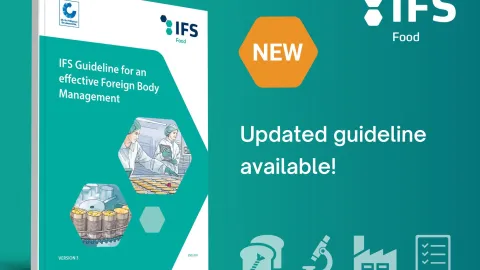
IFS Releases Updated Guideline for Effective Foreign Body Management
International Featured Standards (IFS) has issued an updated Guideline for an Effective Foreign Body Management,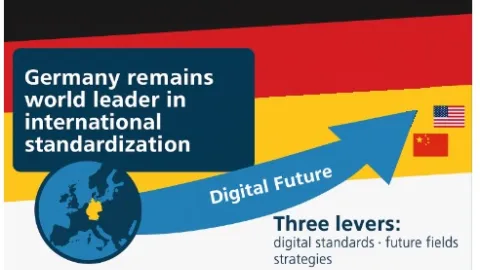
Germany Heads Most ISO Secretariats But China Rapidly Gains Ground
Germany remains the world’s top country in international standardization, holding 17.1% of all ISO secretariats, according to the 2025 International Standardization Barometer published by the German Institute for Standardization (DIN).
Europe Now Conditionally Accepts FDA Inspections Conducted Abroad
The European Medicines Agency (EMA) and the U.S. Food and Drug Administration (FDA) have entered a new stage of cooperation under their Mutual Recognition Agreement (MRA) for Good Manufacturing Practice (GMP) inspections.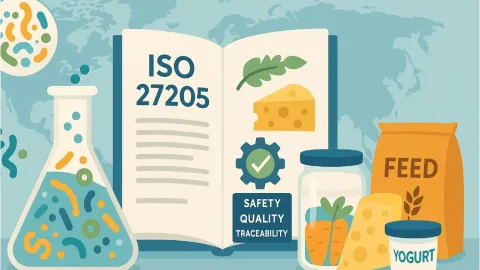
New International Standard in Development for Microbial Cultures and Probiotics
Work has begun within ISO to create a global standard that defines how microorganisms used in food and feed, such as bacteria, yeasts, and fungi, should be characterized and quality assured.
BS 30480 Launched as the World’s First Standard on Suicide Awareness in the Workplace
The world’s first standard dedicated to suicide awareness and prevention in the workplace, BS 30480, has been released by the British Standards Institution (BSI).
IATF Updates GM Quick Reference Guide on How Auditors Review Scorecard Data.
The International Automotive Task Force (IATF) has issued an updated GM Scorecard Quick Reference Guide and Screen Images package to align with the latest Rules for Achieving and Maintaining IATF Recognition (6th edition).
GLOBALG.A.P. Gets New IT Platform for Certification and Transparency
GLOBALG.A.P. now operates on a new IT platform developed by Agraya GmbH together with its technology partner osapiens.
Standards Pavilion Expands at COP30 with Broader Coalition on Climate Policy and Finance
The Standards Pavilion has opened at COP30 in Belém, Brazil, where 21 international organizations are discussing how standards can support measurable climate action.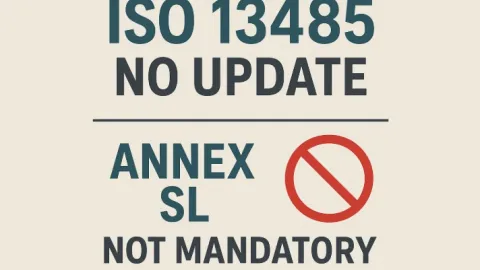
ISO 13485 Stays Unchanged as Revision Committee Rejects Annex SL Alignment
The medical device quality management standard ISO 13485 will remain unchanged, as ISO’s Technical Committee in charge, ISO/TC 210, decided not to align it with Annex SL, ISO’s harmonized structure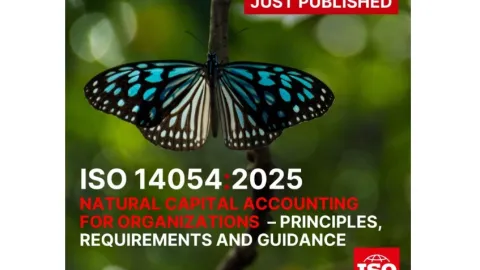
ISO 14054 Introduces First Global Framework for Natural Capital Accounting
The International Organization for Standardization (ISO) has published a new global standard, ISO 14054:2025, to help organizations measure, value, and account for their interactions with nature.