
Management Systems World
All on Quality and other Standards in one place since 2010. Now Worldwide.
News
Please note that you have to be a registered member with paid membership in order to see full articles.
RegisterSelected News
China Seeks Secretariat Holder for New IEC Power System Meteorological Services Subcommittee
China has launched a formal call to designate organizations to run the subcommittee secretariat and coordinate domestic technical work for a
Registration Opens for the 31st Quality Austria Forum in Salzburg
Registration is now open for the 31st Quality Austria Forum, which will take place on March 18, 2026, in Salzburg,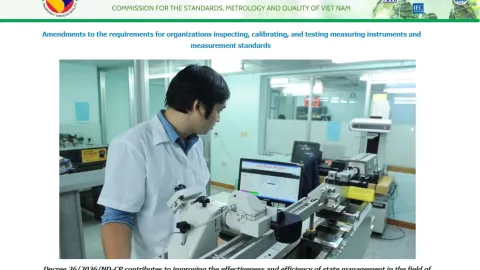
Vietnam Revises Conditions for Metrology Service Providers
Vietnam has adopted Decree No. 36/2026/ND-CP, updating the rules for organizations that inspect, calibrate, and test measuring instruments and measurement standards.
Winter Issue of ANSI in China Newsletter Highlights 2025 Developments
The American National Standards Institute (ANSI) has released the Winter 2025 edition of the ANSI in China Newsletter, outlining recent standards, policy, and regulatory developments linked to U.S. and China engagement.
Inacal Seeks Experts for Calibration Laboratories and Expands Accreditation Scope
Inacal, Peru’s national quality institute, has launched a call for technical experts for calibration laboratories in ionizing radiation and expanded the scope of its accreditation activities.
FSC Interim Forest Stewardship Standard Approved for Hungary
The Forest Stewardship Council (FSC) has approved a new Interim Forest Stewardship Standard for Hungary, introducing a single national framework for responsible forest management that will take effect on May 1, 2026.
Baldrige Foundation Announces 2026 Leadership Award Recipients
The Foundation for the Malcolm Baldrige National Quality Award has announced the 2026 recipients of its Leadership Awards,
OSA Joins IAF as Accreditation Body Member
The International Accreditation Forum (IAF) has confirmed that the Salvadoran Accreditation Body (OSA) has joined IAF as an Accreditation Body Member.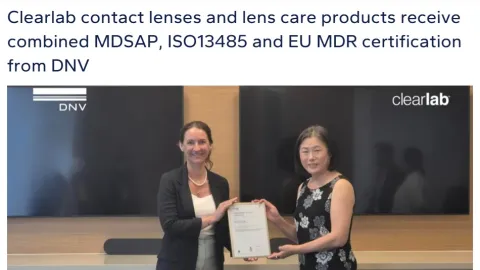
Clearlab Earns MDSAP, ISO 13485 and EU MDR Certifications for Contact Lenses
Clearlab, a manufacturer of vision correction products and lens care solutions, has obtained combined certification under the Medical Device Single Audit Program (MDSAP), ISO 13485, and the European Union Medical Device Regulation (EU MDR).
Climate Transition And Circular Economy In New Edition Of UNE Magazine
The latest edition of UNE Magazine puts climate transition at the center,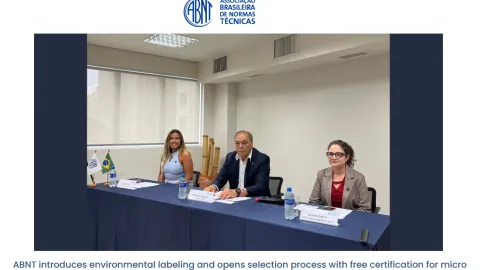
ABNT Launches Environmental Labeling Initiative and Opens Free Certification for Small Businesses
The Brazilian Association of Technical Standards, ABNT, has presented a new environmental labeling initiative and opened a selection process offering free certification for micro and small enterprises (MSEs).
Gender Equality, ICT Security, ESG, And EU Rules In The January Accredia Letter
The January edition of Accredia Letterr, the monthly newsletter of Italy’s national accreditation body,Global News
ISO Develops First International Standard for Net-Zero Emissions
The creation of the first international ISO standard for net-zero emissions is well underway, aiming to provide clarity and firm requirements for the transition towards a "net-zero" state.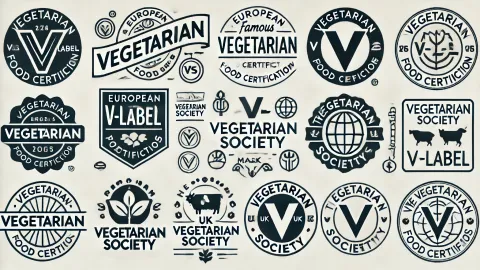
As vegetarianism gains traction, certification becomes key
Even in the realm of eating, it seems there's a trend for everything. With a growing focus on sustainability, vegan and vegetarian diets are grabbing the global spotlight more than ever.
Understanding VDA 6.8 - Supply Chain Process Audit
Marko Stojković, Head of Quality Department at Schwing Stetter Smederevo, outlines the key features of VDA 6.8 - Supply Chain Process Audit.
ANSI Highlights ISO 17516:2014 - Microbiology of Cosmetic Products
Ensuring Cosmetic Safety: Understanding Microbiological Contamination
IFS Broker and IFS PACsecure Earn Global Recognition
What do you call a factory that makes good products? A satisfactory!
ANSI Seeks Comments on New ISO Technical Committee Proposal for Customer Contact Centers
The American National Standards Institute (ANSI), as the U.S. member body to ISO, is soliciting feedback until July 5 on a draft proposal for a new ISO technical committee (TC) focused on customer contact centers (CCC).