
Management Systems World
All on Quality and other Standards in one place since 2010. Now Worldwide.
News European Union
Please note that you have to be a registered member with paid membership in order to see full articles.
RegisterSelected News
NIS 2 Compliance Projects Spread Across Croatia
In recent months, a growing number of organizations across Croatia have started projects to align with the NIS 2 Directive and the national Cybersecurity Act, aiming to improve cyber resilience and business continuity.
EU Tightens Certification Rules for Renewable Synthetic Fuels
Certification of renewable fuels of non-biogenic origin (RFNBOs) has become essential under European Union rules, especially following the shift from the Renewable Energy Directive (RED II) to RED III.
Comment Round Opens in Netherlands for Six Standards on Digital Product Passports
The Nederlands Normalisatie-instituut (NEN) has opened a national comment round for six draft European standards on digital product passports (DPPs).
UNE Magazine June Edition: Focus on National Strategy, Criminal Compliance and Anti-Bribery
The June 2025 edition of the UNE Magazine highlights Spain’s national quality strategy and recent updates to standards that promote ethical and responsible business conduct, especially in criminal compliance and anti-bribery.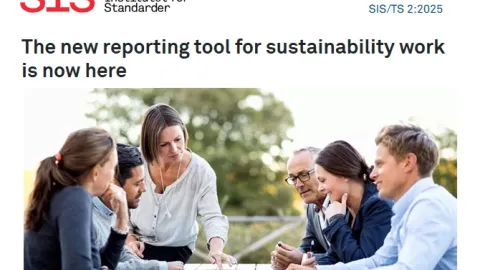
SIS Launches New Tool to Help Companies Report Sustainability Work
The Swedish Institute for Standards (SIS) has launched an updated version of its self-declaration tool, SIS/TS 2:2025, designed to help organizations report their sustainability efforts in a clear, credible, and comparable way.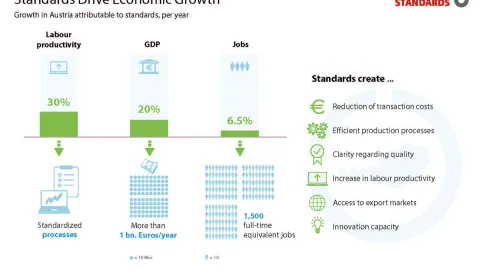
Standards Fuel Austria’s Economic Growth with Billion-Euro Boost
A new study by the GAW Institute shows that standards play a major role in Austria’s economy, contributing about 1 billion euros per year to GDP growth.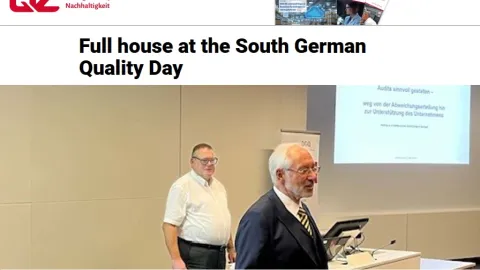
South German Quality Day Tackles Cybercrime, AI and Psychological Safety
The 4th South German Quality Day was held on June 27 in Stuttgart, bringing together quality professionals for a sold-out event focused on emerging challenges in the field.
Germany and India to Host 10th Annual Quality Infrastructure Meeting in New Delhi
The 10th Annual Meeting of the Indo-German Working Group on Quality Infrastructure will take place on July 16, 2025, at the India Habitat Centre in New Delhi.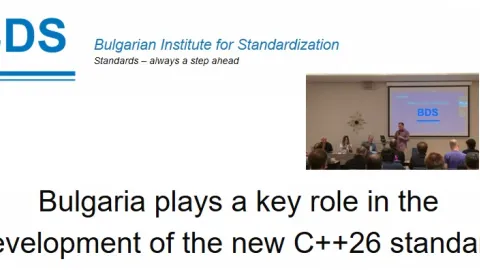
Final Technical Discussions on C++26 Programming Language Standard Held in Sofia
The June 16–21 meeting of ISO/IEC JTC 1/SC 22’s WG 21 working group was held in Sofia,
French Quality Day Honors Transformative Initiatives Across Sectors
The 2025 French Quality Day, held June 18 in Paris at ESQESE–ICP, highlighted how collective commitment drives organizational change.
Cofrac Opens Renewal Process for Certification Committee Members
The French Accreditation Committee, Cofrac, has started the renewal process for its Certification Section Committee, with current member mandates ending in December 2025.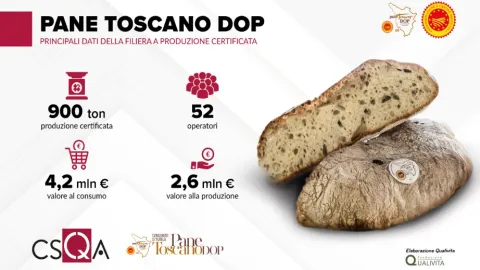
PDO Tuscan Bread has a consumer market value of €4.2 million
CSQA has been reauthorized by Italy’s Ministry of Agriculture, Food Sovereignty and Forests to inspect Pane Toscano DOP (Tuscan Bread with Protected Designation of Origin) for another three years,Global News
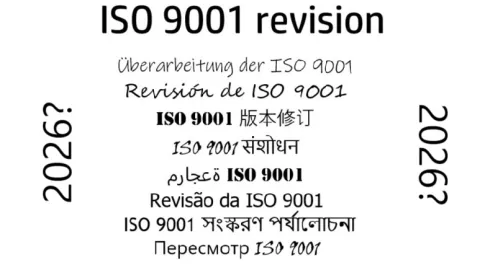
ISO 9001 Revision Faces Continued Challenges with Second Draft
The second Committee Draft (CD2) of the ISO 9001 standard, set for release in 2026, has been issued internally to participants in the revision process.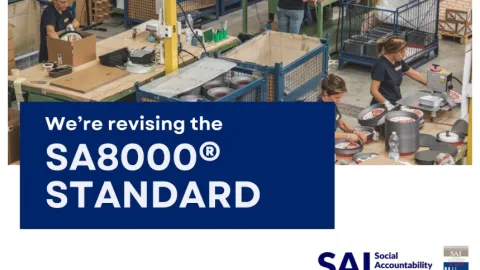
SA8000 Revision: Draft Reveals New Structure, Broader Scope, and Outcome-Based Focus
The draft of the new version of the SA8000 Standard - a globally recognized framework for managing social responsibility in the workplace - is released by Social Accountability International (SAI).
BSI Paper Proposes Contestability Tool to Enhance Digital Rights in AI
A recent paper from British Standards Institution (BSI) outlines how a standardized contestability tool could enhance digital rights and build trust in AI systems.
Global Food Safety Initiative Publishes Response to Stakeholder Consultation
The Global Food Safety Initiative (GFSI) has published its response to feedback on the proposed GFSI Benchmarking Requirements Version 2024 (BMRs v2024).
SGS Leads the Way with Accreditation to FSC EUDR Regulatory Module
SGS is among the first certification bodies accredited to the new Forest Stewardship Council (FSC) EU Deforestation Regulation (EUDR) Regulatory Module (FSC-STD-01-004).
BRCGS 2023-24 Annual Business Report Reveals Top Audit Non-Conformities
The British Retail Consortium Global Standards (BRCGS) has released its Annual Business Report for 2023-24, detailing key non-conformities (NCs) across its standards.
IFS Updates Wholesale and Cash & Carry Standard to Version 3
International Featured Standards (IFS) has released version 3 of its Wholesale and Cash & Carry standard, marking its first update in eight years.
Climate Change’s Growing Influence on Quality and the Revision of ISO 9001
Climate change is increasingly shaping quality management, with ISO 9001 now mandating its inclusion in management systems.
ISO 22329 Standard Guides Organizations on Social Media Use in Emergencies
The standard ISO 22329:2021, which focuses on social media in emergency management, provides vital guidance for governmental and non-governmental organizations.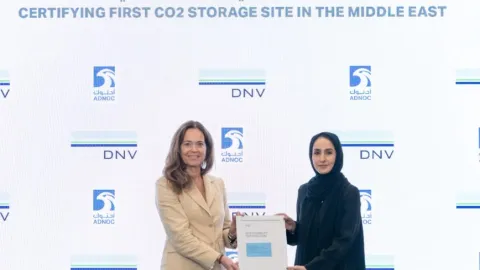
ADNOC’s CO2 Storage Site Becomes First in the Middle East Certified by DNV
DNV has certified the feasibility of ADNOC’s West Aquifer CO2 storage site in the UAE, marking a milestone in the region’s carbon capture and storage (CCS) efforts.
Standards Pavilion Highlights Role of Standards in Advancing Climate Action at COP29
The Standards Pavilion at COP29, held in Baku, Azerbaijan, showcased the critical role of international standards in turning climate commitments into measurable actions.