
Management Systems World
All on Quality and other Standards in one place since 2010. Now Worldwide.
News Europe
Please note that you have to be a registered member with paid membership in order to see full articles.
RegisterSelected News

Europe Begins Work on a 3D Printing Standards Roadmap
Europe has begun work on a new roadmap to guide the future development of standards for 3D printing, with the aim of supporting safe, reliable, and widely usable additive manufacturing across the continent.
France Qualité Opens Registration For Young Generations Quality Club
France Qualité AFQP, the national network that promotes quality practices in France, has opened registration for the Young Generations Quality Club, a new initiative aimed at students, apprentices, and young professionals interested in quality.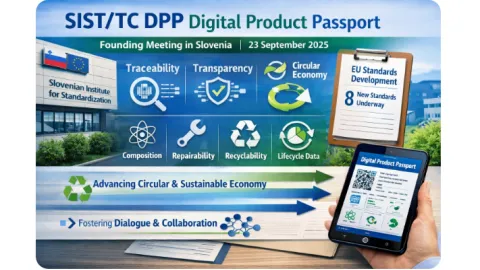
Slovenia Establishes New Technical Committee on Digital Product Passport
Slovenia has set up a new technical committee, SIST/TC DPP Digital Product Passport, to support the country’s digital and sustainable transition and to align national practice with upcoming European rules on product data and circularity.
Brain-Computer Interfaces Joint Committee Proposed Within CEN-CENELEC
A new joint European technical committee focused on brain-computer interfaces has been proposed within the CEN-CENELEC system,
Microbiology of the Food Chain Featured in the Final 2025 Issue of BDS Compass
The fourth and final 2025 issue of BDS Compass focuses on microbiology of the food chain, showing how standards support food safety by ensuring reliable testing from primary production to finished products.
Changes In Global Accreditation And SME Governance In December Issue Of AccrediaLetter
Accredia, Italy’s national accreditation body, has released the December issue of its monthly newsletter, AccrediaLetter,
Quality Infrastructure Driving Innovation and Growth: December Issue of UNE Magazine
The December 2025 issue of UNE Magazine, number 86, is now available and centers on how quality infrastructure and standardization support innovation, competitiveness, and economic growth in Spain and across Europe.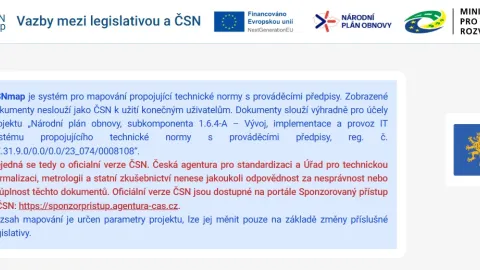
ČSNMap Portal Goes Live, Linking Technical Standards With Czech Building Law
The Czech Standardization Agency (ČAS) has launched the ČSNMap portal, a digital tool that for the first time directly links Czech Technical Standards (ČSN) with Czech building legislation.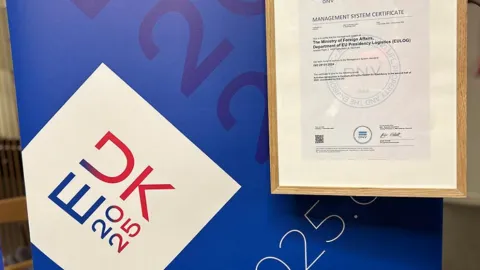
How Denmark Became The Only Country To Certify Its EU Presidency To ISO 20121
Denmark’s EU Council Presidency in the second half of 2025 was certified to ISO 20121, the international standard for sustainable management of events and meetings.
Young French Professional Enguerrand Crouzet On How Standards Support Europe’s Green Transition
European standardization plays a practical role in Europe’s green transition, according to Enguerrand Crouzet,
Italy Updates Minimum Environmental Criteria For Sustainable Construction
Italy has updated its Minimum Environmental Criteria for construction (CAM Edilizia), setting new rules on how buildings are designed, built, renovated, and maintained with greater attention to environmental performance and quality.
Applications Open For 14th Polish National Standards Contest
The Polish Committee for Standardization (PKN) has opened applications for the 14th nationwide “Normalization And Me” contest, with this year’s edition focused on how standards support safety, fairness, and health in sports and recreation.Global News

France and Norway to Lead Committee in Charge of ISO 9000 Family of Standards
The French Standardization Association (AFNOR) and Standard Norway (SN) will jointly lead ISO/TC 176, Quality management and quality assurance, the ISO technical committee responsible for the ISO 9000 family of quality management standards.
Second Consultation Round Begins for Global Organic Textile Standard Version 8.0
The second public consultation for Version 8.0 of the Global Organic Textile Standard (GOTS) is now open and will run until August 15, 2025.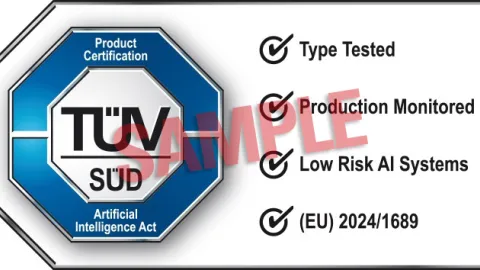
TÜV Süd Launches Voluntary Test Mark for Low-Risk AI Systems
TÜV Süd has launched a voluntary certification mark for low-risk AI (artificial intelligence) systems, allowing manufacturers to prove the quality of their AI solutions even when no legal requirements apply.
Draft of ISO 17024 for Certification of Persons Wins Overwhelming Approval
The draft of ISO/IEC 17024, a conformity assessment standard for certifying persons, has been approved by ISO, IEC, and CEN.
New ISO Agreement Proposed to Align Global Greenhouse Gas Accounting Rules
A new ISO International Workshop Agreement (IWA) has been proposed to harmonize greenhouse gas (GHG) accounting standards for industrial products and improve the comparability of emissions data across global supply chains.
Two New Papers Map AI and Multimedia Authenticity Standards
The AI and Multimedia Authenticity Standards Collaboration (AMAS) released two major papers on July 11 at the AI for Good Global Summit in Geneva.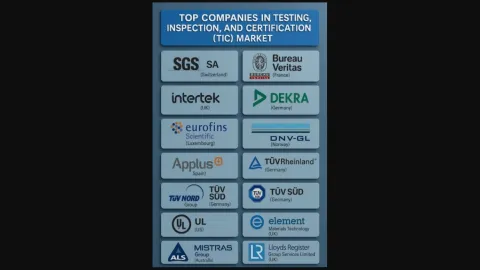
TIC Market Expected to Reach USD 282.76 Billion by 2030
The global testing, inspection, and certification (TIC) market is projected to grow from USD 239.48 billion in 2025 to USD 282.76 billion by 2030, with a compound annual growth rate of 3.4%, according to a new report by MarketsandMarkets.
Public Comments Open on Draft Revision of ISO 20252 Market Research Standard
A revised draft of ISO 20252—covering vocabulary and service requirements for market, opinion and social research—is under international review, with ISO member bodies invited to submit feedback by September 4.
SQF Edition 10 Coming in August With Focus on Culture, Risk, and Monitoring
The Safe Quality Food Institute (SQFI), the organization behind the SQF Program, will publish Edition 10 of its code in August 2025.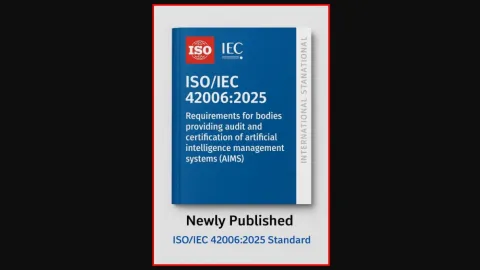
ISO 42006 Brings Clear Requirements for Auditing AI Management Systems
The International Organization for Standardization (ISO) and the International Electrotechnical Commission (IEC) have published ISO/IEC 42006:2025, setting requirements for bodies that audit and certify Artificial Intelligence Management Systems (AIMS) under ISO/IEC 42001.
IFS Publishes New Doctrine and Product Chart to Support HPC Version 3 Audits
IFS has released two new documents to support audits under the Home and Personal Care (HPC) Version 3 standard: