Management Systems World
All on Quality and other Standards in one place since 2010. Now Worldwide.
News Europe
Please note that you have to be a registered member with paid membership in order to see full articles.
RegisterSelected News
Serbia Adopts Translation Of ISO 37000 For Corporate Governance
The Institute for Standardization of Serbia (ISS) has adopted the national translation of ISO 37000:2021, making the international guidance on governance of organizations available in Serbian.
Framework for Zero-Emission Areas Launched in Norway
A new Norwegian specification, SN-NSPEK 3719, is now available and sets out a clear framework for how zero-emission areas can be planned, calculated, and documented.
Cheese Diplomacy in Accreditation Headlines Final Cofrac Compétences Issue of 2025
The final 2025 issue of Compétences is now online, opening with cheese diplomacy, a real-world example used to show how accreditation supports sanitary controls, regulatory confidence, and access to the European Union market.
Bosnia and Herzegovina Adopts ISO 56001 Innovation Management Standard
The Institute for Standardization of Bosnia and Herzegovina (ISBIH) has adopted the new BAS EN ISO 56001:2025 standard,
Croatia to Host 19th Food Safety and Quality Conference in 2026
The 19th Conference on Food Safety and Quality will be held from May 11 to May 13, 2026,
How DAkkS Applies the EA MLA Mark in Germany
The German accreditation body (DAkkS) can now offer a combined accreditation symbol together with the European co-operation for Accreditation (EA), based on the EA Multilateral Agreement (MLA) mark published on September 1, 2025.
Austrian State Prize Winner Shares Practical Advice for Future Applicants
Executives from the Geriatric Health Centers of the City of Graz (GGZ), winner of the 2025 Austrian State Prize for Business Quality, share lessons from their quality journey and offer practical advice for organizations planning to apply for the next edition of the award.
AFNOR Publishes SPEC 2406 Guide on Building a Positive Food Safety Culture
The French Association for Standardization (AFNOR) has published AFNOR SPEC 2406, a practical guide designed to support managers in implementing a positive food safety culture.
Future of Standardization Highlighted in the Latest Issue of UNI’s STANDARD Magazine
The latest issue of STANDARD, the magazine published by the Italian National Standardization Body (UNI),
Dutch Stakeholders Invited to Review Water Sampling Standard NEN-EN-ISO 19458
The Netherlands Standardization Institute (NEN) has opened a consultation asking Dutch stakeholders whether the water sampling standard NEN-EN-ISO 19458 should be revised, with input open until February 19, 2026.
PKN Holds Hands-On Standardization Workshop for Young Professionals
The Young Professionals in Standardization 2025 workshop brought together young experts in Poland to gain practical experience with how standardization works in real settings.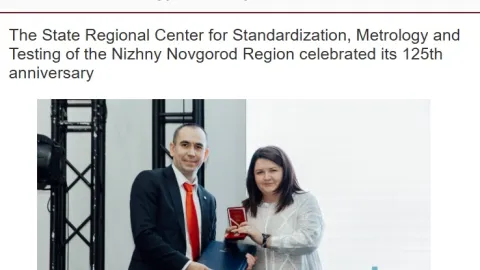
State Regional Standards Center of Nizhny Novgorod Marks 125-Year Anniversary
The State Regional Center for Standardization, Metrology, and Testing of the Nizhny Novgorod Region (NNCSM) marked its 125-year anniversary at an official gathering,Global News
GLOBALG.A.P. Launches IFA v6 Smart Standards for Crops and Propagation Material
GLOBALG.A.P. has released two new product categories under the Integrated Farm Assurance (IFA) version 6 plants scope.
Proposal Aims to Modernize How ISO Standards Are Classified and Organized
Germany’s national standards body, DIN, has proposed the development of ISO/NP TS 26019, which would update the International Classification for Standards (ICS).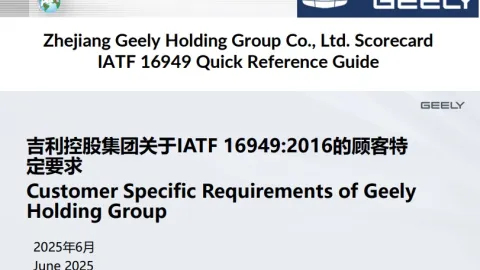
Geely’s New Customer Requirements and Scorecard Now in Effect
Geely Holding Group’s updated Customer Specific Requirements (CSRs) and Scorecard Quick Reference Guide officially took effect on July 1, 2025.
Accreditation Opens for Interprivacy Data Protection Scheme Outside EU
Italy’s national accreditation body, Accredia, has opened accreditation for the Interprivacy data protection certification scheme, which applies to the processing of personal data outside the European Union.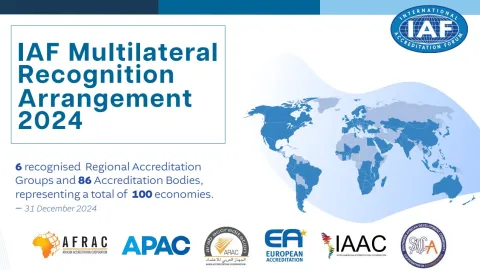
IAF Report Reveals 2024 Growth in MLA Coverage and Accreditation Reach
The International Accreditation Forum (IAF) has released its 2024 report on the Multilateral Recognition Arrangement (MLA),
BIFMA Releases 2024 LEVEL e3 Standard Adding Fourth Certification Level and Fixed Criteria
The Business and Institutional Furniture Manufacturers Association (BIFMA) released the 2024 edition of the LEVEL e3 standard on April 21, 2025, starting a 12-month transition period.
ISO 9001 Revision Moves to DIS Stage, Publication Expected by September
The draft of the sixth edition of ISO 9001 is now ready to enter the Draft International Standard (DIS) stage, with publication expected by late August or early September.
ISO/DIS 14001 Released, Refining EMS Scope, Risk Planning and Management Oversight
The Draft International Standard ISO/DIS 14001 has been released, marking a major step in the update of the world’s leading environmental management system (EMS) standard.
ISO 13485 Under Review as Industry Prepares for Potential Revision
The international standard for medical device quality systems, ISO 13485:2016, has entered its mandatory five-year systematic review, which concluded on June 5, 2025.
IFS Updates Doctrines for Logistics 3 and Broker 3.2 Standards
IFS has released updated versions of the IFS Logistics 3 Doctrine and IFS Broker 3.2 Doctrine.
Global Consultation Opens on ISO 32212 for Net Zero Transition in Finance
ISO has launched a global public consultation on ISO/DIS 32212, a draft international standard that offers financial institutions a unified, credible framework for developing net zero transition plans.