Management Systems World
All on Quality and other Standards in one place since 2010. Now Worldwide.
News Europe
Please note that you have to be a registered member with paid membership in order to see full articles.
RegisterSelected News
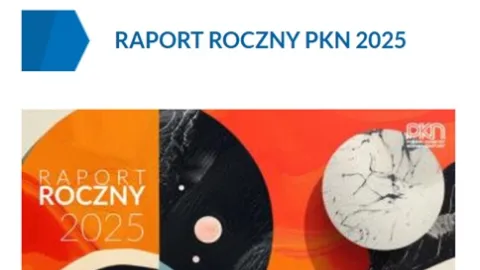
PKN Reports Growth in Standards Development and Digital Modernization During 2025
The Polish Committee for Standardization (PKN) has published its 2025 Annual Report, highlighting expanded standards development, growing participation from industry, and major steps to modernize Poland's standardization system through new digital initiatives.
DIN SPEC 91494 Brings Spiritual Care Into Healthcare Management
The German Institute for Standardization (DIN) has published DIN SPEC 91494, Germany's first specification providing healthcare organizations with a structured framework for integrating Spiritual Care into existing quality management systems.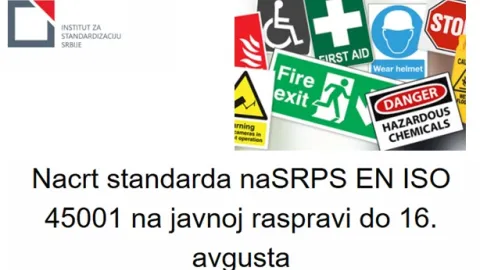
Serbia Opens Public Consultation on ISO 45001 Draft
The Institute for Standardization of Serbia (ISS) has opened a public consultation on the draft naSRPS EN ISO 45001, giving organizations and other interested parties until August 16 to review and comment on the proposed revision of the international OHS management standard.
MESSER Receives Serbia's First Reference Material Producer Accreditation
The Accreditation Body of Serbia (ATS) has awarded Serbia's first accreditation for a reference material producer to MESSER TEHNOGAS AD BEOGRAD, establishing a new accreditation field in the country's quality infrastructure.
Meeting Standards Campaign Encourages Croatian SMEs to Help Shape European Standards
The Croatian Standards Institute (HZN) has joined the European Meeting Standards campaign to encourage more small and medium-sized enterprises (SMEs) to participate in the development of European standards.
DAkkS Extends Flexible Accreditation Scopes Across All Activities
The German Accreditation Body (DAkkS) has expanded its flexible scopes system to all accreditation activities, allowing qualified conformity assessment bodies (CABs) to update their approved technical scope without prior approval for every individual change.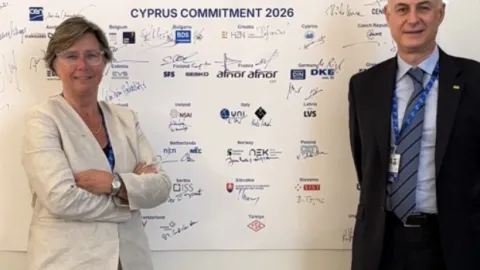
Cyprus Commitment Sets Common Direction for European Standardization
All 43 members of CEN and CENELEC have endorsed the Cyprus Commitment, setting a common direction for the future of European standardization and signaling unity during the ongoing revision of Regulation (EU) No. 1025/2012.
Belgium Adopts New VCA Contractor Safety Certification Scheme
The Belgian Accreditation Body (BELAC) announced that Belgium will adopt the VCA 2026/6.1, the updated contractor safety certification scheme, from July 1, 2026, with no transition period.
NEN Simplifies Safety Culture Ladder Questionnaire
The Netherlands Standardization Institute (NEN) has simplified the Self Assessment Questionnaire (SAQ) used in the Safety Culture Ladder (SCL) certification process.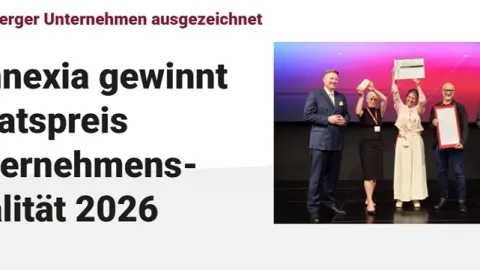
Connexia Wins Austria's 2026 State Award for Business Excellence
The Vorarlberg-based health care and social services organization connexia has won the 2026 State Award for Business Excellence, presented by the Federal Ministry for Economic Affairs, Energy and Tourism (BMWET) and Quality Austria.
Russian Standardization Week 2026 Set for October With New Award for Young Experts
The Russian Standardization Institute (RST) has announced that the Russian Standardization Week 2026 forum will take place in St. Petersburg from October 12–16.
Family Businesses Invited to Apply for Czech Quality Award
The Quality Council of the Czech Republic (RK ČR) has opened applications for the 2026 National Quality Award for Family Businesses, with submissions accepted until July 31, 2026.Global News

ISO 29997 Offers First International Framework for Quality Internships
ISO 29997:2025 provides the first international framework designed to help organizations deliver higher-quality internships through clearer planning, management and evaluation practices.
Experts Behind ISO 14001:2026 Explain New Focus on Climate, Biodiversity and Results
The International Organization for Standardization (ISO) has outlined the most important changes in ISO 14001:2026,
New ISO/IEC 15408 and 18045 Editions Update Common Criteria Framework
ISO/IEC 15408-1:2026 and ISO/IEC 18045:2026 have been published, updating the Common Criteria framework, an international system used to evaluate the security of IT products.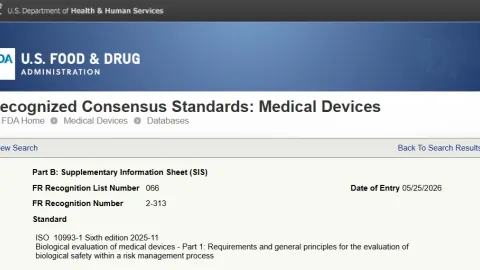
FDA Partially Recognizes ISO 10993-1:2025 for Medical Devices
The U.S. Food and Drug Administration (FDA) has partially recognized ISO 10993-1:2025, the latest edition of the international standard used to assess the biological safety of medical devices.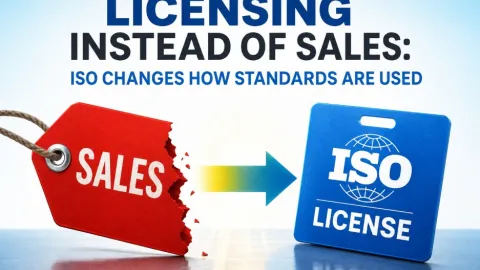
Licensing Instead of Sales: ISO Changes How Standards Are Used
The International Organization for Standardization (ISO) is preparing to replace its traditional standards sales approach with a licensing model that would give users defined rights to use standards content instead of broad unrestricted access.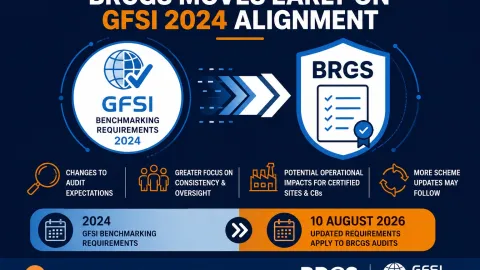
BRCGS Updates Food Safety, Packaging, Storage, and Broker Rules to Meet New GFSI Requirements
BRCGS has updated certification requirements for its Food Safety, Packaging Materials, Storage and Distribution, and Agents and Brokers standards,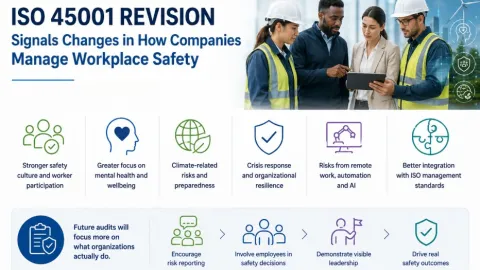
ISO 45001 Revision Signals Changes in How Companies Manage Workplace Safety
The revision of ISO 45001 is expected to push companies beyond traditional workplace safety management by placing greater emphasis on mental health, organizational resilience, safety culture, and climate-related risks.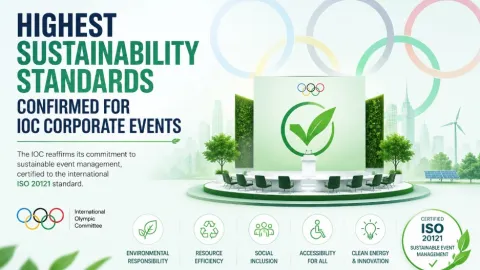
International Olympic Committee Certified to ISO 20121 Event Sustainability Standard
The International Olympic Committee (IOC) has been re-certified to ISO 20121:2024 for sustainability management at the corporate events it directly organizes and finances, including IOC Sessions, conferences, Olympic Day activities, and commission meetings.
Core Industrial Safety Framework IEC 61508 Undergoes Major Revision
The IEC 61508 series, the international foundation for many industrial functional safety standards,
FSC Proposes New Rules for Certification Statements and Audit Duration
The Forest Stewardship Council (FSC) has opened a public consultation on two draft Advice Notes that would update certification body requirements related to certification statements and minimum audit duration for Forest Management audits.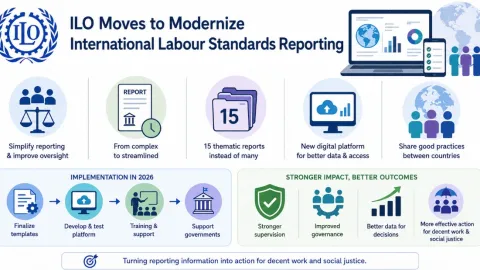
ILO Moves to Modernize International Labour Standards Reporting
The International Labour Organization (ILO) is preparing a major overhaul of how countries report on international labour standards.