Management Systems World
All on Quality and other Standards in one place since 2010. Now Worldwide.
News IT / Telecommunication
Please note that you have to be a registered member with paid membership in order to see full articles.
RegisterSelected News

Czech Standards Agency Forms Council to Help Shape AI Testing Framework
The Czech Standards Agency (ČAS) has formed a Market and Innovation Council to involve the private sector in preparing a regulatory sandbox under the European Union’s Artificial Intelligence Act (EU AI Act).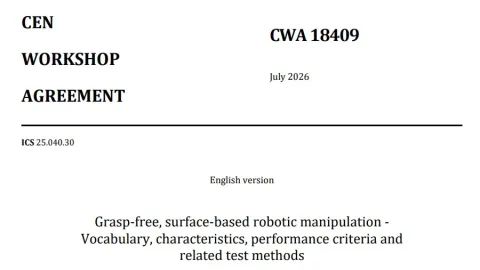
European MOZART Project Develops CWA 18409:2026 for Grasp-Free Robotic Food Handling
CWA 18409:2026 has been published by the European Committee for Standardization (CEN), providing a common technical framework for grasp-free robotic systems designed to move and manipulate soft, fragile and irregular food products using deformable surfaces instead of conventional grippers.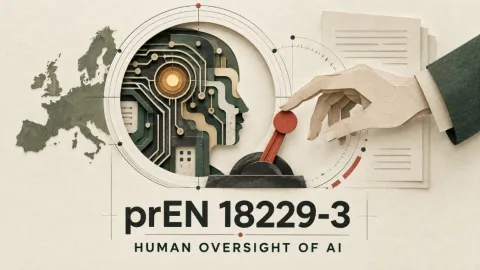
EN 18229-3 Human Oversight, Part of AI Trustworthiness Framework, Opens for Comment
A draft on human oversight is now open for comment within the five-part European EN 18229 AI trustworthiness framework.
NEN Launches Customer Panel to Shape AI Tools for Standards
The Royal Netherlands Standardization Institute (NEN) has launched an AI customer panel to help shape tools that make standards easier to find, understand and use while reducing the risk of incorrect answers from general-purpose AI systems.
How NEN 7510 Provides a Starting Point for New Cybersecurity Act Requirements
With the Dutch Cybersecurity Act (Cbw) now in force, healthcare organizations already using NEN 7510 can use their existing risk assessments, security measures as a starting point for addressing the new requirements.
Serbia’s Innovation Fund Offers MSMEs Up to RSD 3.6 Million in AI Vouchers
The Innovation Fund of the Republic of Serbia (IF) is offering eligible micro, small and medium-sized enterprises (MSMEs) up to RSD 3.6 million in AI vouchers to introduce or expand the use of artificial intelligence in their business.
Ten QM Software Providers to Present Their Tools at SAQ-QUALICON Event
SAQ-QUALICON is organizing a free online Tool Arena on December 10, 2026, where 10 providers will present their own quality management software.
Türkiye Sets Coordinated Transition Timeline for ISO/IEC 27701 and ISO/IEC 27706
The Turkish Accreditation Agency (TÜRKAK) has outlined how accredited certification bodies and their clients must transition to the updated standards for privacy information management certification.
NIST Seeks Comments on Customizable AI Evaluation Framework
The National Institute of Standards and Technology (NIST) has released an initial draft of NIST AI 200-2, The TEVV-Athlon Framework for Evaluating AI Systems, and is seeking comments through October 6, 2026.
DAkkS Starts Cyber Resilience Act Accreditation Process
Germany’s national accreditation body, Deutsche Akkreditierungsstelle (DAkkS), has opened accreditation applications for conformity assessment bodies that want to work under the EU Cyber Resilience Act (CRA).
NIST Opens AI Documentation Draft for Public Comment
The National Institute of Standards and Technology (NIST) is seeking public comment through September 16 on proposed guidance and templates for documenting AI datasets and models, which it plans to put forward for possible development as an international standard.
South Korea to Lead New ISO Drone Cybersecurity Working Group
South Korea will lead a newly established International Organization for Standardization (ISO) working group on drone cybersecurity, which will oversee the development of international standards in the field.Global News
Global ACI Sets Three-Year Transition Timelines for ISO 14001:2026 and ISO 9001:2026
Global Accreditation Cooperation Incorporated (Global ACI) has set three-year transition periods for accredited certification to ISO 14001:2026 and ISO 9001:2026, ending September 30, 2029 and April 30, 2029, respectively.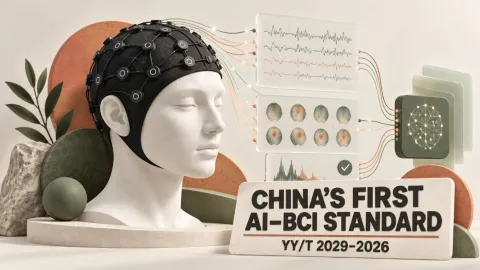
China Approves World’s First Medical Device Standard for AI Brain-Computer Interfaces
China has approved YY/T 2029-2026, the world’s first medical device standard for brain-computer interfaces (BCIs) that use artificial intelligence (AI).
IFS Makes EU Packaging Rules Self-Assessment Tool Available After 70-Company Pilot
International Featured Standards (IFS) has made its self-assessment tool for the EU Packaging and Packaging Waste Regulation (PPWR) available in the IFS Database after a pilot involving 70 companies.
Comment Open on ISO/DIS 20020 for Bodies Auditing and Certifying Food Loss and Waste Management Systems
Comments are open on ISO/DIS 20020, a draft standard setting requirements for bodies that audit and certify food loss and waste management systems (FLWMS).
ISO Begins Developing IWA 52 to Harmonize Transport GHG Emission Factors
The International Organization for Standardization (ISO) is developing IWA 52 to harmonize how greenhouse gas (GHG) emission factors are calculated for transport.
ISO 22095-1 Chain of Custody Revision Reaches Committee Draft Stage
ISO 22095-1 has reached the Committee Draft stage, moving the revision of the general chain of custody framework into formal consultation.
IATF Clarifies Complaint Handling for Certification Bodies
The International Automotive Task Force (IATF) has issued new guidance for certification bodies on handling vehicle manufacturer performance complaints through the IATF Complaint Management System (IATF CMS).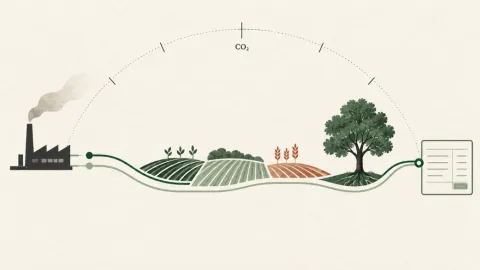
How SBTi and GHG Protocol Updates Expand Options for Corporate Emissions Accounting
Changes from the Science Based Targets initiative (SBTi) and Greenhouse Gas Protocol, two major frameworks for corporate climate targets and greenhouse-gas accounting, are expanding the options companies have for addressing and accounting for value-chain emissions.
ISO 9001:2026 Officially Launched
The sixth edition of ISO 9001, the world’s most widely used quality management system standard, has been officially launched by ISO during a virtual press conference.
Global Responsible Textile Standard (GRTS) Launches for Certification of Wider Range of Fibers
Global Standards has launched the Global Responsible Textile Standard (GRTS), a new certification standard for textiles made from a wider range of plant, animal, synthetic, man-made cellulosic and recycled fibers.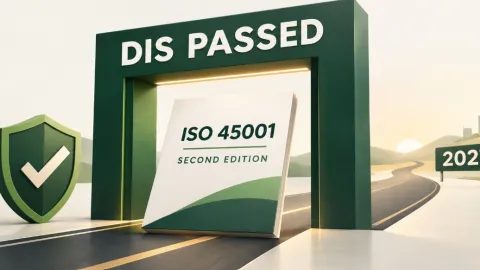
ISO 45001 Second Edition Clears DIS Ballot With Overwhelming Support
The draft second edition of ISO 45001 has passed its Draft International Standard (DIS) vote with only one vote against, moving the revision closer to its planned publication in the first half of 2027.