Management Systems World
All on Quality and other Standards in one place since 2010. Now Worldwide.
News IT / Telecommunication
Please note that you have to be a registered member with paid membership in order to see full articles.
RegisterSelected News
Canada Opens AI and Data Governance Standardization Hub
Canada has launched the AI and Data Governance (AIDG) Standardization Hub to help businesses and regulators use artificial intelligence (AI) responsibly, ethically, and effectively.
UKAS Issues Second Call for Applicants for AI Management System Accreditation
The United Kingdom Accreditation Service (UKAS) has issued a second call for expressions of interest from certification bodies interested in accreditation for ISO/IEC 42001:2023, the first international standard for Artificial Intelligence Management Systems.
Xayn Becomes First German Company Certified to ISO 42001 for AI Management
Xayn, a Berlin-based AI startup, is the first company in Germany to receive certification to ISO/IEC 42001,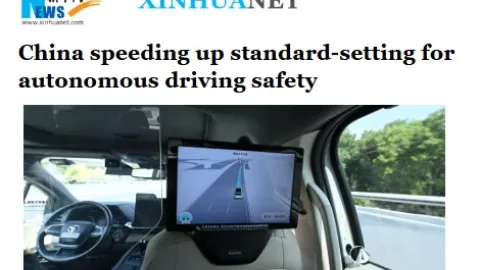
China Aims to Strengthen Autonomous Driving and EV Standards in 2025
China will prioritize the development of national standards for autonomous driving and electric vehicle safety in 2025, according to a new document from the Ministry of Industry and Information Technology.
Bank of Namibia Upgrades National Payment System to ISO 20022
The Bank of Namibia has successfully transitioned its Namibia Interbank Settlement System (NISS) to the ISO 20022 global payment messaging standard, effective May 12, 2025.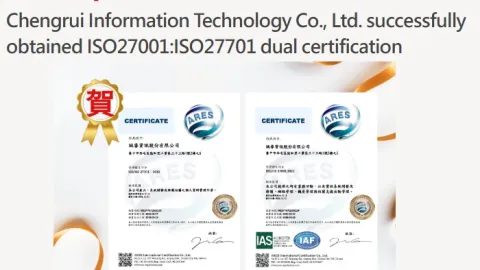
Chengrui Tech Earns Dual ISO Certification for Information and Privacy Security
Chengrui Technology has achieved dual certification to ISO 27001 for Information Security Management Systems and ISO 27701 for Privacy Information Management Systems.
i-PRO Becomes First in Security Industry to Earn ISO 42001 AI Certification
i-PRO Co., Ltd., a global leader in edge computing security cameras, has become the first company in the physical security industry to earn ISO 42001 certification for its AI management systems.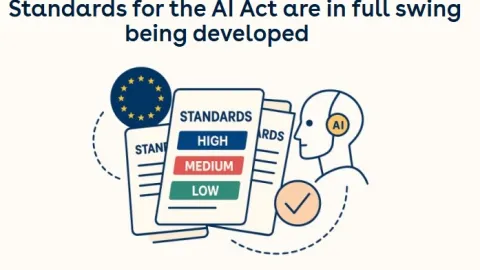
EU Preparing Standards for AI Act Compliance on High-Risk Systems
Organizations that develop or use high-risk artificial intelligence (AI) systems will need to comply with the EU’s AI Act by August 2, 2026.
Korea Establishes National Lidar Standard to Support Autonomous Driving
The Korean Agency for Technology and Standards (KATS) has established a new national standard to assess lidar sensor performance in autonomous vehicles, aiming to improve safety and accelerate commercialization.
UNE Leads Creation of European Guide for Applying AI in Process Industries
The Spanish Association for Standardization (UNE) has led the development of CWA 18211:2025, a new European guide that explains how to apply artificial intelligence (AI) in process industries.
New UNI Guide Unites ISO 27001 and NIST Framework for Stronger Cyber Defense
The Italian national standards body UNI has published UNI/PdR 174:2025, a new guideline to help organizations improve their digital resilience.
Boosting European Identity Systems: New Standard Improves Biometric Verification
A new guidance document has been published in the UK to support safer and more efficient use of facial and fingerprint recognition across Europe.Global News
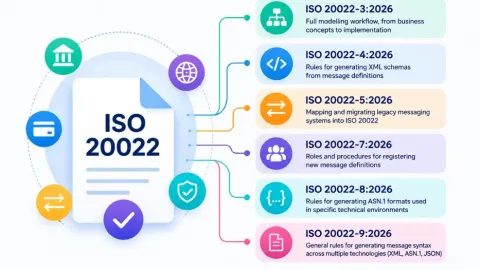
ISO 20022 Series Update Sets New Rules as Payment Systems Prepare for Implementation
The International Organization for Standardization (ISO) has published updated and new parts in the ISO 20022 series, as major payment systems advance their implementation of the standard on closely aligned timelines.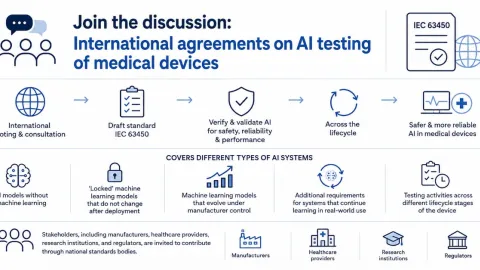
Consultation Underway On Global Standard For AI Testing In Medical Devices
An international voting and consultation phase is underway for a new standard that sets requirements for testing artificial intelligence (AI) and machine learning (ML) in medical devices.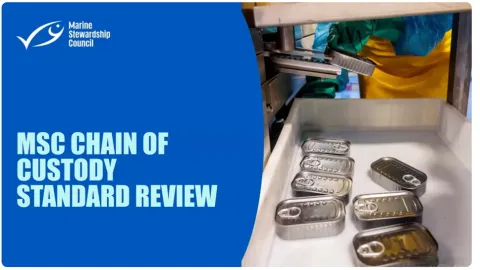
MSC Opens Review Of Chain Of Custody Standard For Public Consultation
The Marine Stewardship Council (MSC) has launched a public consultation on proposed revisions to its Chain of Custody Standard, inviting stakeholders across the seafood supply chain to provide feedback until May 30, 2026.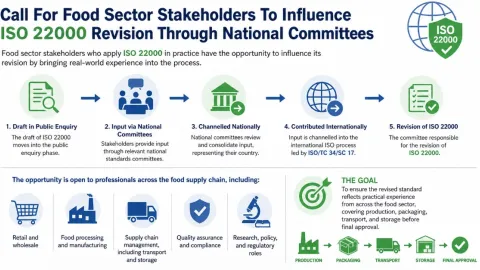
Call For Food Sector Stakeholders To Influence ISO 22000 Revision Through National Committees
Food sector stakeholders who apply ISO 22000 in practice have the opportunity to influence its revision by bringing real-world experience into the process.
AutoCarbon Certification Scheme Due in 2027 As Pilot Phase Begins
The International Automotive Oversight Bureau (IAOB) has announced AutoCarbon,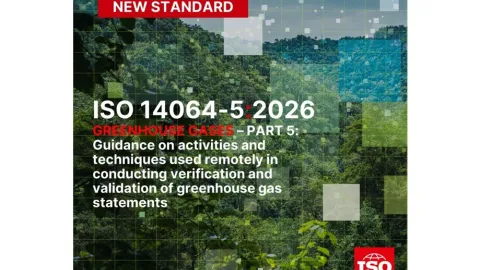
ISO 14064-5 Introduces Guidance For Remote Verification Of Greenhouse Gas Data
The International Organization for Standardization (ISO) has introduced ISO 14064-5, which provides guidance on how to carry out verification and validation of greenhouse gas (GHG) data using remote techniques in digital environments.
ISO 9002 Revision Moves To Draft International Standard Stage
The revision of ISO 9002 has entered the Draft International Standard (DIS) stage, with ISO/TC 176/SC 2, the ISO subcommittee responsible for quality systems, advancing the project into formal consultation.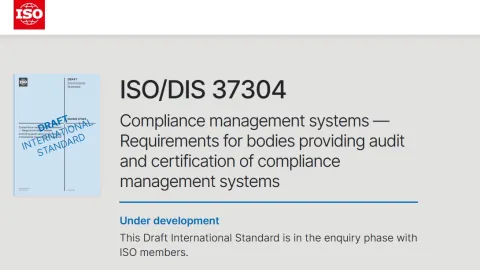
ISO 37304 Compliance Management Certification Standard Advances to Final Draft Stage
The International Organization for Standardization (ISO) has advanced ISO 37304 to the final draft international standard (FDIS) stage.
One Vote Tips Toward New Edition Of ISO/IEC 17065 Over Amendment
One vote has tipped the decision toward publishing a new edition of ISO/IEC 17065 instead of issuing a separate amendment, following a closely split ballot within the International Organization for Standardization (ISO).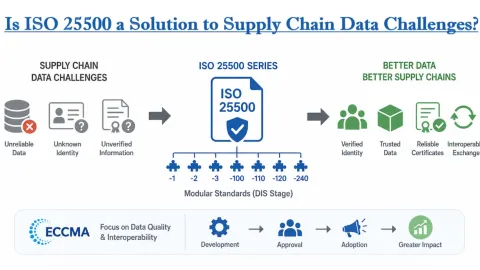
Is ISO 25500 a Solution to Supply Chain Data Challenges?
ISO 25500, a draft series of standards from the International Organization for Standardization (ISO), is presented by the Electronic Commerce Code Management Association (ECCMA) as a possible way to address long-standing problems with unreliable data across global supply chains.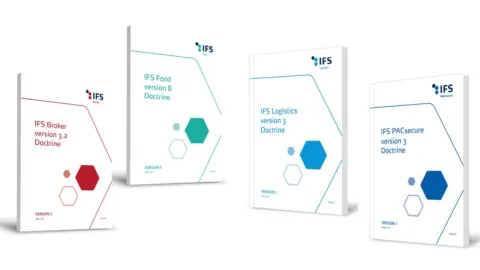
IFS Updates Food, Logistics, Broker And Pacsecure Doctrines To Clarify Certification Rules
The International Featured Standards (IFS) has published updated doctrine documents for its current standards covering food production, logistics, brokerage, and packaging materials, clarifying how certification requirements should be applied without revising the standards themselves.