Management Systems World
All on Quality and other Standards in one place since 2010. Now Worldwide.
News
Please note that you have to be a registered member with paid membership in order to see full articles.
RegisterSelected News
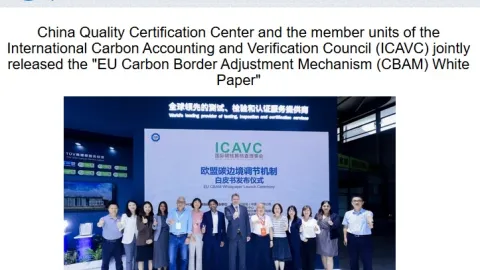
White Paper Analyzes EU Carbon Rules and Their Impact on Chinese Companies
The China Quality Certification Center (CQC) and other members of the International Carbon Accounting and Verification Council (ICAVC),
Standards Australia Webinar Prepares Industry for Respiratory Protection Overhaul
A new webinar from Standards Australia highlights what professionals need to know about the coming changes to respiratory protection standards in Australia and New Zealand.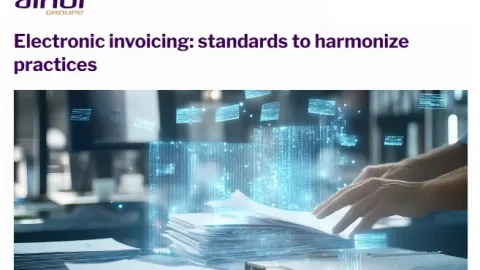
France Releases Experimental Standard to Support Shift to Electronic Invoicing
France has released the voluntary experimental standard XP Z12-014 to help businesses transition to electronic invoicing and comply with upcoming national requirements.
Africa Sets Up Continental Agency to Harmonize Food Safety Standards
Africa has adopted a statute to create the Africa Food Safety Agency, a major step toward coordinating and harmonizing food safety standards and regulations across the continent.
Helping Quantum Technologies Speak the Same Language: Denmark Launches New Specification
Danish Standards has published DS/PAS 21008-1:2025, a new specification designed to help quantum technologies "speak the same language" by introducing a shared framework for describing and classifying the supporting technologies that make quantum systems work.
Almaviva Group Receives ESG Recognition and ISO 37001 Certification from DNV
Almaviva Group has become the second company in the world to receive ESG Recognition from DNV, confirming its commitment to responsible governance and sustainability.
SMI Group and CSQA Celebrate First ISO 42001 Certification in Italy
SMI Group has become the first company in Italy to be certified by CSQA for compliance with the ISO/IEC 42001 standard for Artificial Intelligence Management System.
UKAS Retains EA Status After Successful Peer Review
The United Kingdom Accreditation Service (UKAS), the UK’s national accreditation body, has successfully maintained its status as a signatory to the European co-operation for Accreditation (EA) Multilateral Agreement (EA MLA).
AFNOR Launches Public Inquiry on Revised Standard for Intellectual Property Data Exchange
AFNOR, the French national organization for standardization, has launched a public inquiry on the draft revision of the French standard NF X50-276, which sets guidelines for the electronic exchange of intellectual property (IP) data.
CPDC Earns ISCC PLUS Certification for Three Facilities in Taiwan
China Petrochemical Development Corporation (CPDC) has obtained ISCC PLUS certification for three of its facilities, marking a significant step in its transition from traditional petrochemicals to a more circular, sustainable economy.
UNI Releases Italian Version of EU Artificial Intelligence Governance Report
The Italian national standardization body UNI has published the Italian version of the technical report UNI CEI CEN/CLC/TR 18115:2025,