Management Systems World
All on Quality and other Standards in one place since 2010. Now Worldwide.
News
Please note that you have to be a registered member with paid membership in order to see full articles.
RegisterSelected News
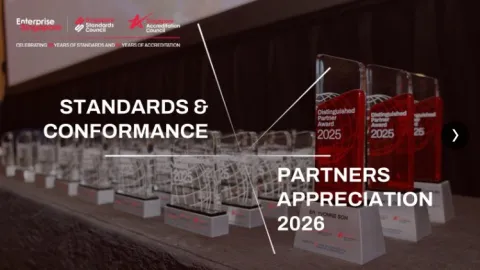
Singapore Honors Partners Advancing Standards And Accreditation
The Enterprise Singapore (EnterpriseSG), Singapore Standards Council (SSC), and Singapore Accreditation Council (SAC) recognized 49 partners for their contributions to national standardization and accreditation efforts.
Baoyan Chan Monastery Earns DnB ESG Registered Status
Baoyan Chan Monastery Shan Jue Meditation Center has achieved ESG Registered status from Dun & Bradstreet (D&B), marking its alignment with environmental, social, and governance principles through a structured ESG framework.
Algeria and Malta Accreditation Bodies Pass EA Peer Reviews
The European co-operation for Accreditation (EA) confirmed that ALGERAC and NAB-Malta have passed peer reviews by its Multilateral Agreement Council (MAC).
India Calls for Input on ISO 24515 Committee Draft on Microplastics in Water Systems
The Bureau of Indian Standards (BIS) is inviting stakeholder comments on ISO/CD 24515, a draft international standard on managing microplastics in water supply systems, with a deadline of April 25, 2026.
Portugal Joins International Group on Certification of Personnel Competence in IECEE
The Portuguese Institute for Quality (IPQ) has joined Working Group 34 (WG 34) on certification of personnel competence within the IECEE system.
Vietnam Sets Rules for Halal Product Quality and Certification
The Government of Vietnam has issued Decree No. 127/2026/ND-CP, setting a legal framework for managing the quality of halal products and services and supporting their development.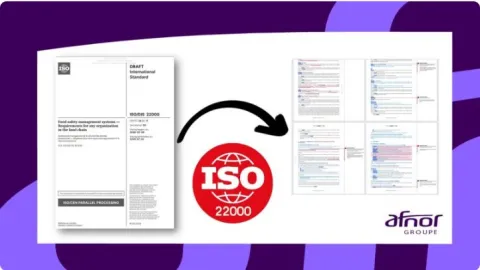
ISO 22000 Draft Gets French Translation
A French translation of the Draft International Standard (DIS) for ISO 22000, which sets requirements for food safety management systems, has now been completed as part of the revision led by the International Organization for Standardization (ISO).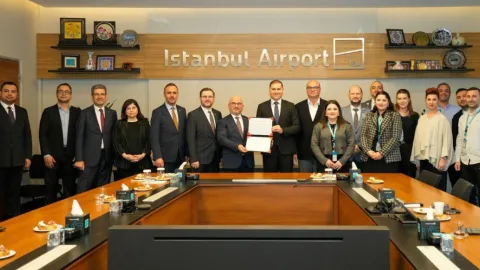
Istanbul Airport Earns ISO 46001 Water Efficiency Certification
Istanbul Airport operator İGA has earned TS ISO 46001 certification for its water efficiency management system, following an audit conducted by the Turkish Standards Institution (TSE).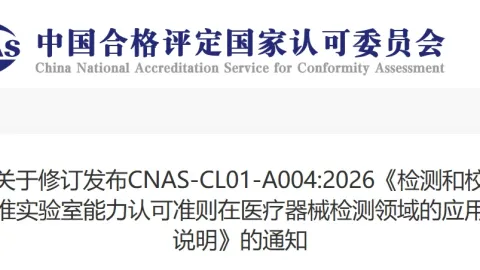
China Updates Laboratory Accreditation Rules for Medical Device Testing
China National Accreditation Service for Conformity Assessment (CNAS) has issued a revised version of its guidance for applying laboratory accreditation criteria in medical device testing, with CNAS-CL01-A004:2026 set to take effect on May 1, 2026.
Sekuro First Cybersecurity Firm in Australia to Achieve ISO 42001 Certification
Australian cybersecurity firm Sekuro has become the first in Australia and the wider Asia-Pacific region to achieve certification to ISO/IEC 42001, a global standard for managing artificial intelligence.
April PKN News Issue Examines Governing Autonomous AI Systems
The Polish Committee for Standardization (PKN) centers its April 2026 issue of its PKN News publication on how standards are adapting to the rapid shift toward artificial intelligence (AI) systems that can act and decide independently.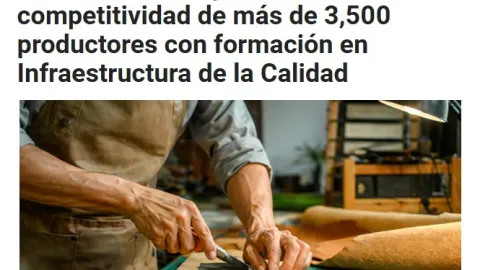
Peru Trains 3,500 Producers to Meet Quality Standards
The National Quality Institute (INACAL) and Technological Institute of Production (ITP) have completed a nationwide training program that reached more than 3,500 producers, helping them learn how to apply standards, improve product quality, and access new markets.Global News
Standards Pavilion Expands at COP30 with Broader Coalition on Climate Policy and Finance
The Standards Pavilion has opened at COP30 in Belém, Brazil, where 21 international organizations are discussing how standards can support measurable climate action.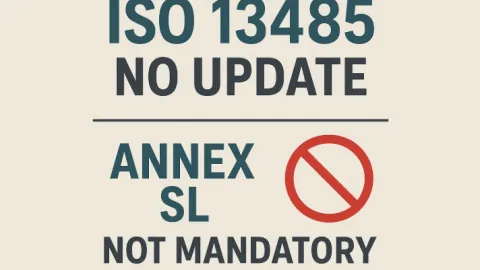
ISO 13485 Stays Unchanged as Revision Committee Rejects Annex SL Alignment
The medical device quality management standard ISO 13485 will remain unchanged, as ISO’s Technical Committee in charge, ISO/TC 210, decided not to align it with Annex SL, ISO’s harmonized structure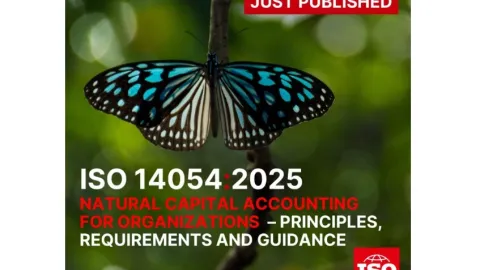
ISO 14054 Introduces First Global Framework for Natural Capital Accounting
The International Organization for Standardization (ISO) has published a new global standard, ISO 14054:2025, to help organizations measure, value, and account for their interactions with nature.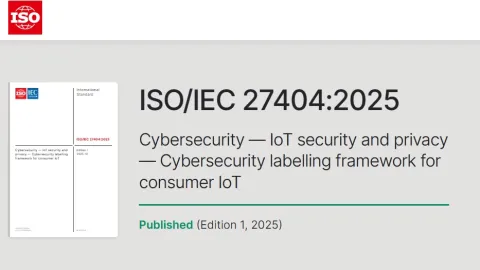
ISO 27404 Sets Global Framework for Cybersecurity Labels on Consumer IoT
The new ISO/IEC 27404:2025 standard has been released,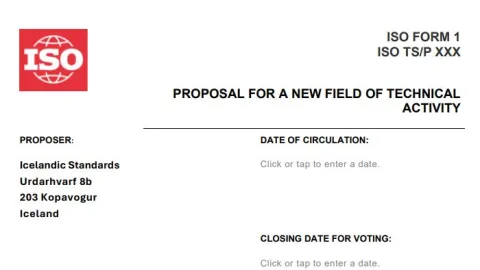
Iceland Proposes New ISO Committee for Children’s Rights Management
The Icelandic Standards (IST) has submitted a proposal to the International Organization for Standardization (ISO) to establish a new technical committee, ISO/TC on Children’s Rights Management.
IFAN 2025 Survey Finds Cost and Complexity Still Blocking Standards Use
The International Federation of Standards Users (IFAN) has released its 2025 International Standards Users Survey, drawing insights from a record 861 organizations worldwide.
IEEE Reveals 2025 Award Winners for Excellence in Standards Development
The IEEE Standards Association (IEEE SA) announced the 2025 recipients of its annual awards, recognizing individuals and groups who made significant contributions to international standards.
IAF and ILAC Replaced at Year End as New Global Accreditation Body Takes Over
The International Accreditation Forum (IAF) and the International Laboratory Accreditation Cooperation (ILAC) will begin dissolution processes on January 1, 2026,
ISO 17620 published to support global biodiversity preservation and sustainable development
A new international standard, ISO 17620:2025, has been published to help ensure that development projects protect, preserve, and enhance biodiversity worldwide.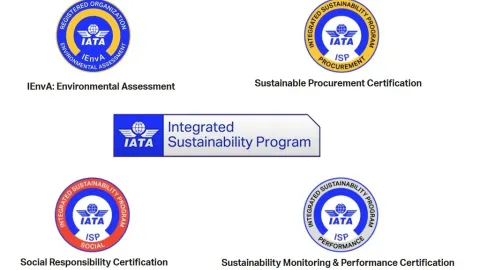
IATA Launches Integrated Sustainability Program for Airlines
The International Air Transport Association (IATA) has introduced the Integrated Sustainability Program (ISP), a comprehensive certification and assessment framework tailored for airlines.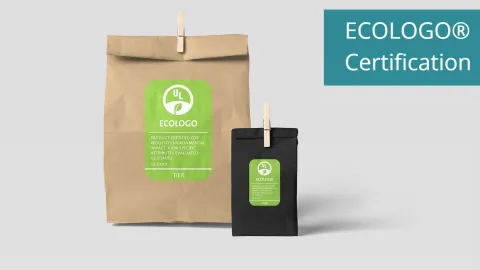
UL Solutions Expands ECOLOGO Certification to Industrial and Energy Equipment
UL Solutions has expanded its ECOLOGO certification program to cover industrial and energy automation equipment, helping manufacturers verify sustainability claims through science-based, multi-attribute standards.