Management Systems World
All on Quality and other Standards in one place since 2010. Now Worldwide.
News
Please note that you have to be a registered member with paid membership in order to see full articles.
RegisterSelected News

May Issue of Calidad Highlights Metrology Events, Global Accreditation and Small Business Support
The National Institute of Quality (INACAL) has published the May 2026 issue of Calidad, its digital newsletter.
Norway Honors Three Leaders in Standardization With 2026 Awards
The Standard Norway (SN) has presented its 2026 standardization awards to Steinar Helland, Tore Andreas Torp and Åse Høisæter,
Environmental Management and Digital Transformation Headline New HZN e-Glasilo
The Croatian Standards Institute (HZN) has published issue 5/2026 of HZN e-Glasilo, with environmental management and digital transformation emerging as the publication's leading themes.
Montenegro Invites Proposals for 2027 National Standards Plan
The Institute for Standardization of Montenegro (ISME) has opened a public call for participation in the development of Montenegro’s 2027 plan for adopting national standards and related documents.
Current Standards System at Risk After IBR Court Decisions, ANSI Brief Warns
The American National Standards Institute (ANSI) is warning standards developing organizations (SDOs) that recent US court decisions involving standards incorporated by reference (IBR) could threaten the long-standing system used to fund, maintain, and update voluntary standards.
Inmetro Gains International Recognition for FSSC 24000 Accreditation
The National Institute of Metrology, Quality, and Technology (Inmetro) has received international recognition to accredit certification bodies under the FSSC 24000 social responsibility certification scheme.
PCA Opens Consultation on Revised Biobank Accreditation Program
Polish Centre for Accreditation (PCA) has opened a public consultation on a revised version of its DABB-01 accreditation program for biobanks, introducing clearer rules for accreditation scope descriptions and updates aligned with PN-EN ISO 20387:2021-01.
India Adopts ISO 14001:2026 as National Environmental Management Standard
The Bureau of Indian Standards (BIS) has published IS/ISO 14001:2026 as an identical adoption of ISO 14001:2026, updating India’s national framework for environmental management systems.
SEK Launches KravSmart Digital Standards Platform
SEK Svensk Elstandard (SEK) has introduced SEK KravSmart, a new digital platform designed to make electrical standards easier to search, use, and integrate into daily work.
Vietnam Food Safety Institute Achieves GLP-OECD Status
The National Accreditation Office for Quality (BOA) awarded OECD Good Laboratory Practice (GLP) recognition to the National Institute for Food Control (NIFC),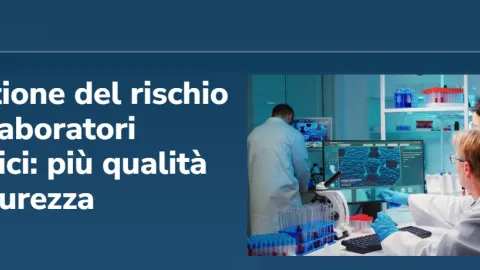
Italy Adopts ISO 22367:2026 for Medical Laboratory Risk Management
The Italian National Standardization Body (UNI) has published the Italian adoption of ISO 22367:2026, the revised international guidance standard for risk management in medical laboratories.
South Korea Opens Public Vote on Six Everyday Standards Proposals
The Korean Agency for Technology and Standards (KATS) has opened a nationwide online vote to help decide which everyday issues should be developed into future Korean Standards (KS).Global News

Enhancing Forensic Investigation With ISO 21043 Standards Series
A new set of international standards shows how standardization can improve the quality and reliability of hands-on work such as forensic investigation.
Stellantis Releases New Customer-Specific Requirements for Use With IATF 16949
Stellantis has released a new set of Customer-Specific Requirements (CSRs) for use with IATF 16949, replacing earlier documents from its various divisions.
BRICS Meeting on Standardization Ends With Signing of Brasilia Declaration
The national standardization bodies of BRICS concluded their first in-person meeting under Brazil’s presidency with the signing of the Brasilia Declaration.
Two New Environmental Management Standards Published by ISO and IEC
The International Organization for Standardization (ISO) and the International Electrotechnical Commission (IEC) have released two new standards—ISO/TS 14076 and IEC 82474-1—
Producer Responsibility Standard Under Development
Sweden will lead the creation of a new global standard on producer responsibility, with the work coordinated by the Swedish Institute for Standards (SIS).
Codex Committee on General Principles Meets in Lille to Discuss Updates to Procedural Manual
Delegates from around the world gathered in Lille, France from June 2 to 6 for the 34th Session of the Codex Committee on General Principles (CCGP34), where they discussed proposed updates to the Codex Alimentarius Procedural Manual.
Preventing Ageism and Scams in Digital Economy: New ISO 25556 Aims to Protect Older People
A new international standard by ISO has been launched to help governments, businesses, and service providers build a digital economy that is fair and accessible to older adults.
IAQG Preparing Major Changes to Aerospace Certification Processes and Quality Standards
The International Aerospace Quality Group (IAQG) is preparing major updates to its global certification scheme.
Ford Updates CSRs, Scorecard Guide and Audit Screens With Stricter Rules
Ford has issued updates to its Customer-Specific Requirements (CSRs), scorecard guide, and audit visuals under the IATF 16949 quality management standard.
IAF Joins AIQI Consortium to Strengthen Quality Infrastructure for AI
The International Accreditation Forum (IAF) has joined the Artificial Intelligence Quality Infrastructure (AIQI) Consortium to help develop safe and trustworthy AI technologies.
SGS Launches The PLEDGE program on Food Waste Certification Across Food Service Sector
SGS has launched The PLEDGE on Food Waste Certification, a third-party program aimed at helping food service businesses reduce food waste and improve operational efficiency.