Management Systems World
All on Quality and other Standards in one place since 2010. Now Worldwide.
News Food / Agriculture
Please note that you have to be a registered member with paid membership in order to see full articles.
RegisterSelected News
Mexico Postpones Final Labeling Phase for Prepackaged Food and Drink Products
Mexico has extended the second phase of its food labeling standard for prepackaged foods and non-alcoholic beverages until December 31, 2025.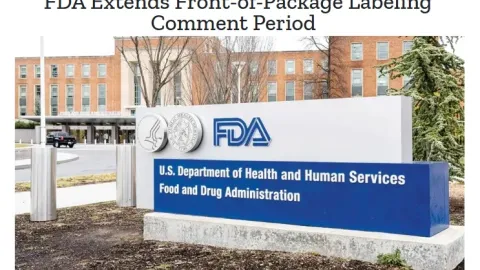
FDA Extends Deadline for Front-of-Package Nutrition Label Proposal
The U.S. Food and Drug Administration (FDA) has extended the comment period for its proposed front-of-package (FOP) nutrition labeling rule until July 15.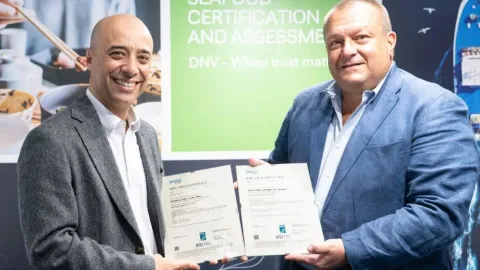
Skretting Certified under ASC Feed Standard Ahead of Compliance Deadline
Skretting, an aquaculture feed manufacturer based in Stavanger, Norway, has been certified under the ASC Feed Standard by DNV.
Valore Sicilia Project Boosts Agri-Food Transparency Through Blockchain and Certification
The Agency for the Mediterranean has launched the Valore Sicilia project to improve traceability and promote the origin and quality of Sicilian agri-food products.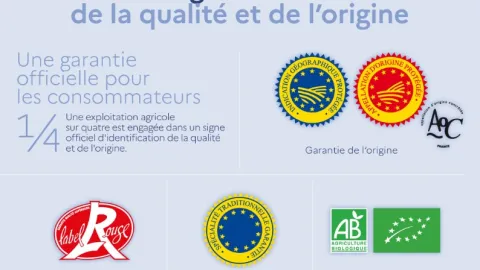
French Labels That Guarantee Food Quality and Origin Explained
An infographic published by France’s Ministry of Agriculture clearly explains the country’s system of quality and origin labels, used to certify over 1,100 food and agricultural products.
EU Updates Certification Templates for Imported Animal-Based Foods
The European Union has updated the certificate templates required for importing and transiting certain animals and animal-derived foods.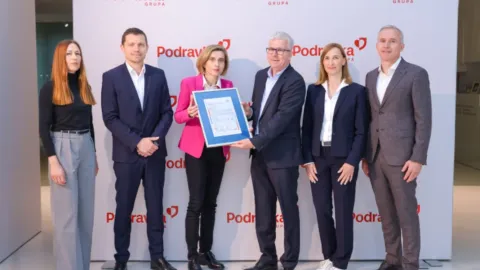
Podravka Factory Achieves BRCGS Certification Following Audit
Podravka’s Vegeta, Soup, and Pasta Factory has successfully passed the BRCGS Food Safety audit, confirming that its product range meets the highest global standards for food safety and quality.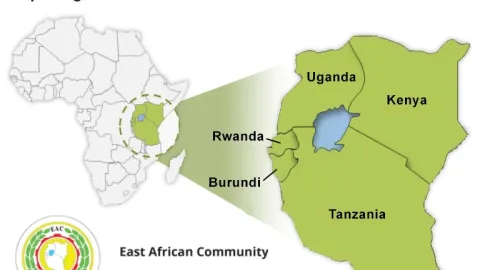
East African Community Proposes New Standard for Food Labeling
The Tanzania Bureau of Standards (TBS) has released a draft general standard for the labeling of prepackaged foods under the East African Community (EAC) framework.
Korea Revises Food Labeling Rules to Prevent Waste and Expand Nutrition Requirements
South Korea’s Ministry of Food and Drug Safety (MFDS) has revised national food labeling rules to reduce waste from unsold export products, improve consistency, and expand nutrition label requirements.
Stronger Guidance for Food Waste Diagnosis Released in France
The CTCPA, France’s Technical Center for the Conservation of Agricultural Products, has released an updated version of its guide for diagnosing food waste.
New Zealand GAP Scheme Granted IFA v6 Smart Recognition for Fruit and Vegetables
New Zealand GAP has been officially benchmarked equivalent to GLOBALG.A.P. Integrated Farm Assurance (IFA) version 6 Smart for fruit and vegetables, effective April 7, 2025.
Montenegro Opens Refund Call for Organic Certification and Control Costs
The Ministry of Agriculture, Forestry and Water Management of Montenegro has announced a public call to refund costs related to control and certification in organic production for this year, with a total of 170,000 euros allocated.Global News
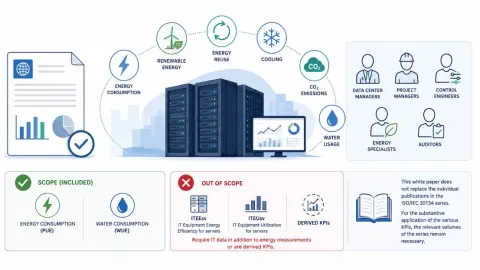
ISO 30134 Series KPIs Highlighted in New Data Center Energy and Water Whitepaper
A new whitepaper published by the International Organization for Standardization (ISO) explains how key performance indicators (KPIs) from the ISO/IEC 30134 series can be used to measure and report energy and water use in data centers.
CSQ Invites Comments on Cannabis EU GMP Certification Addendum
Cannabis Safety & Quality (CSQ) has opened a public comment period for a new EU GMP certification addendum,
FSSC 22000 Version 7 Updates Prerequisite Programs And Aligns With GFSI 2024
The Foundation FSSC has released Version 7 of the FSSC 22000 food safety management system certification scheme, introducing updated prerequisite programs (PRPs) and aligning the scheme with the 2024 Global Food Safety Initiative requirements.
ISO Develops Carbon Credit Data Model Standard, Calls for Input
A new data model for carbon credit markets is being developed by ISO’s sustainable finance and financial services committees, with early input still open to stakeholders.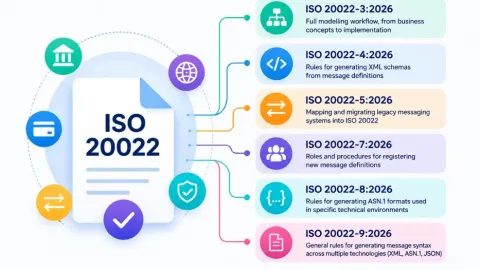
ISO 20022 Series Update Sets New Rules as Payment Systems Prepare for Implementation
The International Organization for Standardization (ISO) has published updated and new parts in the ISO 20022 series, as major payment systems advance their implementation of the standard on closely aligned timelines.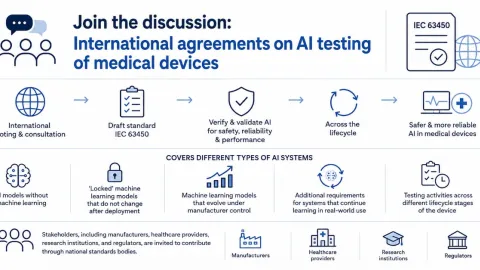
Consultation Underway On Global Standard For AI Testing In Medical Devices
An international voting and consultation phase is underway for a new standard that sets requirements for testing artificial intelligence (AI) and machine learning (ML) in medical devices.
MSC Opens Review Of Chain Of Custody Standard For Public Consultation
The Marine Stewardship Council (MSC) has launched a public consultation on proposed revisions to its Chain of Custody Standard, inviting stakeholders across the seafood supply chain to provide feedback until May 30, 2026.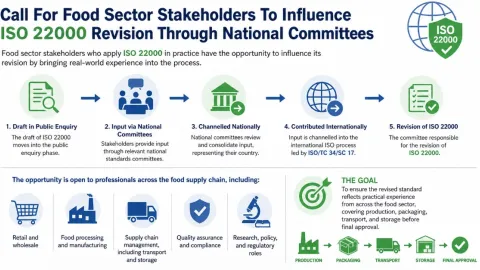
Call For Food Sector Stakeholders To Influence ISO 22000 Revision Through National Committees
Food sector stakeholders who apply ISO 22000 in practice have the opportunity to influence its revision by bringing real-world experience into the process.
AutoCarbon Certification Scheme Due in 2027 As Pilot Phase Begins
The International Automotive Oversight Bureau (IAOB) has announced AutoCarbon,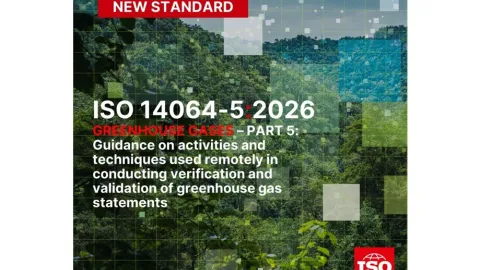
ISO 14064-5 Introduces Guidance For Remote Verification Of Greenhouse Gas Data
The International Organization for Standardization (ISO) has introduced ISO 14064-5, which provides guidance on how to carry out verification and validation of greenhouse gas (GHG) data using remote techniques in digital environments.
ISO 9002 Revision Moves To Draft International Standard Stage
The revision of ISO 9002 has entered the Draft International Standard (DIS) stage, with ISO/TC 176/SC 2, the ISO subcommittee responsible for quality systems, advancing the project into formal consultation.