Management Systems World
All on Quality and other Standards in one place since 2010. Now Worldwide.
News Food / Agriculture
Please note that you have to be a registered member with paid membership in order to see full articles.
RegisterSelected News
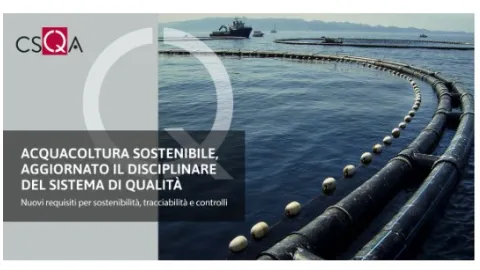
Italy Updates Sustainable Aquaculture Rules With Stricter Traceability Requirements
Italy’s Ministry of Agriculture has updated the production specifications for the National Livestock Quality System (SQNZ) “Sustainable Aquaculture” scheme, which sets the certification requirements for participating producers.
Rhum Bologne First Distillery in Guadeloupe to Earn ISO 22000 Certification
Rhum Bologne, a rum distillery in the French Caribbean territory of Guadeloupe, has received ISO 22000 certification for its food safety management system, becoming the first distillery on the island to achieve the certification.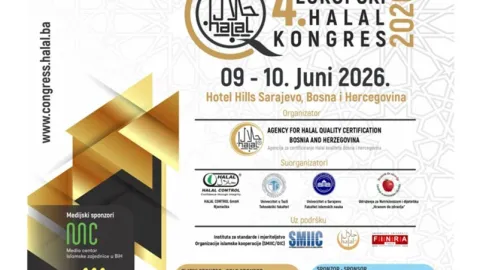
Sarajevo to Host Fourth European Halal Congress in June 2026
The Agency for Halal Quality Certification of Bosnia and Herzegovina will host the Fourth European Halal Congress in Sarajevo on June 9-10, 2026,
CJ CheilJedang First in South Korea to Introduce BRCGS Food Safety Culture Module
CJ CheilJedang, one of South Korea’s largest food companies, has become the first company in South Korea to implement the BRCGS Food Safety Culture Excellence (FSCE) module, using the program to assess food safety culture and identify areas for improvement across the company.
Italy Opens Consultation on Food Traceability Certification Rules
The Italian National Unification Body (UNI) has opened a public consultation on a new reference practice that would define how accredited certification bodies assess traceability systems in agri-food supply chains under UNI EN ISO 22005:2008.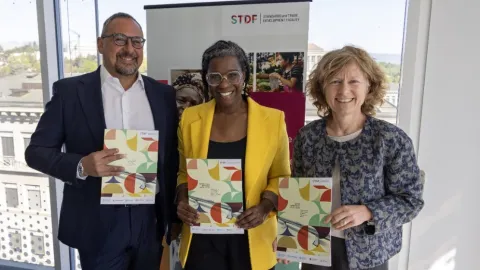
Canada Funds STDF Efforts to Strengthen Food Safety Systems in Developing Countries
The Government of Canada is investing about 360,000 US dollars in the Standards and Trade Development Facility (STDF) to help developing countries strengthen food safety, plant health, and animal health systems tied to international trade requirements.
France Invites Food Sector Feedback on ISO 22000 Revision
The French Association for Standardization (AFNOR) is inviting food sector stakeholders to comment on the draft revision of ISO 22000 as part of both the international update process and the future French adoption of the standard as NF EN ISO 22000.
Yad Mordechai Becomes Only Israeli Olive Oil Producer With SII Standards Mark
The Standards Institution of Israel (SII) has awarded Yad Mordechai an official Standards Mark certificate for its olive oil products, recognizing the company as the only producer currently holding the mark.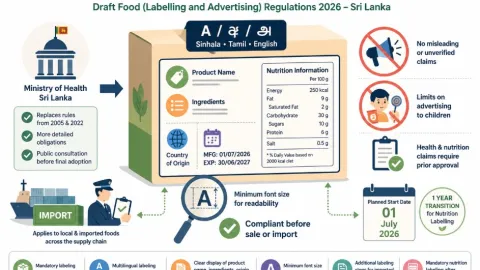
Sri Lanka Proposes Food Labelling And Advertising Rules With Mandatory Nutrition Information
Sri Lanka’s Ministry of Health has issued draft Food (Labelling and Advertising) Regulations 2026 for public consultation.
Vietnam Sets Rules for Halal Product Quality and Certification
The Government of Vietnam has issued Decree No. 127/2026/ND-CP, setting a legal framework for managing the quality of halal products and services and supporting their development.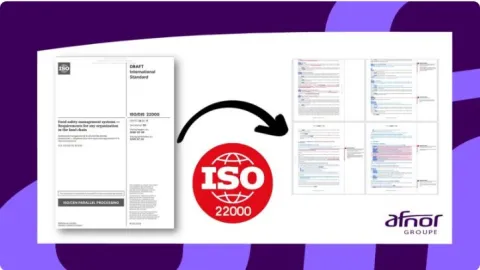
ISO 22000 Draft Gets French Translation
A French translation of the Draft International Standard (DIS) for ISO 22000, which sets requirements for food safety management systems, has now been completed as part of the revision led by the International Organization for Standardization (ISO).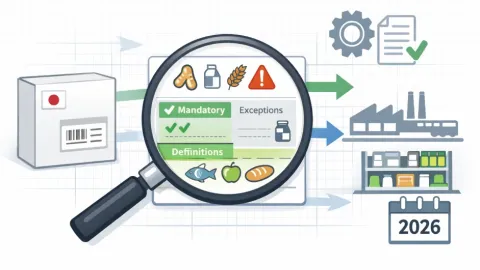
Japan Updates Food Labeling Rules for Allergen Information
The Consumer Affairs Agency (CAA) has revised Japan’s Food Labeling Standards to update allergen information and improve how key safety details are presented on food products.Global News
GFSI Seeks Feedback on Freshcare and SQF Programs Under 2024 Requirements
The Global Food Safety Initiative (GFSI) has opened public consultations on Freshcare Food Safety & Quality Standard Edition 5 (2026) and SQF Code Edition 10 for recognition against the GFSI Benchmarking Requirements Version 2024.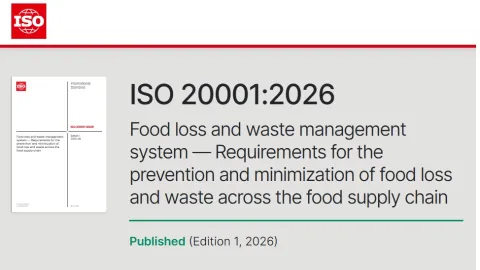
ISO 20001:2026 Published as First Food Loss and Waste Management Standard
The International Organization for Standardization (ISO) has published ISO 20001:2026, its first management system standard dedicated to preventing and reducing food loss and waste across the food supply chain.
ISO 14060 Net-Zero Draft Fails to Secure Approval, Returns for Revision
The draft of ISO 14060, the proposed international standard for net-zero aligned organizations, has failed to secure the approval needed to advance.
Global ACI Aligns CORSIA MRA Sub-Scope With Fourth Edition of ICAO Manual
Global Accreditation Cooperation Incorporated (Global ACI) has updated the Carbon Offsetting and Reduction Scheme for International Aviation (CORSIA) sub-scope of its Multilateral Recognition Arrangement (MRA) to align it with the latest international guidance.
ISO/UNDP 53001 Debuts as First International Management System Standard for Sustainable Development Goals
ISO and UNDP released ISO/UNDP 53001 on September 28, 2026, the world's first International Standard for managing contributions to the United Nations Sustainable Development Goals (SDGs).
ISO Central Secretariat Explains Key Changes in ISO 9001:2026 in New Video
The International Organization for Standardization (ISO) has released a detailed video explaining the changes in ISO 9001:2026 directly from its Central Secretariat.
Journalism Trust Initiative Proposed as New ISO Workshop Agreement
A proposal has been submitted to develop the Journalism Trust Initiative (JTI) into a new ISO International Workshop Agreement (IWA), extending an existing European framework for trustworthy journalism to the international level.
Global ACI Sets Three-Year Transition Timelines for ISO 14001:2026 and ISO 9001:2026
Global Accreditation Cooperation Incorporated (Global ACI) has set three-year transition periods for accredited certification to ISO 9001:2026 and ISO 14001:2026 , ending September 30, 2029 and April 30, 2029, respectively.
China Approves World’s First Medical Device Standard for AI Brain-Computer Interfaces
China has approved YY/T 2029-2026, the world’s first medical device standard for brain-computer interfaces (BCIs) that use artificial intelligence (AI).
IFS Makes EU Packaging Rules Self-Assessment Tool Available After 70-Company Pilot
International Featured Standards (IFS) has made its self-assessment tool for the EU Packaging and Packaging Waste Regulation (PPWR) available in the IFS Database after a pilot involving 70 companies.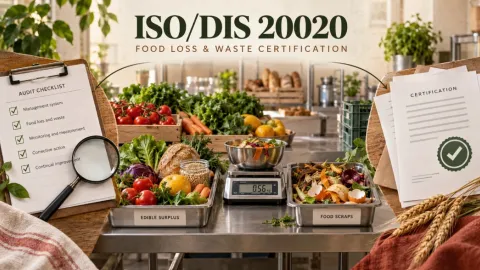
Comment Open on ISO/DIS 20020 for Bodies Auditing and Certifying Food Loss and Waste Management Systems
Comments are open on ISO/DIS 20020, a draft standard setting requirements for bodies that audit and certify food loss and waste management systems (FLWMS).